
Jun 26, 2026
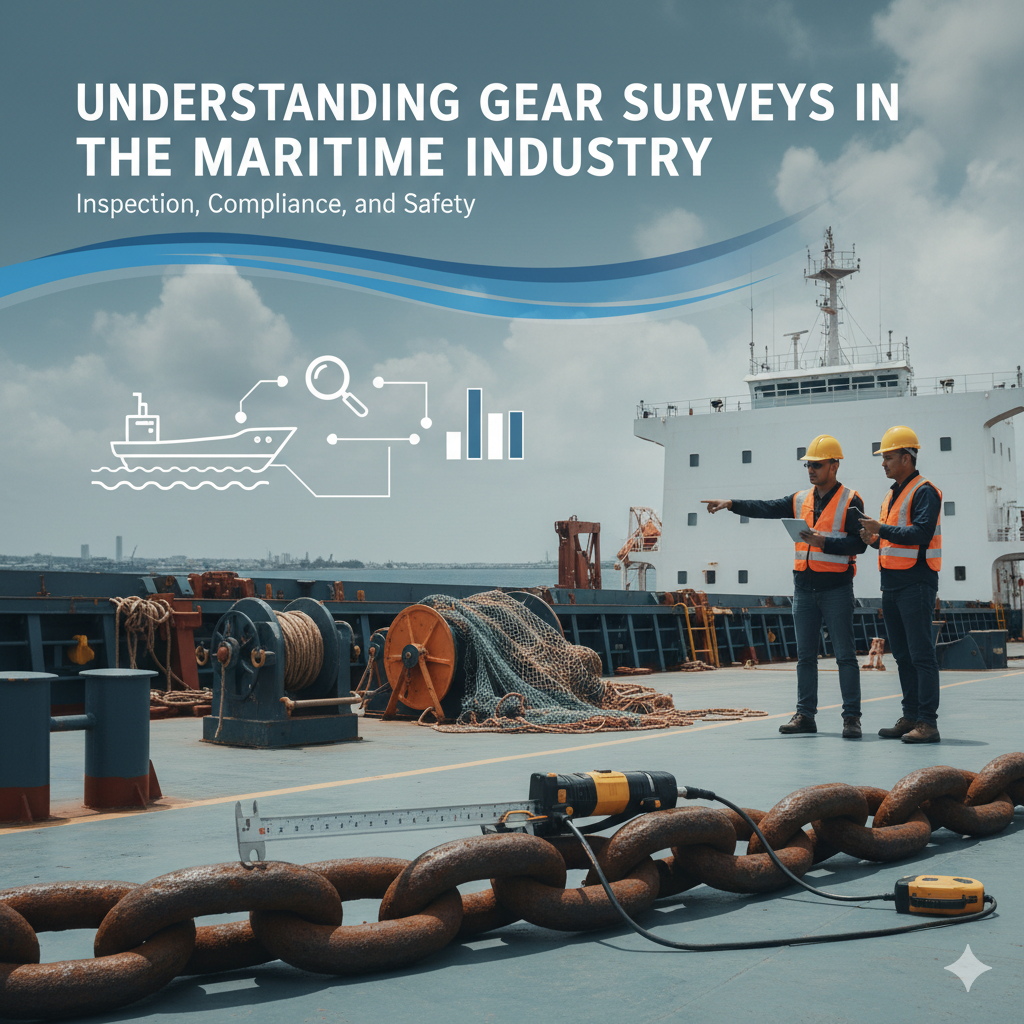
Understanding Gear Surveys in the Maritime Industry
Efficient and reliable ship operations depend on the proper functioning of
onboard mechanical and deck machinery, collectively referred to as the vessel’s
gear. A Gear Survey is an essential
part of vessel maintenance and statutory compliance, ensuring that all
mechanical and handling equipment remains safe, functional, and compliant with
class and flag requirements.
What Is a Gear Survey?
A Gear Survey is a detailed inspection and examination of
the various mechanical, lifting, and handling equipment installed on board a
vessel. This may include:
·
Cargo handling gear (cranes, derricks, winches)
·
Mooring and anchoring gear (windlasses,
capstans, mooring winches)
·
Steering gear systems
·
Towing or fishing gear (where applicable)
·
Hydraulic and control systems associated with
deck machinery
The objective is to confirm that all such equipment is in sound working
condition, correctly maintained, and capable of performing its intended
function safely.
Scope of a Gear Survey
A comprehensive gear survey typically covers the following areas:
1. Visual Inspection
All components are examined for signs of corrosion, wear, cracks, leakage, or
deformation. Surveyors inspect foundations, housings, bearings, seals, and
couplings to assess the mechanical integrity of the equipment.
2. Operational Testing
Machinery is operated under normal working conditions to verify smooth
operation, correct performance, and responsiveness of safety systems such as
brakes, clutches, limit switches, and emergency stops.
3. Functional Load Testing
For lifting and mooring gear, proof load tests may be carried out using
certified test weights or hydraulic load cells to confirm the safe working load
(SWL) and mechanical strength.
4. Hydraulic and Electrical System Checks
Hydraulic systems are examined for leaks, pressure stability, and cleanliness
of oil. Electrical controls, interlocks, and limit switches are tested for
reliability and compliance with safety standards.
5. Documentation and Certification Review
All maintenance records, service logs, and certificates are verified for
validity. Any non-conformities are recorded with recommendations for corrective
action.
Frequency of Gear Surveys
While specific intervals depend on the ship type and classification society,
typical schedules include:
·
Annual Visual Survey: To
confirm ongoing compliance and readiness
·
Five-Yearly Thorough Examination:
Including proof load tests, overhauls, and re-certification
·
Occasional/Intermediate Surveys:
Conducted after major repairs, incidents, or at the request of charterers or
port authorities
Benefits of Conducting Regular Gear Surveys
Regular gear surveys offer significant operational and safety benefits:
·
Enhanced Safety: Ensures all
mechanical and lifting equipment operates safely and reliably
·
Regulatory Compliance: Meets
flag, class, and ILO requirements
·
Operational Efficiency: Reduces
risk of breakdowns and port delays
·
Extended Equipment Life: Early
detection of wear and damage supports timely maintenance
·
Reduced Downtime: Minimizes
unexpected failures during cargo operations or maneuvering
Conclusion
Gear surveys are a vital aspect of ship maintenance, safety, and compliance.
By ensuring that all deck machinery, lifting appliances, and associated systems
are inspected and certified, shipowners and operators can maintain high
standards of safety, efficiency, and operational reliability.
Professional marine service providers conduct these surveys using certified
equipment, experienced technicians, and class-approved procedures delivering confidence that every component of
a vessel’s gear is fit for service and ready for operation.