
Jun 26, 2026
BONDED STORE PLANNING & COMPLIANCE: MANAGING DUTY-FREE SUPPLIES ON SHIPS
Introduction
Bonded stores are an essential part of vessel operations, covering duty-free
items such as alcohol, tobacco, and certain consumables supplied under customs
control. Managing these supplies requires strict adherence to regulations,
accurate documentation, and disciplined onboard handling. Any lapse in bonded
store compliance can lead to penalties, cargo detention, or delays during port
calls. Solanki Ship Care supports vessels by ensuring bonded store planning,
customs compliance, and controlled delivery processes that align with port and
customs requirements.
1. Understanding Bonded Store
Requirements
Knowing What Qualifies as Bonded Supplies
Bonded stores refer to duty-free items supplied to vessels for onboard
consumption under customs supervision. These items are not meant for local sale
or unauthorized use and must be handled separately from regular stores.
Key
bonded store requirements include:
• Clear identification of bonded items such as spirits, tobacco, and restricted
consumables
• Compliance with port-specific and national customs regulations
• Proper sealing, labeling, and controlled access onboard
• Accurate quantity declarations matching approved limits
2. Customs Compliance and
Documentation
Maintaining Accuracy and Transparency
Customs documentation is the backbone of bonded store management. Incomplete or
incorrect paperwork can trigger inspections, fines, or supply delays.
Essential
compliance documents include:
• Bonded store requisition and customs declaration forms
• Vessel details, voyage information, and port clearance data
• Acknowledgment receipts signed by authorized ship personnel
• Records aligned with customs and port authority requirements
3. Storage and
Handling Restrictions
Ensuring Secure and Controlled Onboard Management
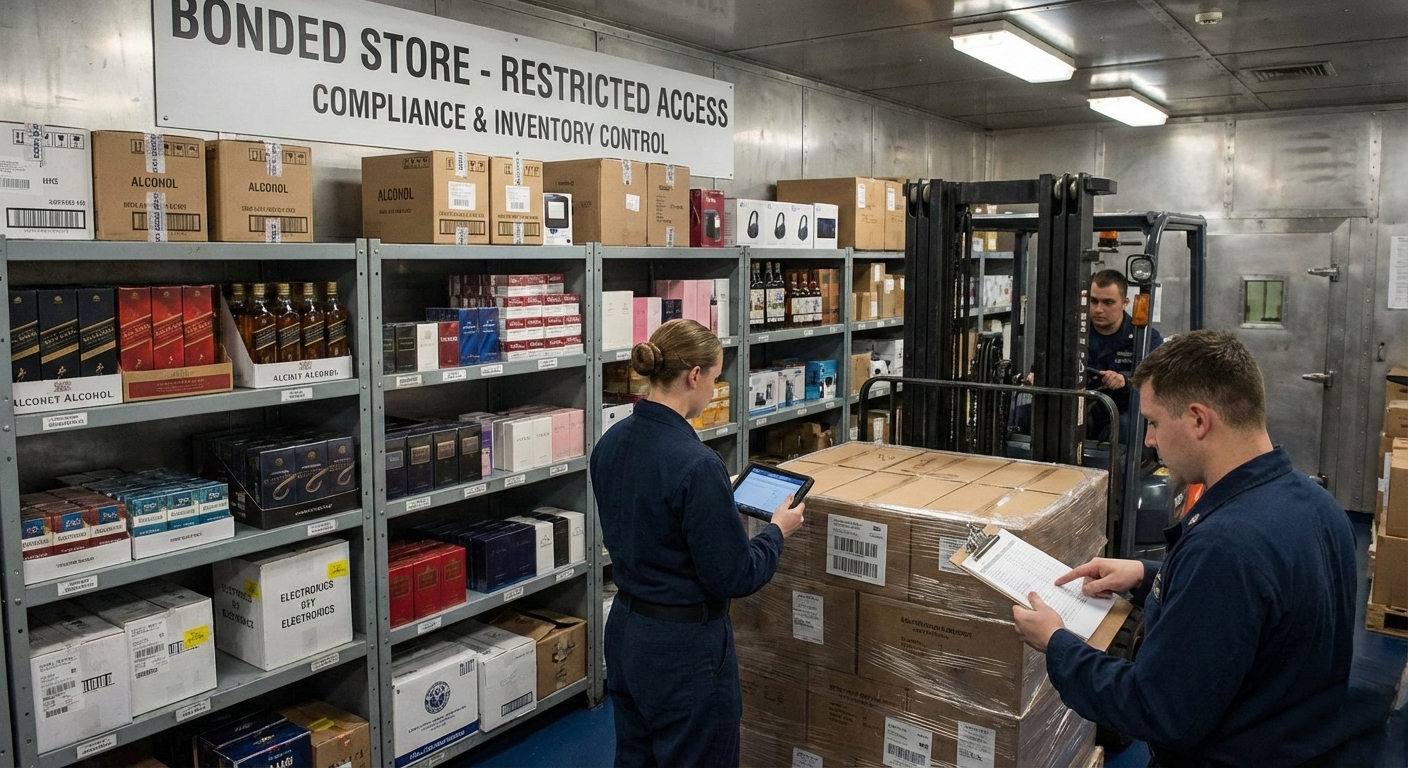
Bonded stores must be stored in designated, secured areas onboard the vessel.
Access is typically restricted to authorized personnel to prevent misuse or
regulatory violations.
Proper
storage and handling practices involve:
• Separate bonded lockers with restricted access
• Clear segregation from non-bonded provisions
• Controlled issue and consumption tracking
• Regular verification against declared quantities
4. Avoiding Penalties and Delays
Reducing Compliance Risks at Ports
Non-compliance with bonded store regulations can result in heavy penalties,
port delays, or increased scrutiny during inspections. Proactive planning and
strict control help mitigate these risks.
Risk-avoidance
measures include:
• Early submission of bonded store documentation
• Strict adherence to declared quantities and usage limits
• Clear coordination with port agents and customs officials
• Prompt resolution of discrepancies during inspections
5. How Solanki Ship Care Manages
Bonded Store Supply Compliantly
Structured Processes and Regulatory Expertise
Solanki Ship Care follows a disciplined and transparent approach to bonded
store supply management. Their experience with customs procedures and port
regulations ensures that vessels receive duty-free supplies without compliance
issues.
Their
compliant bonded store management includes:
• Advance verification of bonded store requirements and limits
• Accurate preparation and submission of customs documentation
• Secure handling and delivery aligned with port regulations
• Close coordination with vessels, agents, and authorities to avoid delays
Conclusion
Ensuring Smooth and Compliant Bonded Store Operations
Effective bonded store planning is critical for maintaining regulatory
compliance and operational efficiency. By understanding requirements,
maintaining accurate documentation, and enforcing strict storage controls,
vessels can avoid penalties and port delays. With a structured compliance-driven
approach, Solanki Ship Care ensures bonded store supplies are managed safely,
legally, and efficiently supporting smooth port operations and uninterrupted
voyages.