
Jun 26, 2026
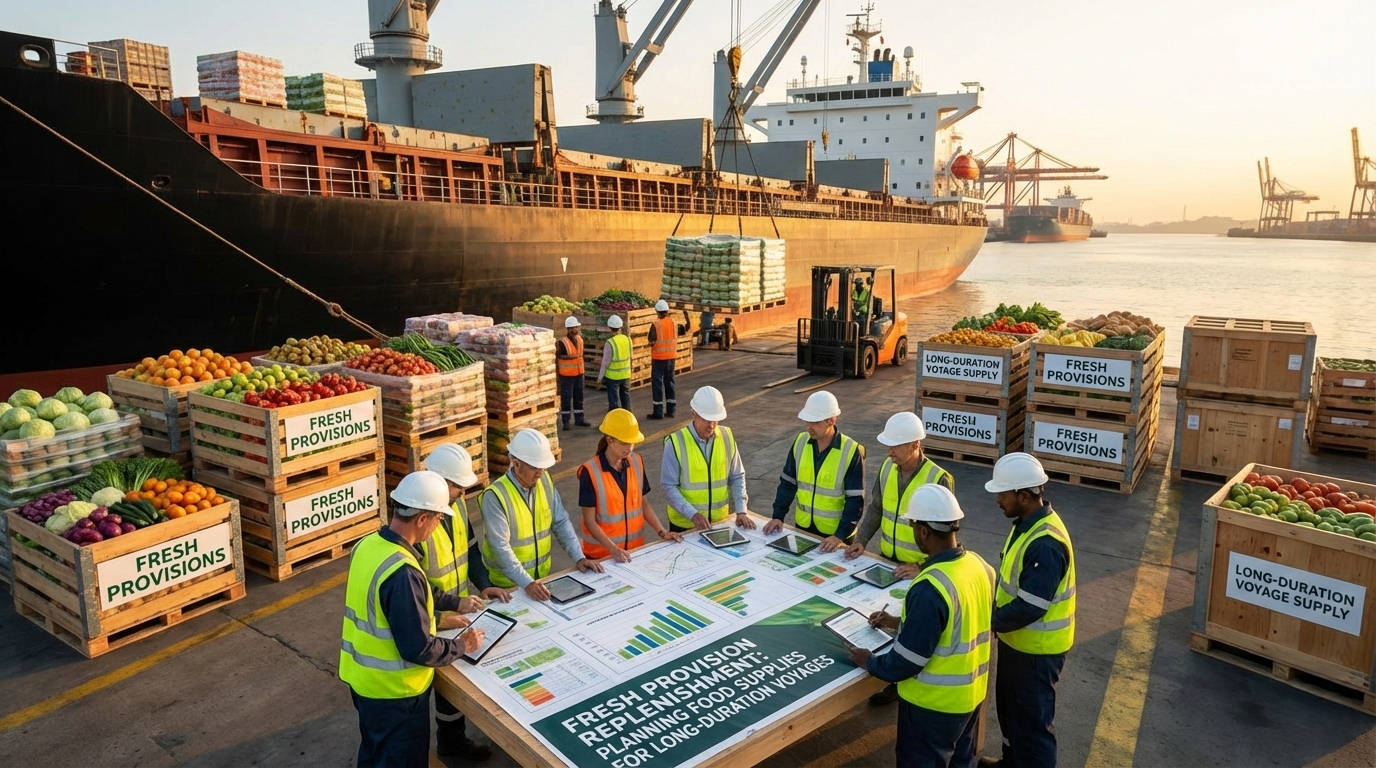
FRESH PROVISION REPLENISHMENT: PLANNING FOOD SUPPLIES FOR LONG-DURATION VOYAGES
Introduction
Proper planning and management of fresh and frozen food provisions are critical
for the health, morale, and performance of crew members during long-duration
voyages. Without timely replenishment, strict cold-chain handling, and
effective coordination with vessel schedules, ships risk spoilage, wastage, and
non-compliance with hygiene standards. Solanki Ship Care plays a vital
role in ensuring vessels receive high-quality, hygienic, and well-planned food
supplies to support safe and efficient operations at sea.
1. Planning Fresh and Frozen
Provisions
Ensuring Adequate Nutrition and Availability
Long voyages demand careful forecasting of food requirements based on crew
size, voyage duration, and onboard storage capacity. A well-balanced mix of
fresh, frozen, and dry provisions helps maintain crew nutrition while reducing
wastage and shortages.
Key planning considerations include:
• Accurate assessment of daily consumption rates
• Balanced selection of fruits, vegetables, meat, dairy, and frozen items
• Efficient use of refrigerated and freezer storage space
• Planned replenishment to avoid overstocking or food shortages
2. Cold-Chain Handling and Hygiene
Standards
Maintaining Quality from Supplier to Vessel
Maintaining the cold chain is essential to preserve freshness and prevent
bacterial growth. Any temperature deviation during transportation or storage
can compromise food safety. Strong hygiene practices further ensure compliance
with maritime food safety regulations.
Essential cold-chain and hygiene
practices include:
• Temperature-controlled storage and transportation
• Clean and sanitized handling equipment
• Proper segregation of raw, cooked, and ready-to-eat foods
• Adherence to international food safety and hygiene standards
3. Avoiding Spoilage During Long
Voyages
Reducing Waste and Health Risks
Extended sea passages increase the risk of food spoilage if provisions are not
properly managed. Regular monitoring and disciplined inventory control are
essential to maintain food quality throughout the voyage.
Spoilage prevention measures
include:
• Routine inspection of cold rooms and freezers
• First-in, first-out stock rotation
• Proper packaging and clear labeling of food items
• Immediate removal of spoiled or compromised provisions
4. Coordination with Vessel
Schedules
Timely and Efficient Replenishment
Provision replenishment must be closely aligned with vessel schedules and port
calls. Poor coordination can lead to delays, shortages, or unnecessary
port-time extensions.
Key coordination elements include:
• Advance planning based on confirmed port rotations
• Flexible supply arrangements for schedule changes
• Clear communication with ship operators and crew
• Fast and efficient delivery to minimize port stay
5. How Solanki Ship Care Manages
Provision Replenishment
Reliable Supply and Operational Support
Solanki Ship Care follows a structured and reliable approach to provision
replenishment, focusing on freshness, hygiene, and operational efficiency.
Their experience ensures vessels are well supplied even during long and
demanding voyages.
Provision management support
includes:
• Supplying fresh and frozen provisions from trusted sources
• Strict adherence to cold-chain and hygiene requirements
• Customized provisioning plans based on voyage duration and crew size
• On-time delivery coordinated with vessel schedules
Conclusion
Supporting Healthy Crews on Long-Duration Voyages
Effective fresh provision replenishment is essential for crew wellbeing, food
safety, and uninterrupted vessel operations. With careful planning, strong
cold-chain management, and precise coordination, the risks of spoilage and
non-compliance can be significantly reduced. Solanki Ship Care remains
committed to delivering dependable, high-quality food provisioning solutions
that support safe, efficient, and comfortable voyages at sea.