
Jun 26, 2026
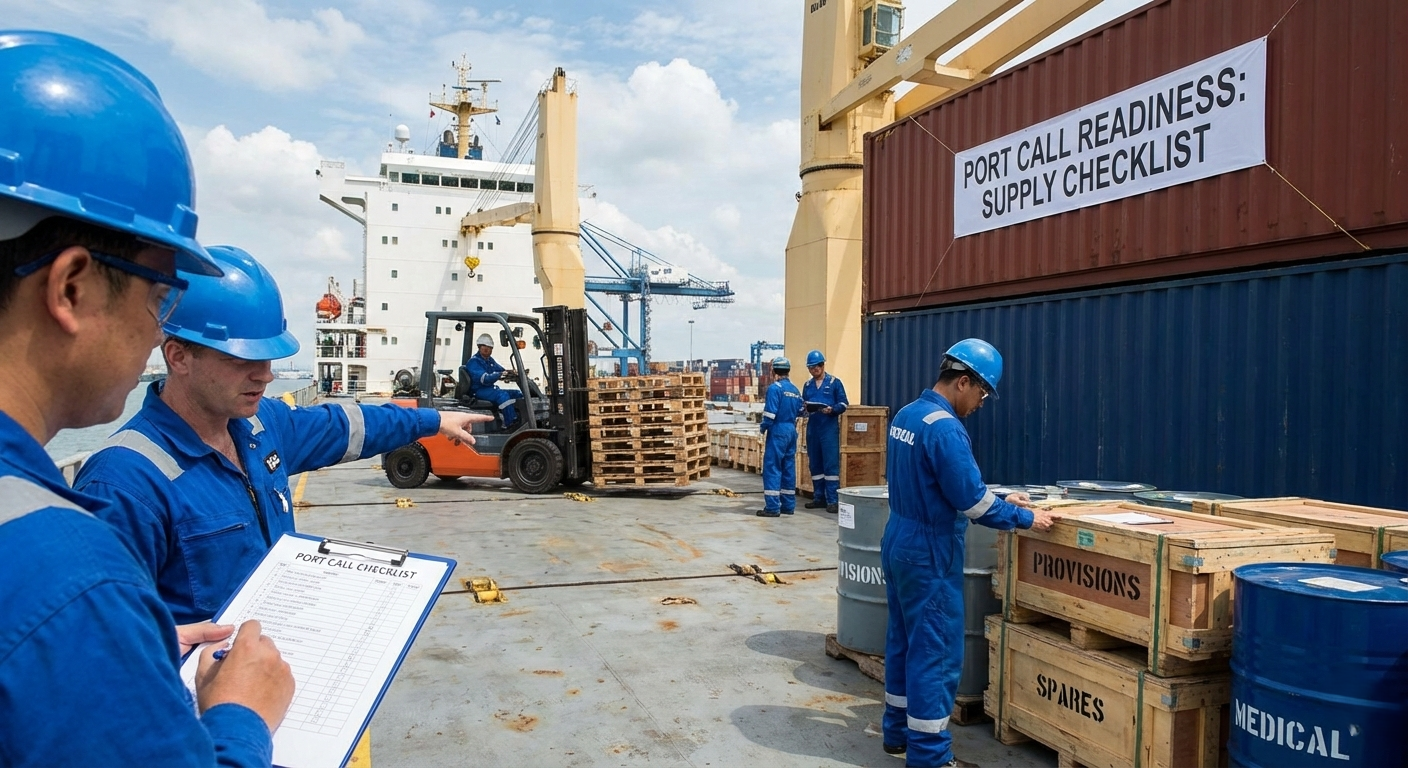
PREPARING FOR PORT CALLS: A SUPPLY READINESS CHECKLIST FOR VESSELS
Introduction
Efficient port calls depend on thorough preparation and timely coordination of
vessel supply requirements. When supplies are not planned in advance, vessels
may face delays, cost overruns, or operational disruptions. A structured supply
readiness checklist helps ensure that all critical needs are identified and
fulfilled before arrival. Solanki Ship Care supports vessels by managing
pre-arrival planning, supplier coordination, and on-time delivery to ensure
smooth and efficient port calls.
1. Pre-Arrival Supply Planning
Building a Strong Foundation for Port Operations
Pre-arrival supply planning is essential to avoid rushed decisions during port
calls. By reviewing requirements early, vessels can ensure uninterrupted
operations and better control over costs and timelines.
Key
pre-arrival planning actions include:
• Reviewing onboard inventory and consumption patterns
• Forecasting supply needs based on upcoming voyage duration
• Confirming port call schedules and available time windows
• Finalizing supply requisitions well before vessel arrival
2. Identifying Priority Supply
Requirements
Focusing on Critical and Essential Items
Not all supplies carry equal importance during a port call. Identifying
priority requirements helps vessels ensure that critical items are delivered
first, especially when port stays are short.
Priority
supply requirements often include:
• Fresh provisions, bonded stores, and potable water
• Engine, deck, and cabin consumables
• Safety, compliance, and statutory items
• Urgent spares and technical supplies
3. Coordination Between Vessel and
Supplier
Ensuring Clear Communication and Accurate Deliveries
Effective coordination between the vessel, ship managers, and suppliers is
vital for timely and error-free deliveries. Clear communication minimizes
misunderstandings and ensures supplies match the vessel’s actual needs.
Essential
coordination practices include:
• Sharing detailed and accurate requisition lists
• Confirming delivery locations, access, and port procedures
• Providing regular updates on ETA and schedule changes
• Maintaining a single point of contact for coordination
4. Avoiding Last-Minute Delays
Reducing Risks and Unplanned Port-Time Extensions
Last-minute supply requests can lead to missed deliveries, extended port stays,
and higher costs. Proactive planning and early confirmations help vessels
maintain operational efficiency.
Delay
prevention measures include:
• Early submission and approval of supply requests
• Advance vendor readiness and material availability
• Buffer planning for schedule changes or delays
• Quick issue resolution during port operations
5. How Solanki Ship Care Ensures
Port-Call Readiness
Reliable Supply Planning and End-to-End Support
Solanki Ship Care adopts a structured and proactive approach to vessel supply
readiness. With strong local networks and operational experience, they ensure
vessels are fully prepared for every port call.
Their
port-call readiness support includes:
• Advance assessment and verification of vessel requirements
• Prioritization of urgent and critical supplies
• Close coordination with vessels, agents, and suppliers
• Timely delivery aligned with port schedules and safety standards
Conclusion
Achieving Seamless and Efficient Port Calls
A well-prepared supply readiness plan is essential for minimizing delays and
ensuring smooth port operations. Through early planning, clear prioritization,
and strong coordination, vessels can avoid last-minute challenges and maintain
schedule reliability. Solanki Ship Care remains committed to delivering
dependable and well-coordinated supply solutions that support efficient,
cost-effective, and stress-free port calls.