
Jun 26, 2026
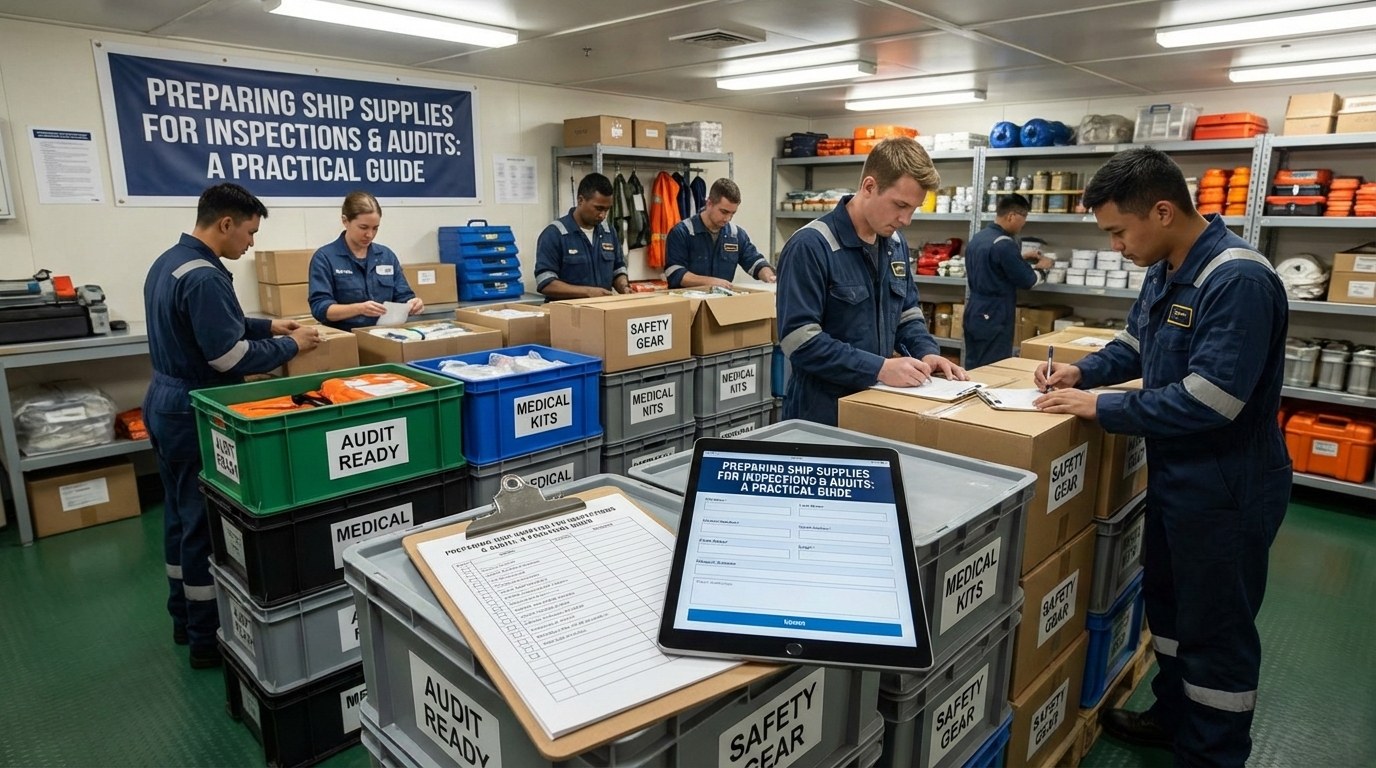
PREPARING SHIP SUPPLIES FOR INSPECTIONS & AUDITS: A PRACTICAL GUIDE
Introduction
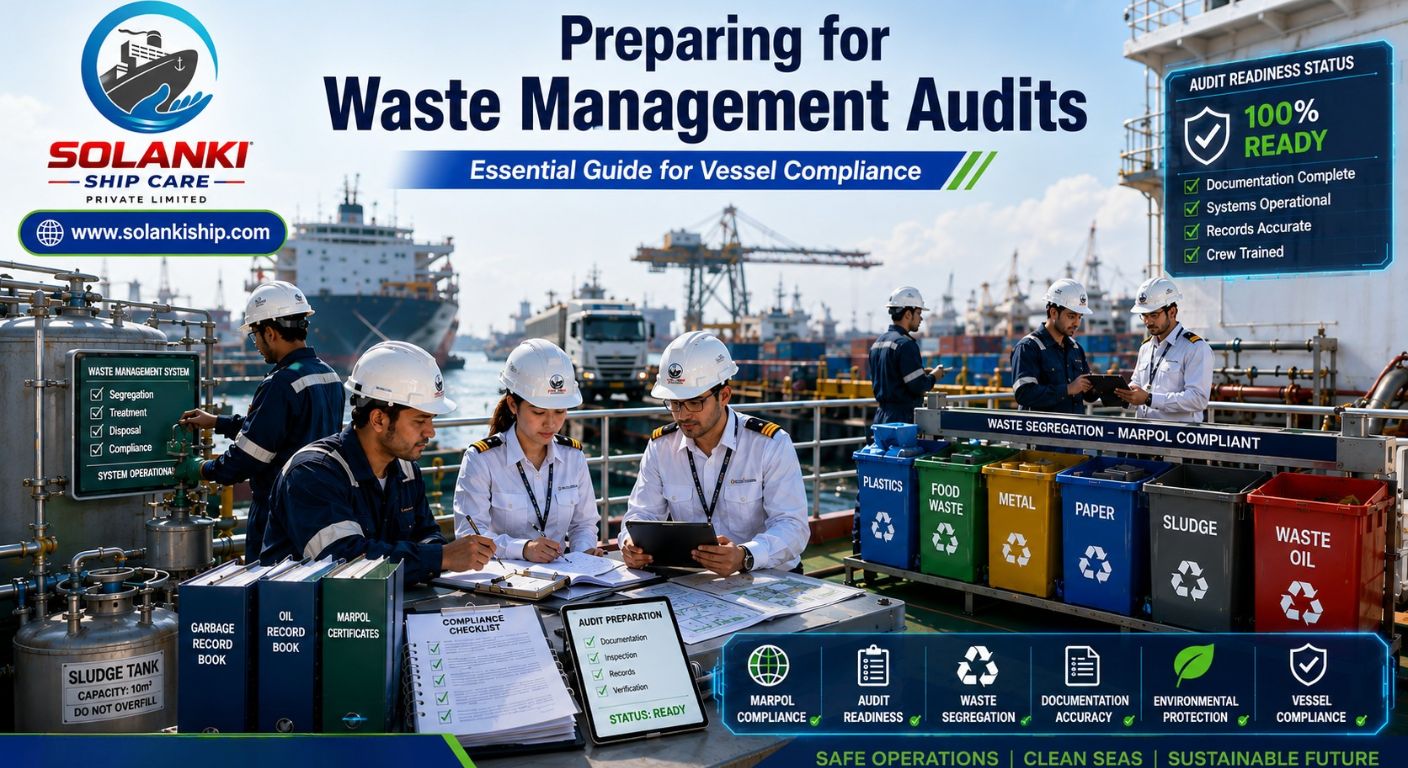
Ship inspections and audits are a routine yet critical part of maritime
operations. Whether conducted by port state control, flag authorities,
charterers, or internal auditors, these inspections closely examine ship
stores, supplies, and records. Poor preparation can result in deficiencies,
operational delays, or even vessel detention. Preparing ship supplies in
advance, with proper documentation and physical readiness, is essential for
smooth inspections. Solanki Ship Care supports vessels by ensuring ship stores
are audit-ready, compliant, and aligned with inspection requirements at ports.
1. Understanding Inspection
Requirements for Ship Stores
Knowing What Inspectors Look For
Inspectors review ship supplies to confirm safety, regulatory compliance, and
proper onboard management. This includes provisions, bonded stores, spare
parts, chemicals, and consumables.
Common
inspection requirements related to ship stores include:
• Verification of approved quantities and declared items
• Compliance with customs, port, and flag state regulations
• Proper segregation of bonded and non-bonded stores
• Safe storage practices meeting safety and environmental standards
• Traceability of supplies from delivery to onboard usage
2. Documentation and Physical
Readiness
Aligning Records with Onboard Reality
Accurate documentation must always reflect the actual condition and quantity of
ship supplies onboard. Any mismatch between records and physical stock is a
common cause of inspection remarks.
Key
documentation and readiness checks include:
• Updated inventory lists for all ship stores and bonded
items
• Delivery notes, receipts, and supplier invoices
• Customs declarations and port clearance records
• Clearly labeled storage areas and lockers
• Clean, organized, and accessible storage spaces
3. Identifying Non-Compliance Risks
Spotting Issues Before Inspectors Do
Many inspection deficiencies arise from small, preventable oversights rather
than major violations. Early identification of risks allows corrective action
before an audit begins.
Common
non-compliance risks include:
• Expired, damaged, or improperly stored consumables
• Excess quantities beyond permitted limits
• Missing, outdated, or incomplete documentation
• Improper storage of hazardous or restricted items
• Unauthorized access to bonded or controlled stores
4. Pre-Inspection Supply Checks
Practical Steps for Audit Preparation
A structured pre-inspection supply check helps vessels address issues in
advance and reduces last-minute pressure during inspections.
Effective
pre-inspection checks involve:
• Physical verification of stock against inventory records
• Ensuring bonded and non-bonded stores are clearly segregated
• Confirming all documentation is complete and up to date
• Checking seals, labels, and access controls
• Coordinating with ship agents and suppliers for timely corrections
5. How Solanki Ship Care Supports
Audit-Ready Vessels
Compliance-Driven Supply Management
Solanki Ship Care plays a key role in helping vessels prepare for inspections
and audits by ensuring ship supplies meet regulatory and operational
expectations.
Their
inspection-focused support includes:
• Advance planning of ship supplies based on port and
inspection requirements
• Accurate preparation and verification of supply documentation
• Delivery of compliant, quality-controlled ship stores
• Close coordination with vessels, agents, and port authorities
• Practical guidance to minimize inspection risks and port delays
Conclusion
Ensuring Smooth and Inspection-Ready Ship Operations
Preparing ship supplies for inspections and audits is essential for maintaining
compliance, safety, and operational efficiency. By understanding inspection
expectations, keeping documentation accurate, identifying risks early, and
performing thorough pre-inspection checks, vessels can avoid deficiencies and
delays. With a structured and compliance-focused approach, Solanki Ship Care
ensures vessels remain audit-ready, supporting smooth port operations and
uninterrupted voyages.