
Jun 26, 2026
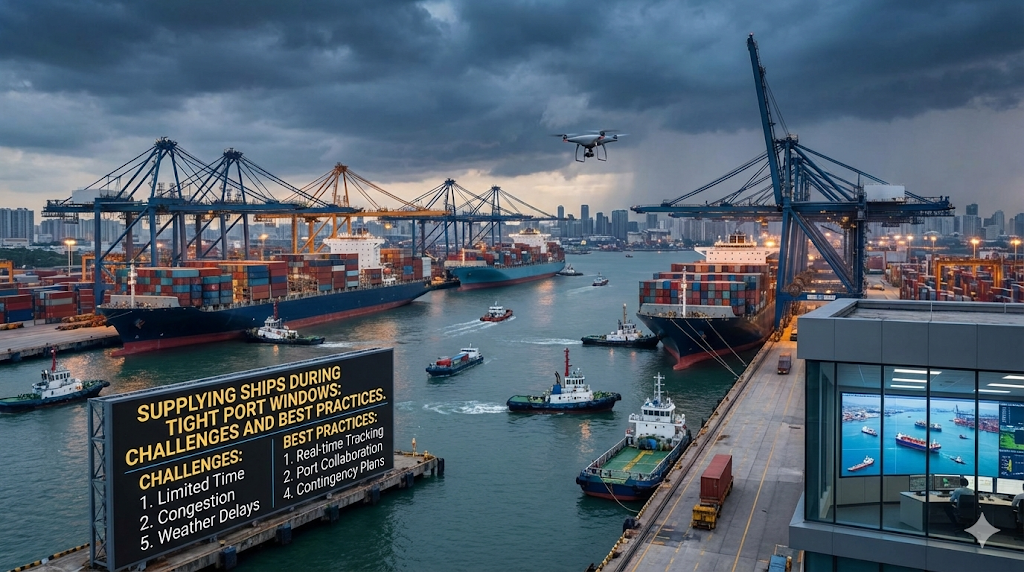
SUPPLYING SHIPS DURING TIGHT PORT WINDOWS: CHALLENGES AND BEST PRACTICES
Introduction
Modern shipping schedules are becoming increasingly tight, with vessels often
allowed only a few hours alongside or at anchorage to complete cargo
operations, documentation, and essential services. In such short port stays,
supplying ships with critical stores becomes a complex operational challenge.
Any delay or miscoordination can result in missed deliveries, extended port
stays, or disruptions to the vessel’s voyage plan. Supplying ships efficiently
during tight port windows requires precise planning, prioritisation, and strong
coordination between vessels, suppliers, and port stakeholders. Solanki ShipCare specialises in managing port-side supplies within limited timeframes,
ensuring vessels receive what they need without compromising schedules.
1. Challenges of Short Port Stays
Limited Time and High Operational Pressure
Short port stays leave very little
margin for error. Vessel schedules are closely linked to berth availability,
cargo operations, tidal windows, and regulatory clearances. Ship supplies must
be delivered and received within narrow time slots, often while multiple
operations are taking place simultaneously.
Key
challenges during short port stays include:
• Restricted time windows for delivery alongside or at
anchorage
• Port congestion affecting vehicle movement and launch availability
• Cargo operations limiting safe access for supply delivery
• Last-minute changes in berth or schedule
• Increased pressure on crew to receive and verify supplies quickly
2. Prioritising Critical Ship Supplies
Focusing on Essential Requirements
When time is limited, effective
supply operations depend on prioritising critical and voyage-essential items.
Not every requirement can be fulfilled during a short port call, making smart
decision-making essential.
Best
practices for prioritising supplies include:
• Identifying safety-critical and compliance-related
supplies first
• Prioritising provisions, fresh water, bonded stores, and essential spares
• Postponing non-urgent or non-essential items to the next port
• Aligning supply quantities with voyage duration and crew needs
• Confirming specifications and quantities well in advance
3. Coordination Between Vessel and
Supplier
Clear Communication as a Success Factor
Strong coordination between the
vessel, ship agent, and supplier is vital during tight port windows. Even minor
communication gaps can result in delays, rejected supplies, or missed delivery
opportunities.
Effective
coordination involves:
• Early confirmation of vessel ETA, berth position, and port
window
• Clear instructions on delivery location, access procedures, and safety rules
• Continuous updates between vessel, agent, and supplier teams
• Advance preparation and approval of documentation
• Standby arrangements to manage sudden schedule changes
4. Avoiding Delays and Missed
Deliveries
Proactive Planning and Execution
Missed deliveries during short port
calls can disrupt voyages, increase costs, and impact crew welfare. Preventing
such outcomes requires forward planning and operational readiness.
Key
measures to avoid delays include:
• Planning ship supplies well before vessel arrival
• Pre-clearance of port and customs documentation
• Proper packaging, labelling, and segregation of supplies
• Readiness of logistics teams before berthing or anchoring
• Rapid problem-solving through on-ground operational support
5. How Solanki Ship Care Ensures
Timely Port-Side Supply
Reliable Support During Time-Critical Operations
Solanki Ship Care understands the
pressures of short port stays and operates with a time-sensitive,
execution-focused approach. Their supply management systems are designed to
deliver accuracy and efficiency under tight schedules.
Their
approach includes:
• Early engagement with vessels to identify critical supply
priorities
• Advance logistical planning aligned with berth and port conditions
• Accurate preparation of supplies and documentation before arrival
• Dedicated on-ground teams for fast and safe delivery
• Operational flexibility to adapt to last-minute changes
Conclusion
Ensuring Smooth Operations Despite Tight Schedules
Supplying ships during tight port
windows demands careful planning, clear prioritisation, and seamless
coordination. By understanding the challenges of short port stays, focusing on
essential supplies, and executing deliveries with precision, vessels can
maintain schedule integrity and operational efficiency. With its
experience-driven processes and strong port-side coordination, Solanki Ship
Care ensures timely and reliable ship supply services, even in the most
time-constrained port environments.