
Jun 26, 2026
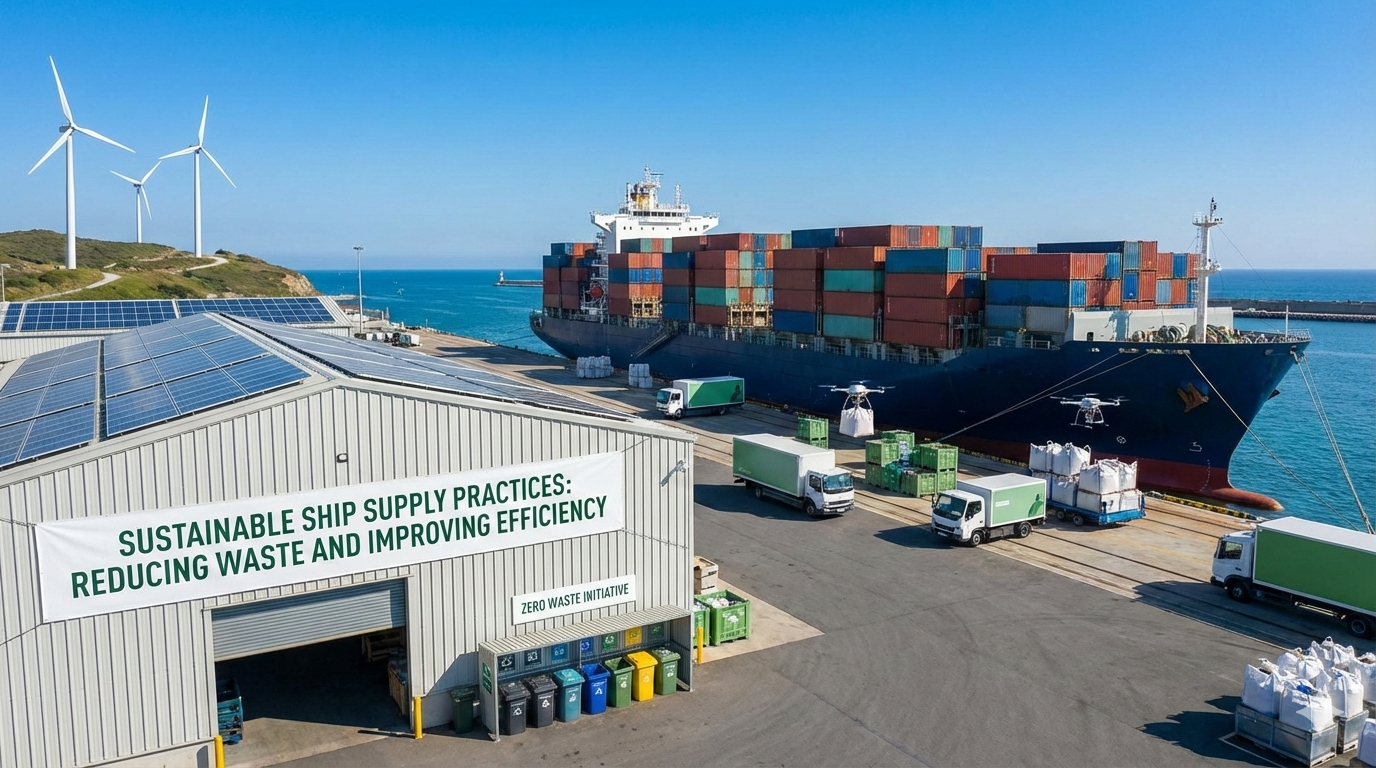
SUSTAINABLE SHIP SUPPLY PRACTICES: REDUCING WASTE AND IMPROVING EFFICIENCY
Introduction
Sustainability is becoming a core priority in the maritime industry as vessel
operators face stricter environmental regulations, rising operational costs,
and growing expectations from charterers and stakeholders. Ship supply
operations directly influence waste generation, resource consumption, and
overall efficiency onboard. By adopting sustainable ship supply practices,
vessels can reduce over-ordering, minimize waste, improve operational control,
and achieve long-term cost and compliance benefits. Solanki Ship Care supports
this transition by delivering responsible, well-planned, and efficient ship
supply solutions.
1. Reducing Over-Ordering and Waste
Onboard
Managing Inventory More Effectively
at Sea
Over-ordering is one of the primary causes of waste onboard vessels. Excess
supplies often expire, deteriorate, or require disposal at ports, increasing
costs and environmental impact.
Key Reasons for Over-Ordering
• Inaccurate estimation of consumption
• Limited visibility of existing onboard stock
• Ordering excess quantities for safety margins
• Poor coordination between vessel and supplier
• Lack of historical consumption analysis
Why This Is Important
Reducing over-ordering helps vessels lower waste generation, optimize storage
space, and reduce unnecessary disposal costs. Precise supply planning ensures
that only essential quantities are delivered, improving efficiency and
supporting sustainability objectives.
2. Environment-Friendly Packaging
and Sourcing
Reducing Environmental Impact
Through Smarter Choices
Packaging materials and sourcing methods significantly affect the environmental
footprint of ship supply operations.
Sustainable Packaging and Sourcing
Practices
• Use of recyclable and reusable packaging
• Minimizing single-use plastics
• Sourcing from environmentally responsible suppliers
• Opting for bulk packaging where practical
• Selecting durable products with longer shelf life
Why This Is Important
Environment-friendly packaging reduces waste onboard and at ports, while
responsible sourcing supports global sustainability efforts. These practices
also help vessels meet environmental compliance requirements and charterer
expectations.
3. Responsible Supply Planning
Supplying What Is Needed, When It Is
Needed
Responsible supply planning focuses on aligning deliveries with actual vessel
requirements rather than overestimating needs.
Key Elements of Responsible Planning
• Analysis of historical consumption data
• Close coordination with vessel crew
• Planning supplies based on voyage duration and trade routes
• Reducing last-minute or emergency orders
• Regular review and optimization of supply lists
Why This Is Important
Well-structured planning improves inventory control, reduces unnecessary
procurement, and minimizes waste. It also lowers the environmental impact
associated with excess production, packaging, and transportation.
4. Long-Term Cost and Compliance
Benefits
Sustainability That Supports Operational
Profitability
Sustainable ship supply practices provide measurable financial and regulatory
advantages over time.
Key Long-Term Benefits
• Reduced procurement and disposal costs
• Lower storage and handling expenses
• Improved compliance with environmental regulations
• Stronger reputation with charterers and stakeholders
• Better readiness for future sustainability requirements
Why This Is Important
Sustainability is no longer optional in maritime operations. Efficient and
responsible supply practices enhance cost control, reduce risk, and strengthen
a vessel’s long-term competitiveness.
5. How Solanki Ship Care Supports
Sustainable Supply Practices
Delivering Smart, Responsible Ship
Supply Solutions
Solanki Ship Care integrates sustainability into every stage of the ship supply
process through careful planning, sourcing, and execution.
Service Highlights
• Accurate assessment of vessel supply requirements
• Support in reducing over-ordering and onboard waste
• Responsible sourcing from reliable suppliers
• Focus on efficient and environment-friendly packaging
• Clear communication for precise and timely delivery
Why Choose Solanki Ship Care
• Strong understanding of vessel operations and consumption patterns
• Commitment to efficient and sustainable supply planning
• Reliable execution across multiple ports
• Support for regulatory compliance and long-term efficiency
Conclusion
Driving Sustainable Operations
Through Smarter Ship Supply
Sustainable ship supply practices are essential for reducing waste, improving
efficiency, and meeting evolving environmental and regulatory demands. By
minimizing over-ordering, adopting environment-friendly packaging, and
implementing responsible supply planning, vessel operators can achieve lasting
cost savings and compliance benefits. With Solanki Ship Care as a trusted
supply partner, vessels benefit from structured, efficient, and
sustainability-focused ship supply solutions that support both operational
excellence and environmental responsibility.