
Jun 24, 2026
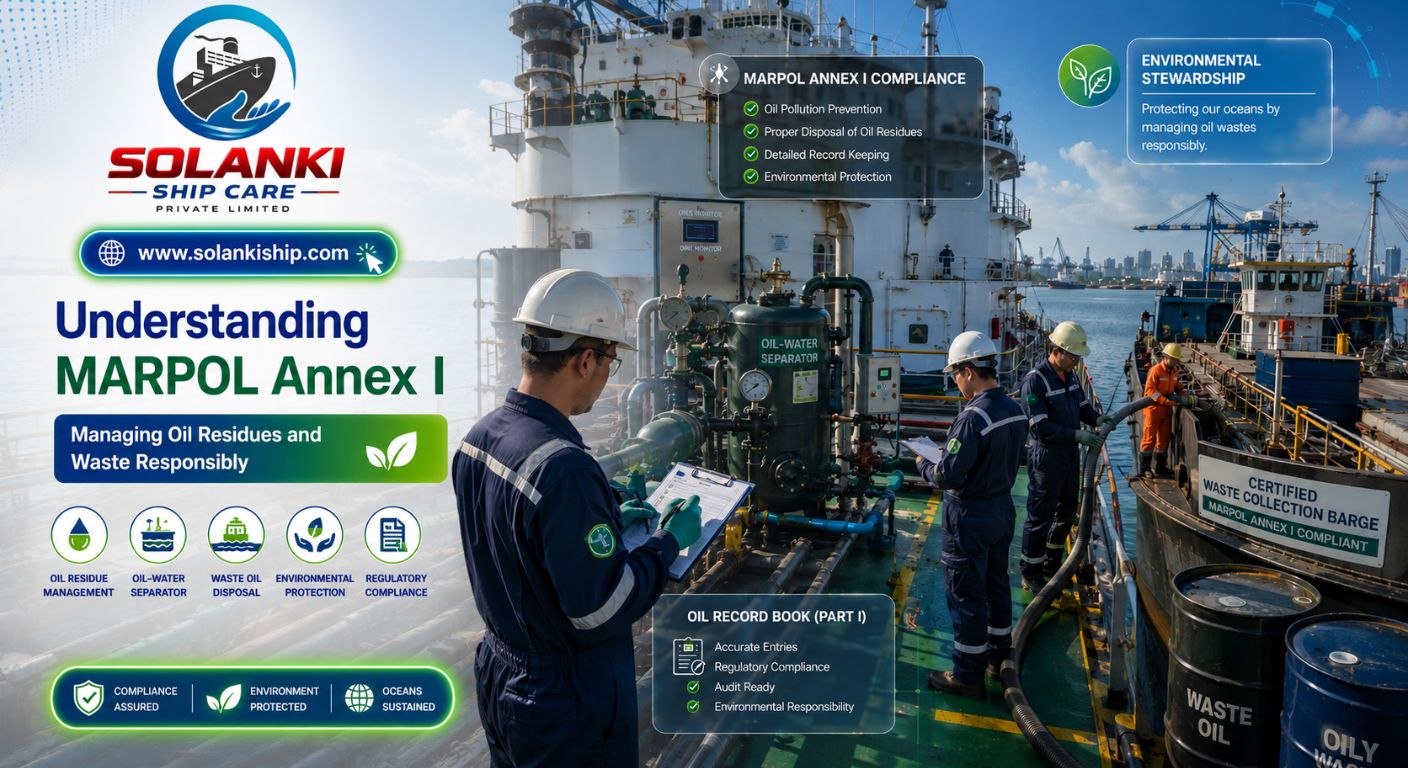
Understanding MARPOL Annex I: Managing Oil Residues and Waste Responsibly
MARPOL Annex I is a key
international regulation aimed at preventing marine pollution from oil
generated by ships, including sludge, bilge water, and other oily residues, and
requires proper waste management to protect the environment, ensure compliance,
and avoid penalties while supporting smooth vessel operations and inspections.
Understanding
MARPOL Annex I Regulations
MARPOL Annex I, established by the
International Maritime Organization (IMO), aims to prevent oil pollution from
ships by setting strict requirements for handling, storing, processing, and
disposing of oil residues; it mandates the use of approved equipment such as
oily water separators and sludge tanks, along with accurate record-keeping in
the Oil Record Book to ensure compliance and responsible waste management
throughout a vessel’s operations. Learn more at Solanki Ship Care.
1. Requirements
for Oil Residue Handling Onboard
Ships generate oil residues from
engine operations, fuel purification, machinery maintenance, and bilge water
treatment, and MARPOL Annex I requires these wastes to be safely collected,
stored, and managed to prevent marine pollution, which involves using
designated sludge tanks, monitoring storage capacity, applying approved
treatment systems, and ensuring trained crew follow proper handling procedures
for full regulatory compliance.
2. Disposal
Procedures at Ports
When onboard storage reaches
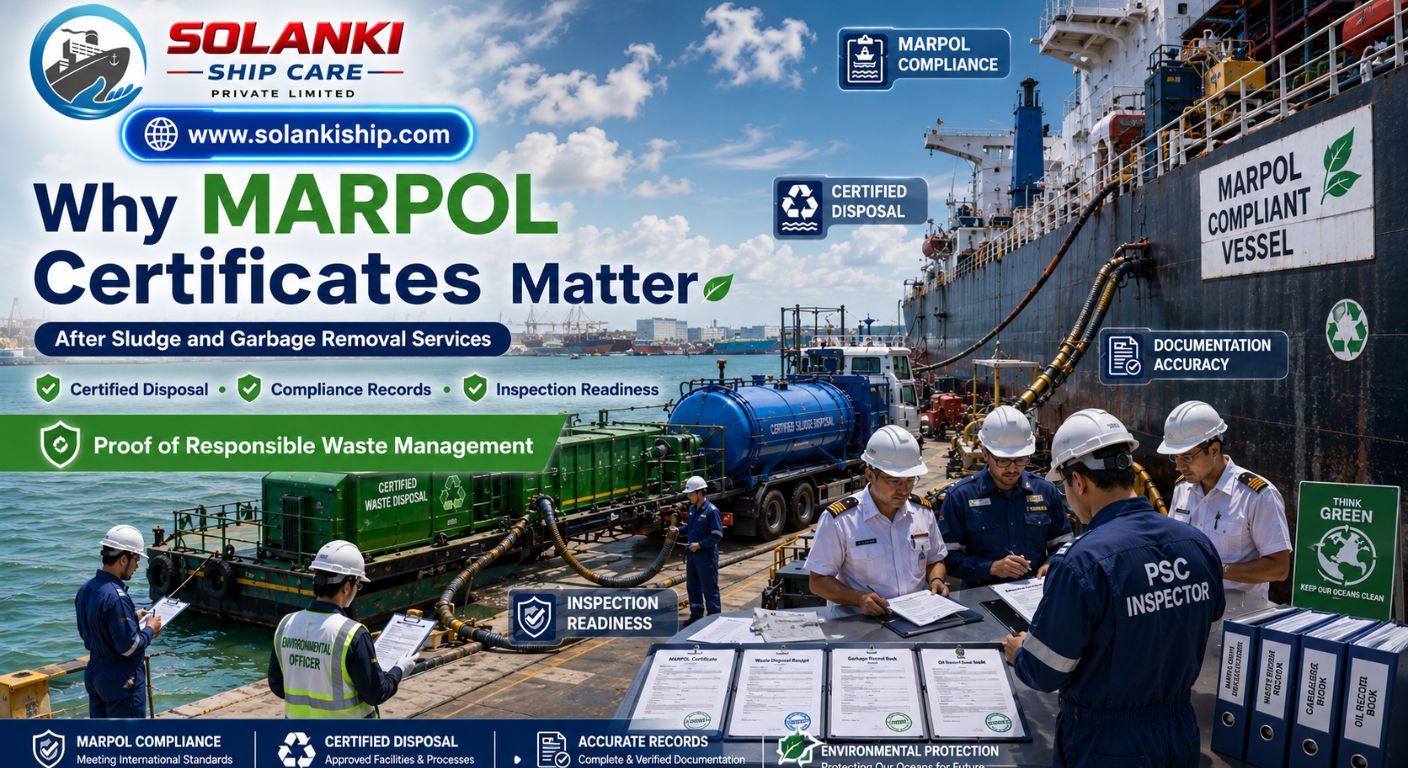
capacity, vessels must discharge oil residues to authorized Port Reception
Facilities (PRFs) by coordinating with port authorities and approved service
providers, while maintaining proper documentation such as waste transfer
receipts, disposal certificates, and Oil Record Book entries to ensure
compliance with MARPOL Annex I and environmentally responsible waste
management.
3. Environmental
and Legal Implications of Improper Disposal
Improper handling or illegal
discharge of oil residues can severely harm marine ecosystems by contaminating
seawater, damaging habitats, and affecting wildlife and coastal communities,
while non-compliance with MARPOL Annex I can lead to heavy fines, vessel
detention, operational delays, and reputational damage, making proper oil waste
management essential for environmental protection and regulatory compliance.
4. Documentation
and Compliance Best Practices
Accurate record-keeping is essential
for MARPOL Annex I compliance, requiring vessels to maintain detailed documentation
of oil residue handling activities such as collection, storage, transfer,
treatment, and disposal, including records like the Oil Record Book, waste
transfer receipts, disposal certificates, sludge discharge logs, equipment
maintenance records, and crew training documentation, while regular audits,
crew awareness, and equipment inspections ensure ongoing compliance and
readiness for inspections.
5. How Solanki
Ship Care Supports Compliant Waste Disposal
Solanki Ship Care provides
MARPOL-compliant waste management services, including oil residue collection,
sludge removal, waste oil disposal, and documentation support, ensuring vessels
meet regulatory requirements while maintaining environmental responsibility and
smooth port operations.
Conclusion
MARPOL Annex I is essential for
preventing marine pollution by regulating oil residue handling and disposal on
vessels, ensuring compliance, environmental protection, and avoidance of
penalties; partnering with experts like Solanki Ship Care helps ships manage
waste responsibly, maintain accurate documentation, and meet international
regulations visit Solanki Ship Care
for more details.
Frequently Asked
Questions (FAQ)
Q1. What is
MARPOL Annex I?
It is an international regulation
that prevents oil pollution from ships and governs oil waste management.
Q2. What are oil
residues on a vessel?
They include sludge, oily bilge
water, waste oil, and contaminated materials.
Q3. How should
oil residues be disposed of?
They must be discharged to
authorized Port Reception Facilities or approved service providers.
Q4. What records
are required under MARPOL Annex I?
Oil Record Book, disposal
certificates, and waste transfer receipts.
Q5. How does
Solanki Ship Care support MARPOL compliance?
By providing sludge removal, waste
oil disposal, and compliant documentation services.