
Aug 01, 2026
Ship Garbage Management: Meeting MARPOL Requirements Without Operational Delays
Proper ship garbage management helps
vessels comply with MARPOL Annex V, protect the marine environment, and avoid
operational delays. Effective waste handling, documentation, and disposal
through approved facilities ensure smooth and compliant operations.
UNDERSTANDING
SHIP-GENERATED GARBAGE
Ship-generated garbage includes
waste produced during normal vessel operations, such as from crew
accommodations, galley activities, maintenance work, and cargo operations.
Common types include plastics, food
waste, paper and cardboard, glass, metal, domestic waste, cooking oil, cargo
residues, maintenance waste, incinerator ash, and electronic waste. Proper
classification helps ensure effective segregation, storage, documentation, and
MARPOL-compliant disposal. Learn more at Solanki Ship Care
1. MARPOL ANNEX
V REQUIREMENTS
MARPOL Annex V regulates garbage
disposal from ships to prevent marine pollution. It prohibits plastic
discharge, restricts food waste disposal based on location, and requires many
vessels to maintain a Garbage Management Plan and Garbage Record Book.
Compliance helps avoid penalties, prevent delays, and protect the marine environment.
2. PROPER
SEGREGATION AND DISPOSAL PROCEDURES
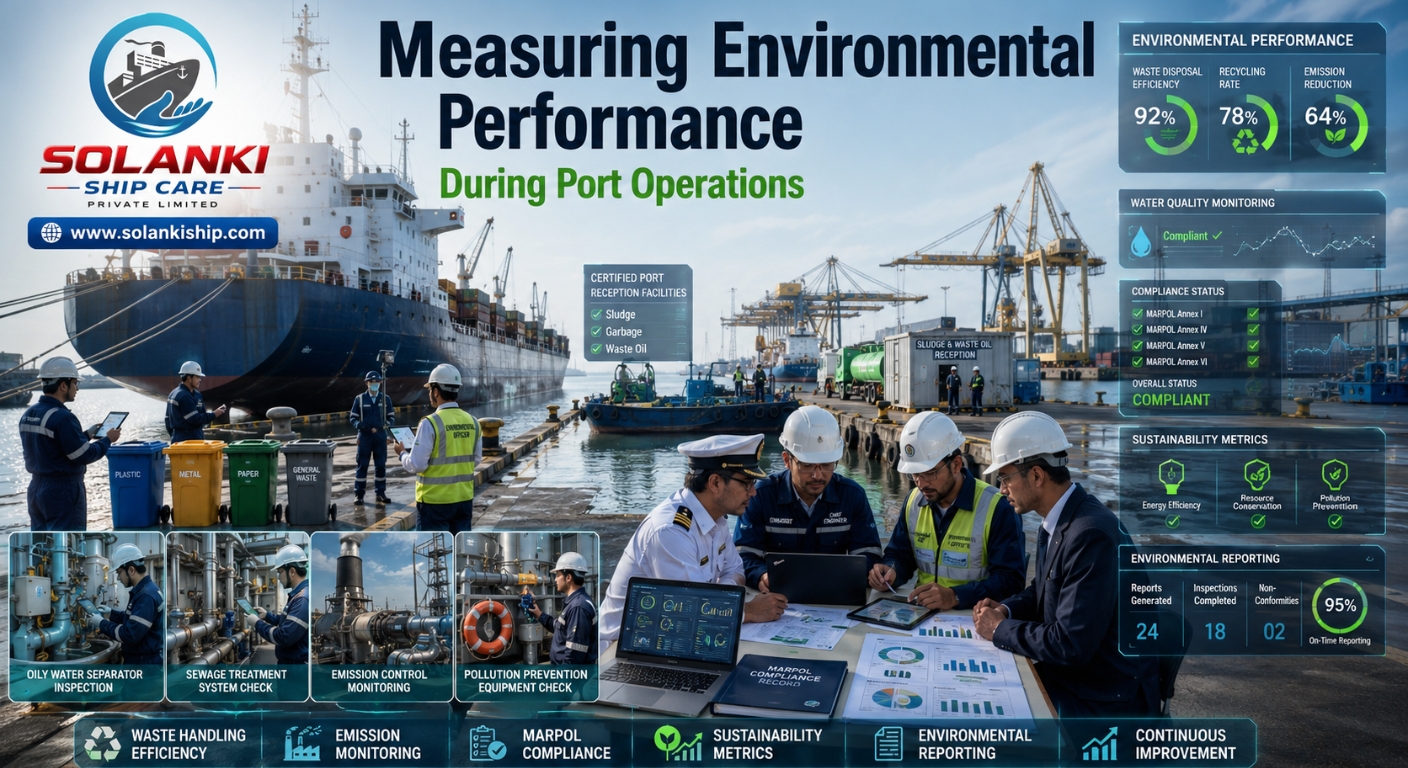
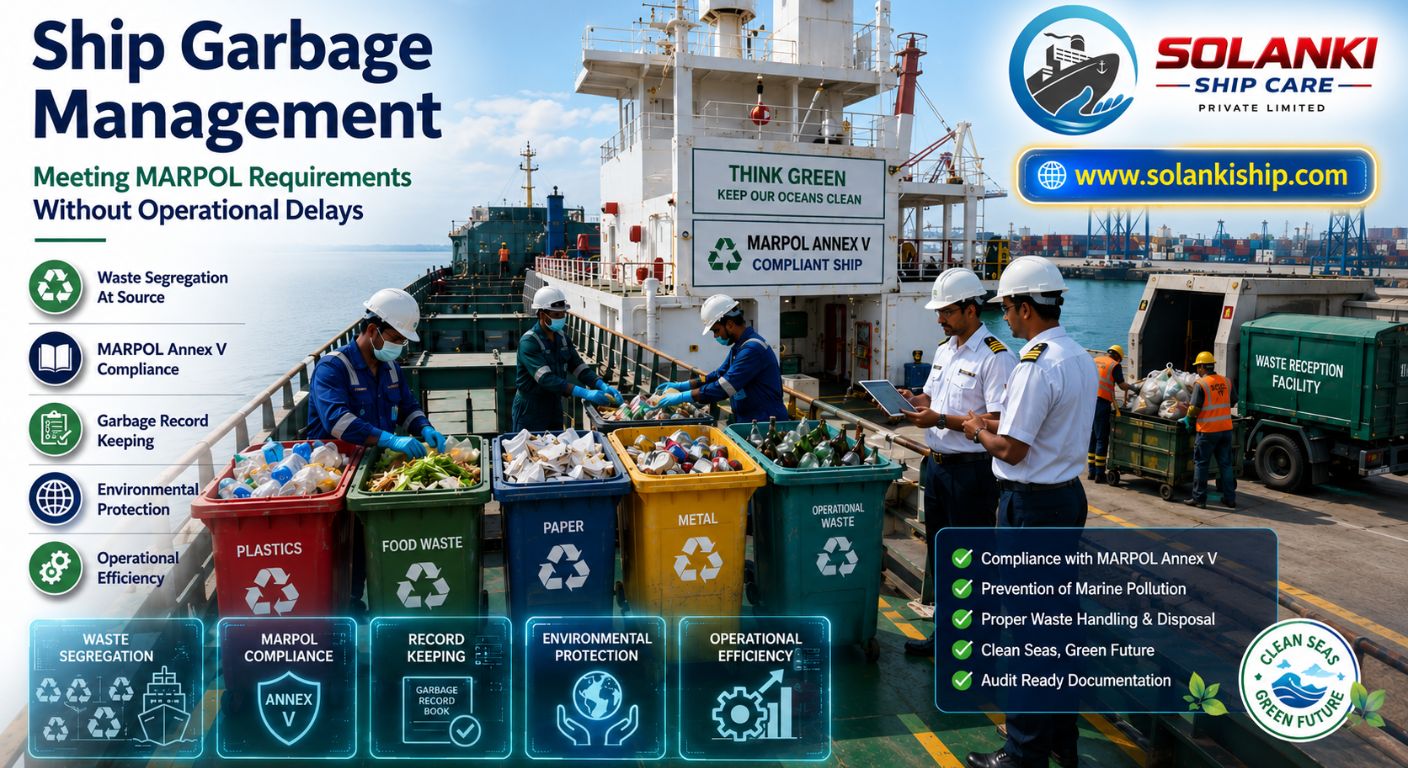
Proper waste segregation helps ships
manage garbage safely and comply with MARPOL regulations. Waste should be
separated into labeled containers for plastics, paper, glass, metals, and food
waste. Crew members must follow proper handling and disposal procedures, store
waste securely, and use authorized port reception facilities for disposal.
These practices support compliance, environmental protection, and smooth port
inspections.
3. DOCUMENTATION
AND COMPLIANCE REQUIREMENTS
Accurate documentation is essential
for MARPOL Annex V compliance. Key records include the Garbage Management Plan,
Garbage Record Book, disposal receipts, crew training records, and inspection
reports.
Maintaining accurate records helps
vessels pass audits and inspections while avoiding fines, delays, and
compliance issues.
4. PREVENTING
OPERATIONAL DELAYS THROUGH EFFECTIVE GARBAGE MANAGEMENT
Poor garbage management can cause
delays, fines, and inspection issues. A proper garbage management system helps
vessels stay compliant, improve onboard safety and hygiene, speed up port
clearance, and avoid operational disruptions. It also supports environmental
responsibility and enhances a company's reputation. By managing ship-generated
garbage effectively, operators can reduce risks and maintain smooth vessel
operations.
5. HOW SOLANKI
SHIP CARE SUPPORTS COMPLIANT GARBAGE REMOVAL
Solanki Ship Care provides
professional Ship Garbage Removal Services to help vessels comply with MARPOL
Annex V requirements. Their services include garbage collection, disposal
coordination, and compliance documentation support, ensuring timely and
environmentally responsible waste handling during port calls.
By partnering with Solanki Ship
Care, vessel operators can simplify waste management, maintain compliance, and
support smooth port operations.
CONCLUSION
Ship Garbage Management is essential
for protecting marine ecosystems, maintaining regulatory compliance, and
ensuring efficient vessel operations. MARPOL Annex V provides a clear framework
for managing ship-generated waste, and compliance requires proper segregation,
secure storage, accurate documentation, and responsible disposal practices.
By implementing effective waste
management systems and working with experienced service providers such as
Solanki Ship Care, vessel operators can minimize compliance risks, prevent
operational delays, and contribute to a cleaner marine environment.
Visit Solanki Ship Care
FREQUENTLY ASKED
QUESTIONS (FAQ)
Q1. What is
ship-generated garbage?
Waste from vessel operations,
including plastics, food waste, paper, glass, and metal.
Q2. What is
MARPOL Annex V?
It regulates ship garbage disposal
to prevent marine pollution.
Q3. Why is
garbage segregation important onboard ships?
It improves waste handling and
supports compliance.
Q4. What
documents are required for MARPOL garbage compliance?
A Garbage Management Plan, Garbage
Record Book, and disposal receipts.
Q5. How does
Solanki Ship Care help vessels remain compliant?
By providing garbage removal,
disposal coordination, and compliance support.