
Jul 28, 2026
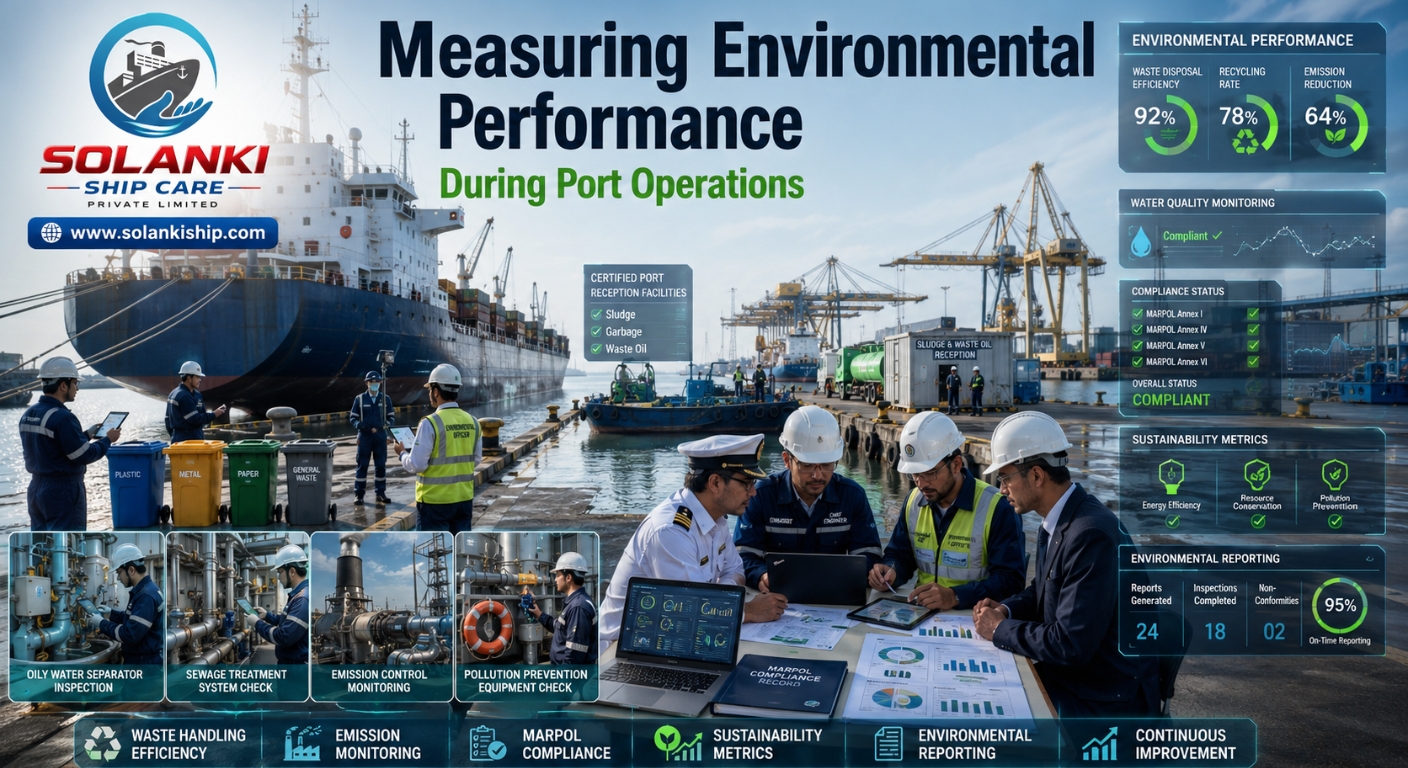
Measuring Environmental Performance During Port Operations
Environmental
performance is a key benchmark in modern shipping. With stricter global port
regulations, vessels must actively monitor and improve sustainability
practices. Measuring environmental performance during port operations helps
ship owners reduce pollution, improve waste management, ensure compliance, and
support global sustainability goals. Solanki Ship Care provides professional
maritime services that promote environmental responsibility while ensuring
efficient and compliant port operations.
Why Measuring
Environmental Performance Matters During Port Operations
Environmental performance extends
beyond emissions at sea. In port, vessels generate waste, manage sludge and
wastewater, and conduct maintenance that affects the environment. Monitoring
key indicators helps shipping companies improve efficiency, ensure compliance,
and strengthen sustainability. Solanki Ship Care provides environmentally
responsible maritime support services that enhance performance while meeting
international standards. learn more at Solanki Ship Care
1. Monitoring
Key Indicators of Environmentally Responsible Operations
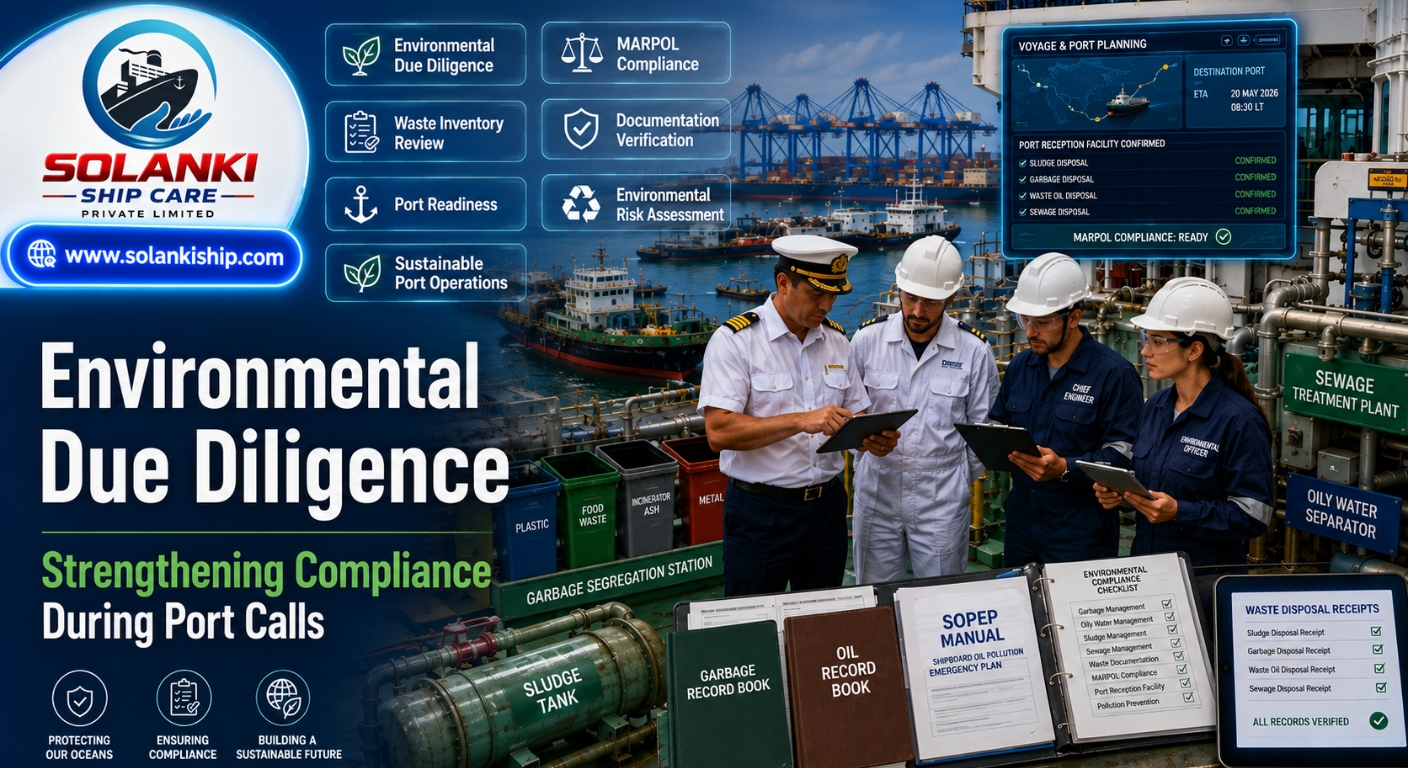
Measuring environmental performance
starts with tracking key indicators during every port visit. These include
waste segregation, sludge disposal, freshwater use, hazardous material
handling, spill prevention, recycling activities, MARPOL compliance, and
environmental reporting. Regular monitoring helps identify improvements, reduce
environmental risks, improve transparency, and strengthen long-term
environmental management.
2. Tracking
Waste Handling Efficiency
Efficient waste management is a key
environmental performance factor in port operations. Monitoring collection,
segregation, storage, transport, and disposal of garbage, sludge, bilge waste,
hazardous materials, and recyclables ensures compliance and reduces
environmental impact. Proper records improve efficiency, reduce errors, support
recycling, and strengthen environmental responsibility.
3. Maintaining
Compliance Records and Environmental Reporting
Accurate documentation is essential
for environmental compliance. Keeping records of waste disposal, MARPOL
certificates, inspections, pollution prevention procedures, and regulatory
reports helps meet port and international requirements. Good records simplify
audits, improve transparency, reduce risks, and support better environmental
management.
4. Supporting
Sustainability Objectives in Modern Shipping
Environmental performance tracking
helps shipping companies meet sustainability goals. By monitoring data,
reducing waste, improving resource use, and minimizing pollution risks, vessels
support cleaner ports and sustainable shipping. These efforts also align with
ESG goals and long-term environmental standards.
5. How Solanki
Ship Care Helps Improve Environmental Performance
Solanki Ship Care offers complete
maritime environmental support to improve vessel performance during port calls.
Our team assists with waste handling, sludge removal, garbage disposal, MARPOL
documentation, and environmental reporting. We help ship owners and operators
maintain compliance, reduce environmental risks, and follow sustainable
maritime practices.
Conclusion
Measuring environmental performance
during port operations is essential for achieving sustainable shipping,
regulatory compliance, and operational excellence. By monitoring key
environmental indicators, improving waste handling efficiency, maintaining accurate
compliance records, and supporting long-term sustainability objectives,
shipping companies can reduce environmental impact while enhancing operational
reliability. Solanki Ship Care delivers professional maritime environmental
support services that help vessels improve environmental performance, maintain
compliance, and contribute to responsible shipping practices.
Visit Solanki Ship Care
to learn more about our comprehensive environmental support and maritime
services.
Frequently Asked
Questions (FAQ)
Q1. Why is measuring environmental
performance important during port operations?
It reduces environmental impact, improves compliance, and supports sustainable
shipping.
Q2. What are the key environmental
performance indicators for vessels?
Waste management, MARPOL compliance, pollution prevention, recycling, sludge
disposal, hazardous waste handling, and reporting.
Q3. Why is waste handling efficiency
important in shipping?
It reduces pollution, ensures compliance, and improves sustainability.
Q4. How do compliance records
support environmental performance?
They prove compliance, simplify inspections, and improve transparency and
environmental management.
Q5. Why choose Solanki Ship Care for
environmental support services?
We provide waste handling, MARPOL documentation, and environmental reporting to
improve port operation performance.