
Jul 25, 2026
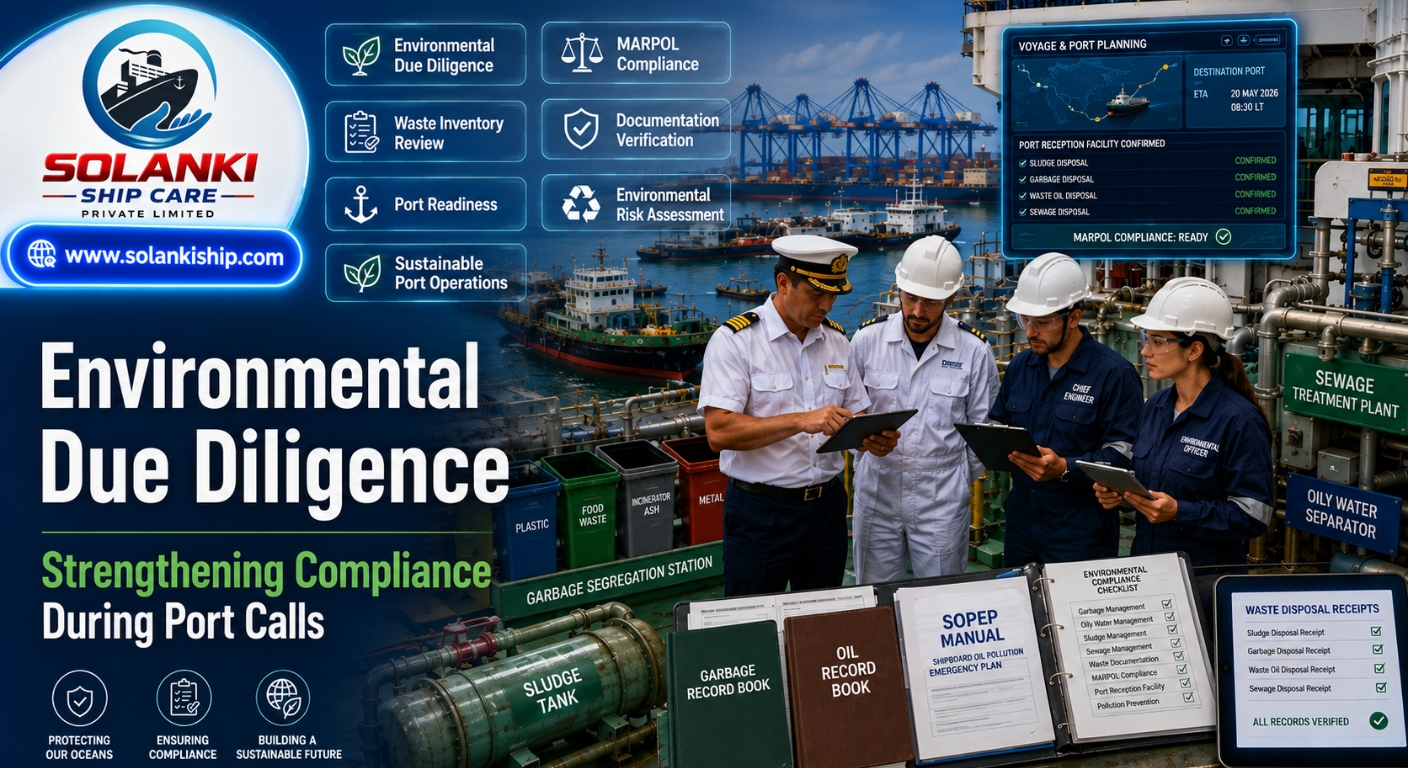
Environmental Due Diligence: Strengthening Compliance During Port Calls
Environmental
compliance is a key focus in modern maritime operations due to stricter
regulations and rigorous Port State Control inspections, making advance
preparation essential to avoid documentation errors, delays, and crew stress;
environmental due diligence helps vessels proactively manage waste, maintain
accurate records, and ensure compliance before arrival, reducing inspection
risks and supporting sustainable operations, while Solanki Ship Care assists
vessels across Indian ports with waste coordination, documentation, and
inspection readiness to ensure smooth and compliant operations.
Why
Environmental Due Diligence Matters
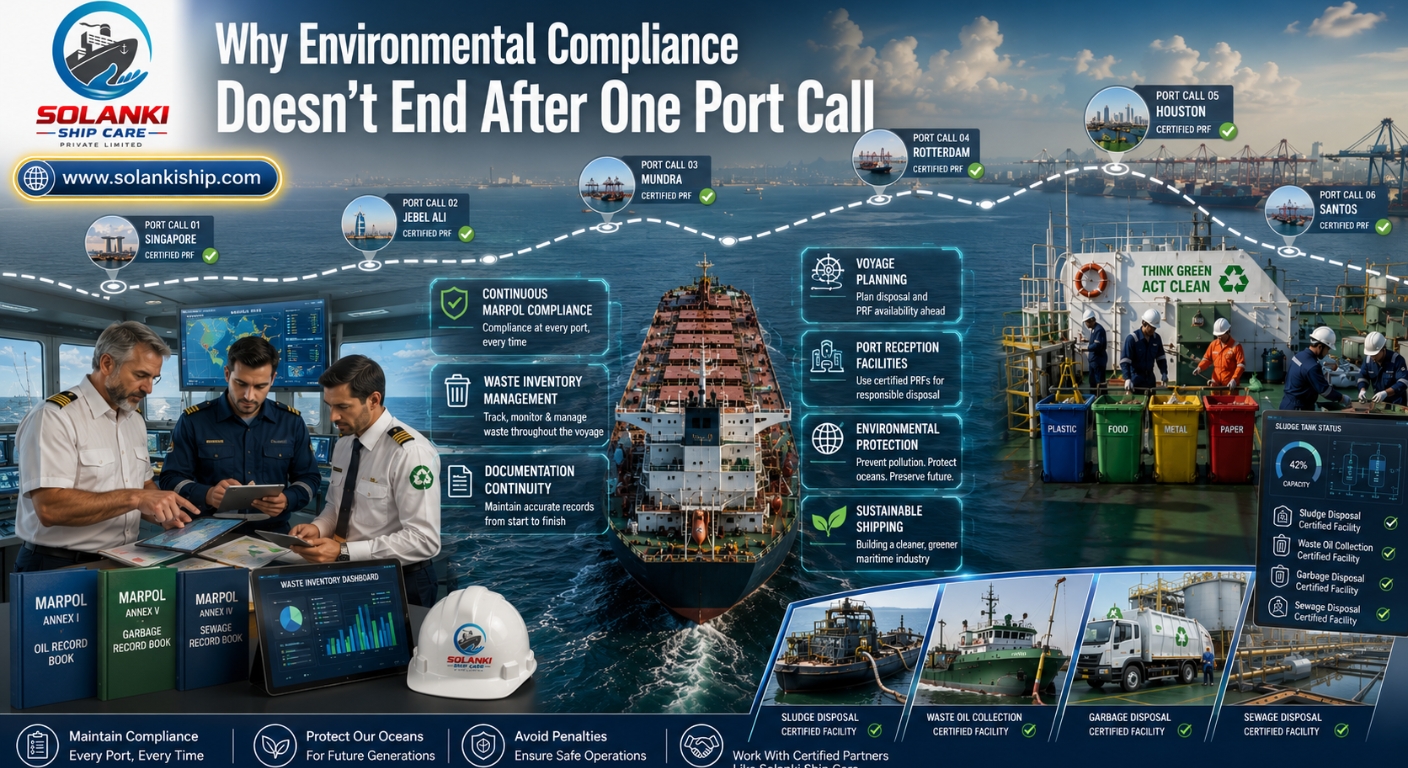
Preparing for environmental
compliance before reaching port allows the crew to thoroughly review
requirements, confirm waste disposal arrangements, and ensure that all
documentation is complete and accurate, and since each port may follow
different procedures and regulatory expectations, early preparation helps
eliminate confusion and prevents delays during port operations while also
enabling vessel operators to identify potential compliance gaps in advance,
addressing these issues before inspection significantly reduces the likelihood
of deficiencies and ensures a smoother inspection process. Learn more at Solanki Ship Care.
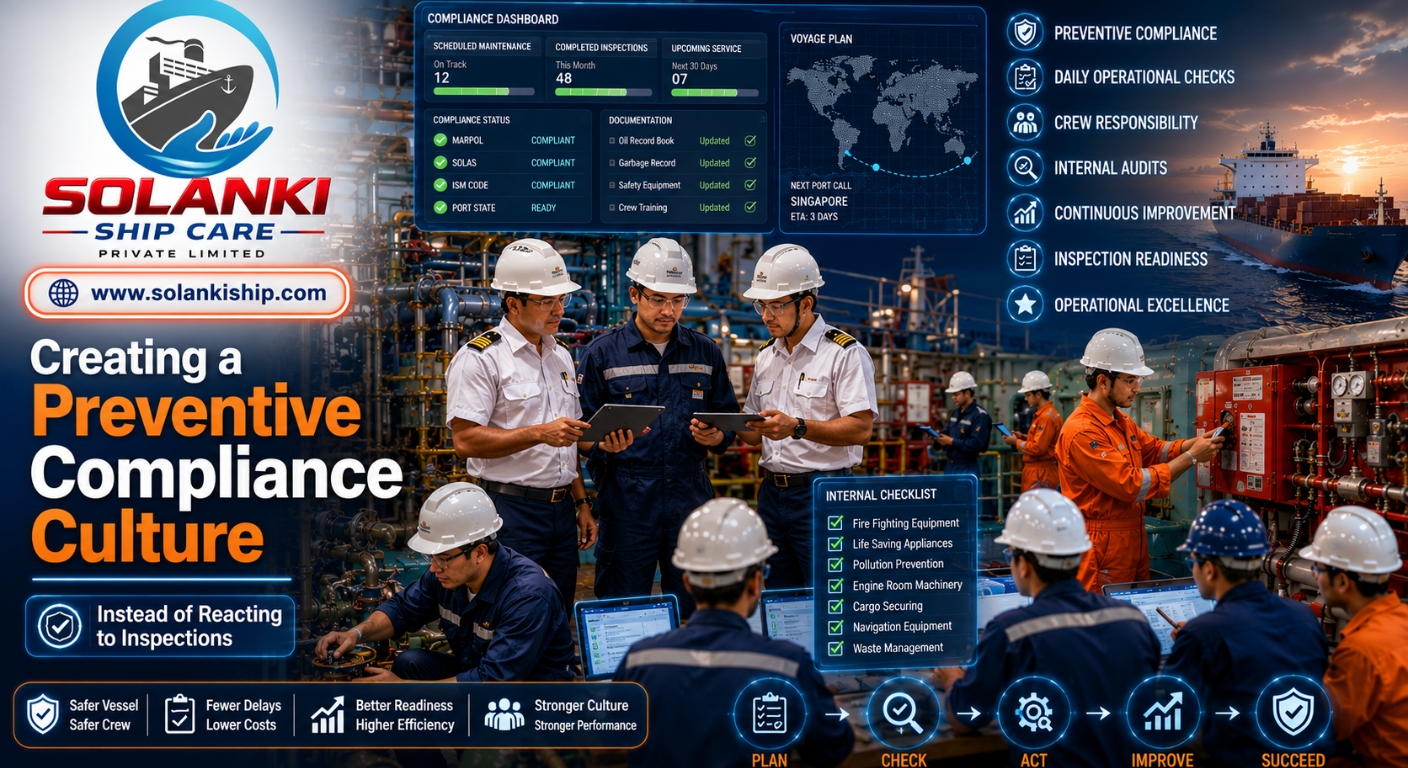
1. Daily
Operational Practices
Routine operational activities play
a crucial role in maintaining long-term compliance. Regular equipment checks,
proper waste segregation, and timely updates to record books help prevent small
issues from developing into major problems. Consistency in these daily
practices ensures that the vessel remains prepared for inspections at all
times.
2. Crew Awareness
Crew members are at the heart of
environmental compliance. When they are properly trained and fully aware of
environmental procedures and responsibilities, they are better equipped to
carry out their duties effectively. This awareness improves teamwork, reduces
errors, and strengthens the vessel’s overall compliance performance.
3. Regular
Internal Checks
Conducting routine internal
inspections allows vessels to identify and address potential issues before they
are discovered during official inspections. Reviewing records, checking
equipment, and assessing environmental systems on a regular basis improves
inspection readiness and ensures that compliance standards are consistently
met.
4. Avoiding
Last-Minute Pressure
Maintaining continuous compliance eliminates
the need for rushed preparation before inspections. This reduces stress for the
crew and allows for a more organized and confident approach during inspections.
As a result, vessels experience fewer deficiencies and smoother port
operations.
5. Solanki Ship
Care Support
Solanki Ship Care provides
comprehensive support to help vessels maintain environmental compliance across
Indian ports. Their services include documentation assistance, MARPOL
compliance support, waste disposal coordination, inspection readiness services,
and overall marine operational support.
By offering reliable and
professional assistance, Solanki Ship Care helps vessels remain compliant,
efficient, and fully prepared for inspections at all times.
Conclusion
Environmental due diligence is
essential for ensuring safe, efficient, and compliant maritime operations. By
focusing on proper planning, maintaining accurate records, and adopting
consistent daily compliance practices, vessels can significantly reduce risks
and improve their overall performance. With the support of Solanki Ship Care,
shipowners can strengthen their environmental compliance strategies and ensure
smooth and efficient port operations across Indian ports. visit at Solanki Ship Care.
Frequently Asked
Questions (FAQ)
Q1. What is environmental due
diligence in shipping?
It is preparing vessels for environmental compliance before port arrival by
reviewing documentation and waste management practices.
Q2. Why is planning important before
port arrival?
Planning helps avoid compliance issues and ensures smooth port operations.
Q3. What records should vessels
maintain?
Vessels should maintain Oil and Garbage Record Books, along with sewage,
sludge, and MARPOL-related records.
Q4. How does preventive compliance
help?
It helps identify and fix issues early, reducing inspection risks.
Q5. How does Solanki Ship Care help?
Solanki Ship Care provides compliance support, documentation assistance, waste
coordination, and marine services across Indian ports.