
Jul 17, 2026
Why Environmental Compliance Doesn't End After One Port Call
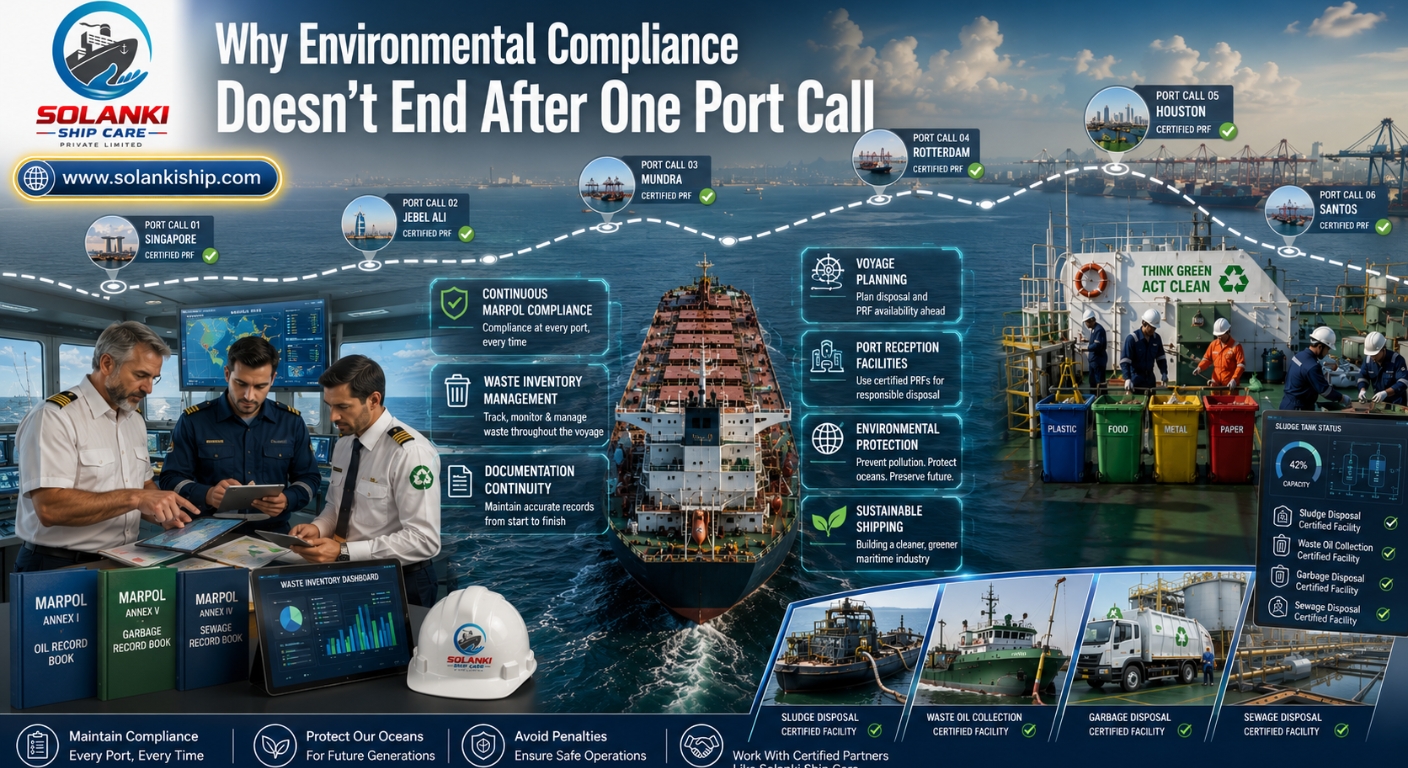
Environmental compliance is a
continuous responsibility throughout every voyage, not just during a single
port visit. Solanki Ship Care helps vessels maintain MARPOL compliance through
proper waste management, documentation continuity, and operational support
across major and minor Indian ports.
Understanding
Continuous Environmental Compliance in Maritime Operations
Environmental compliance is not
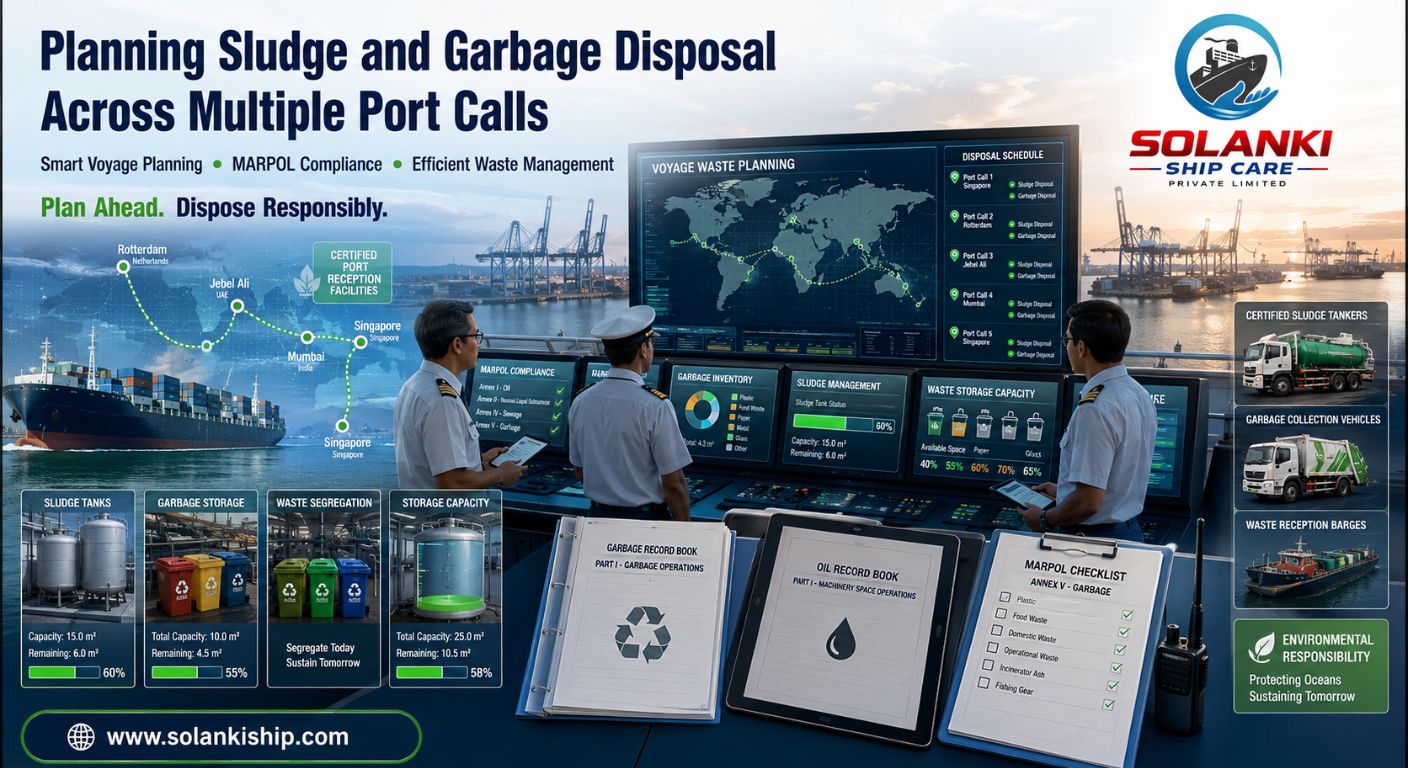
completed once a vessel disposes of waste at a port. Throughout a voyage, ships
continue generating sludge, garbage, sewage, and oily waste that must be
managed under MARPOL regulations. Vessels must maintain proper records, monitor
waste, and follow compliant disposal procedures at every port. Continuous
compliance protects marine ecosystems, prevents violations, and ensures smooth
operations. With support from Solanki Ship Care, shipowners can maintain
compliance from departure to arrival. learn more at Solanki Ship Care.
1. Environmental
Compliance Is a Continuous Voyage Responsibility
Many shipping professionals assume
environmental compliance ends after waste is discharged at a port, but it
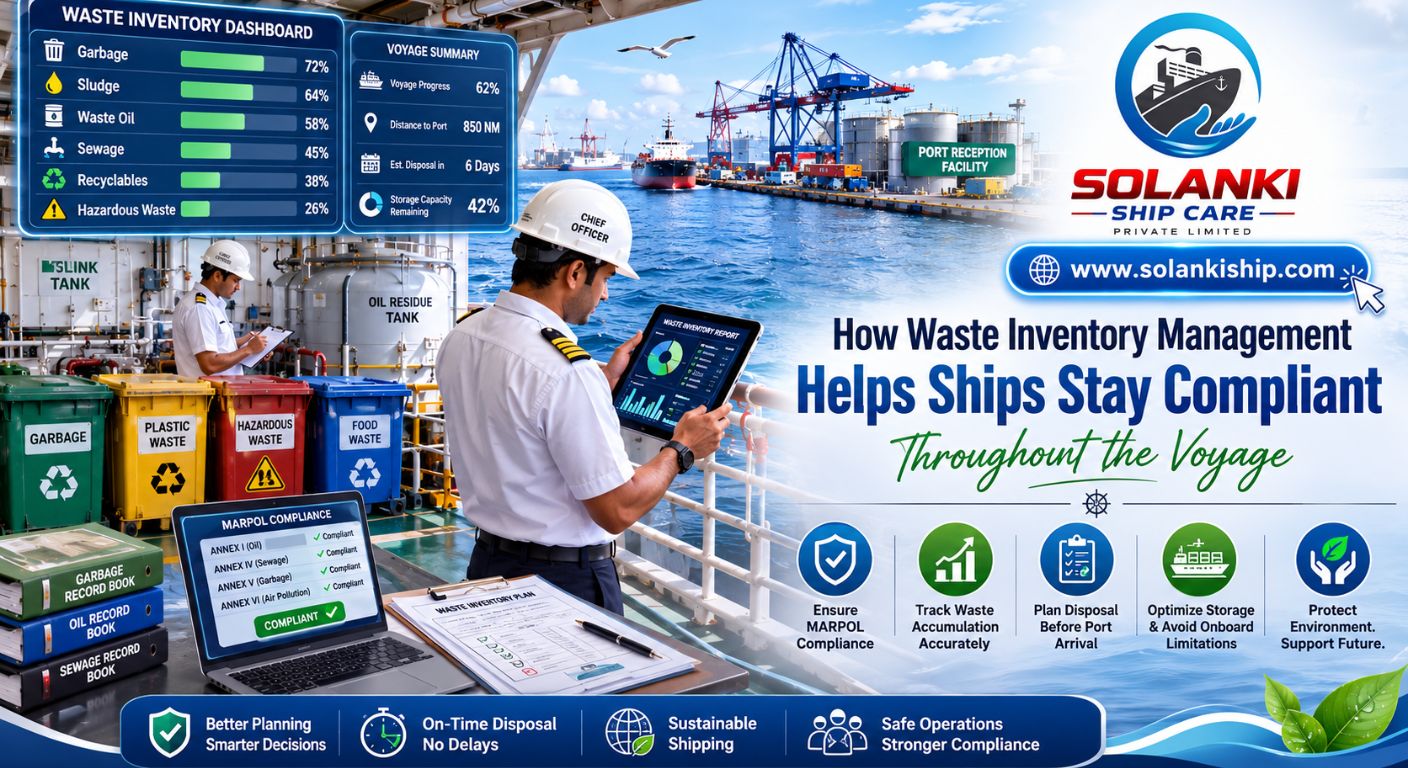
continues throughout the voyage. Ships must monitor waste generation, segregate
waste streams, operate pollution prevention equipment properly, and follow
MARPOL requirements. Continuous monitoring helps reduce environmental risks and
keeps vessels ready for inspections at every port.
2. Managing
Ship-Generated Waste Between Port Calls
Even after leaving a port, vessels
continue producing waste daily. Sludge builds up during engine operations,
garbage is generated by the crew, and oily residues must be stored safely until
disposal. Proper onboard management includes segregation, secure storage,
equipment upkeep, and disposal planning. Efficient handling between ports helps
prevent storage issues, reduces risks, and ensures readiness for compliant
disposal at the next port.
3. Maintaining
Documentation Continuity Throughout the Voyage
Accurate documentation is essential
for environmental compliance. Garbage Record Books, Oil Record Books, waste
transfer receipts, MARPOL certificates, and disposal records must remain
complete and consistent throughout the voyage. Missing or inaccurate records
can lead to inspections, delays, or penalties. Continuous documentation ensures
transparency and demonstrates a vessel's commitment to environmental
responsibility.
4. Operational
Planning for International Voyages
Effective environmental compliance
starts with proper voyage planning. Before sailing, operators should assess
waste generation, storage capacity, port calls, reception facilities, and
regulations. Good planning ensures timely disposal, adequate storage, and smooth
compliance throughout the voyage, helping avoid delays and operational issues.
5. How Solanki
Ship Care Supports Ongoing Environmental Compliance
Solanki Ship Care provides reliable
environmental compliance services beyond a single port call. The company
supports vessels with waste disposal coordination, sludge removal, garbage
disposal, MARPOL-compliant documentation, and waste management across Indian
ports. Experienced professionals help shipowners and operators maintain
continuous compliance while minimizing disruptions, ensuring vessels remain
compliant throughout their voyage.
Conclusion
Environmental compliance is an
ongoing responsibility throughout every voyage. Proper waste management,
accurate documentation, effective planning, and timely disposal are essential
for meeting MARPOL requirements and protecting the marine environment. By
maintaining compliance between ports, shipowners can reduce risks, avoid
penalties, and ensure smooth operations. Solanki Ship Care supports this
process with reliable environmental compliance services across Indian ports.
Visit Solanki
Ship Care.
Frequently Asked
Questions (FAQ)
Q1. Why doesn't environmental
compliance end after one port call?
Ships keep generating waste and must stay MARPOL compliant throughout the
voyage.
Q2. What waste must be managed
between ports?
Sludge, garbage, oily residues, sewage, and other onboard waste.
Q3. Why is documentation continuity
important?
It proves compliance and helps avoid delays or penalties.
Q4. How does voyage planning improve
environmental compliance?
It ensures proper waste storage and timely disposal.
Q5. How does Solanki Ship Care
support continuous compliance?
By managing waste disposal, documentation, and compliance support across ports.