

Jul 15, 2026
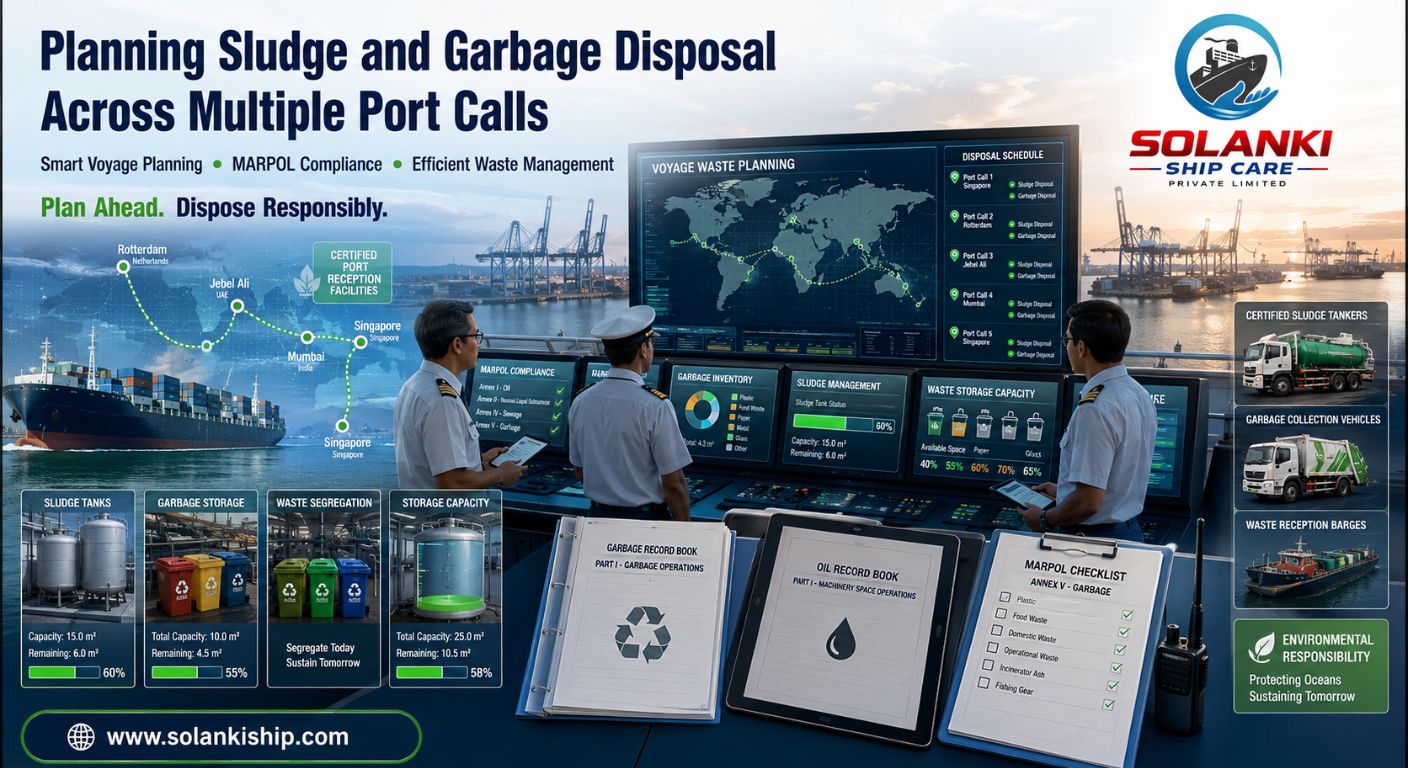
Planning Sludge and Garbage Disposal Across Multiple Port Calls
Proper sludge and garbage disposal
planning is essential for long voyages. It ensures MARPOL compliance, prevents
storage issues, avoids delays, and supports smooth operations. Solanki Ship Care
offers reliable waste management services across major and minor Indian
ports.
Understanding
the Importance of Waste Disposal Planning for Long Voyages
Long-distance voyages generate
significant amounts of sludge, oily waste, garbage, and recyclable materials.
With limited onboard storage, vessels must plan waste discharge during
scheduled port calls. A well-organized disposal strategy ensures regulatory
compliance, prevents storage overflow, reduces disruptions, and supports
efficient operations. Solanki Ship Care assists ship operators with timely
waste reception services for smooth voyage planning. learn more at Solanki Ship Care
1. Developing an
Effective Disposal Strategy for Long Voyages
Waste management planning should
begin before the vessel departs. Ship operators assess voyage duration,
expected waste generation, onboard storage capacity, crew size, and scheduled
port calls. This helps identify suitable ports for sludge and garbage disposal
while ensuring adequate storage throughout the voyage. A proactive approach
reduces risks and supports smooth sailing schedules.
2. Choosing
Suitable Ports for Sludge and Garbage Discharge
Not every port offers the same waste
reception capabilities. Before selecting a disposal port, ship operators
consider factors such as availability of MARPOL-approved facilities, disposal
capacity, turnaround time, documentation requirements, costs, vessel schedule,
and local regulations. Choosing ports with reliable infrastructure reduces
delays, simplifies documentation, and ensures compliant disposal.
3. Regulatory
Considerations for MARPOL-Compliant Waste Management
International maritime regulations
require vessels to manage waste responsibly throughout every voyage. Compliance
with MARPOL Annex I for oily waste and Annex V for garbage includes maintaining
accurate records, proper waste segregation, and obtaining disposal receipts
from authorized facilities. Failure to comply may lead to inspections, delays,
penalties, or detention. Proper planning ensures all disposal activities meet
regulatory requirements and support environmentally responsible operations.
4. Managing
Storage Limitations Between Port Calls
Onboard sludge tanks and garbage
storage areas have limited capacity, especially during long voyages or
infrequent port calls. Delays, extended operations, or larger crews can
increase waste buildup. Effective monitoring helps track storage levels,
optimize segregation, prevent overflow, and schedule timely disposal, ensuring
safe and compliant operations.
5. How Solanki
Ship Care Supports Voyage Waste Disposal Planning
Solanki Ship Care provides reliable
sludge removal and garbage disposal services across Indian ports. The company
ensures MARPOL-compliant waste reception, arranges timely collections, assists
with documentation, and issues disposal certificates. With efficient
coordination and professional support, Solanki Ship Care helps vessels maintain
compliance and avoid delays during multiple port calls.
Conclusion
Planning sludge and garbage disposal
across multiple port calls is essential for maintaining regulatory compliance,
protecting the marine environment, and ensuring uninterrupted vessel
operations. A well-planned waste disposal strategy helps ship operators manage
storage limitations, select suitable ports, reduce operational risks, and
comply with MARPOL requirements throughout long voyages. Solanki Ship Care
delivers dependable sludge removal and garbage disposal services across Indian
ports, helping vessels complete every voyage safely, efficiently, and in full
environmental compliance. visit solanki ship care.
Frequently Asked Questions (FAQ)
Q1. Why is sludge and garbage
disposal planning important for long voyages?
It prevents storage overflow, ensures compliance, and avoids delays.
Q2. What factors should be
considered when selecting a port for waste disposal?
Check MARPOL facilities, capacity, costs, turnaround time, and regulations.
Q3. Which MARPOL regulations apply
to sludge and garbage disposal?
Annex I covers sludge; Annex V covers garbage.
Q4. How does Solanki Ship Care
assist with voyage waste management?
They provide waste removal, documentation, and port coordination services.