
Jul 13, 2026
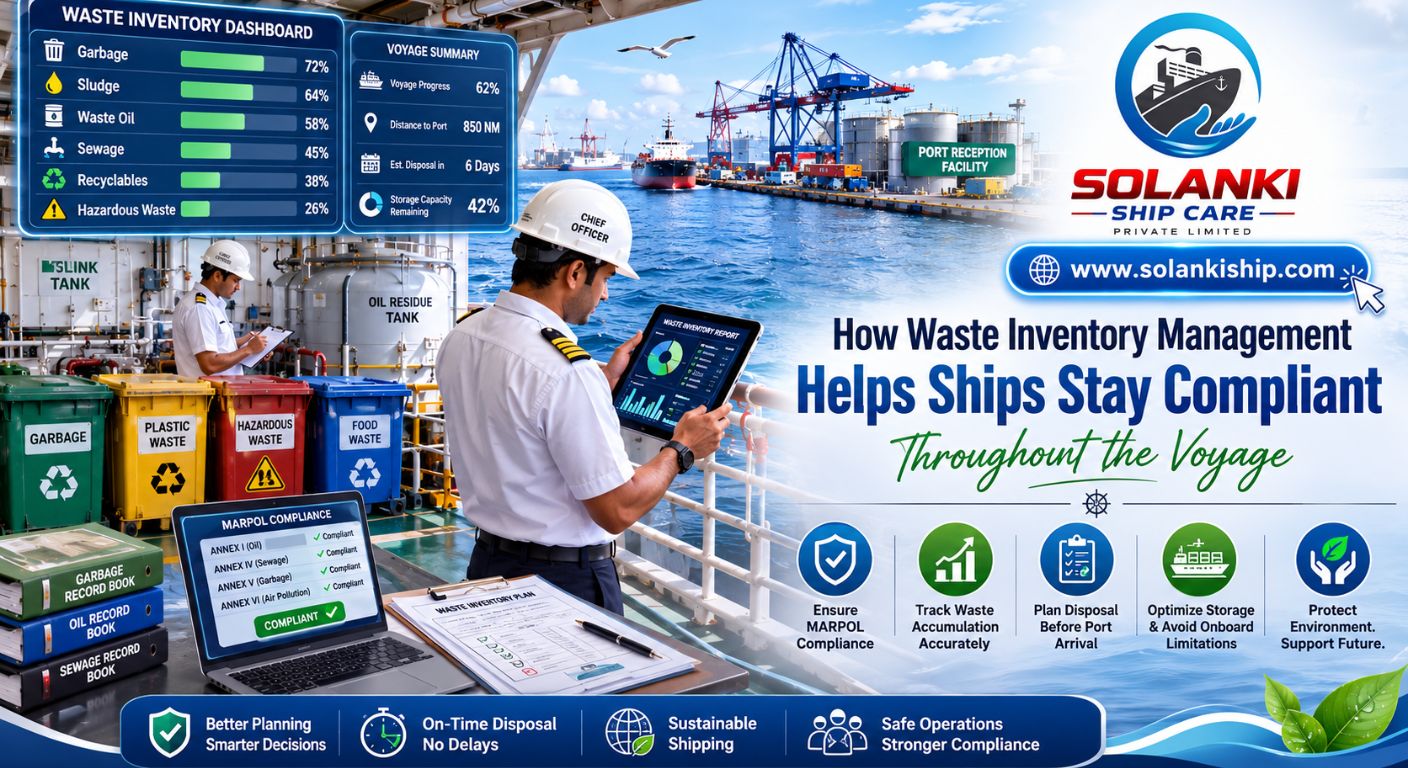
How Waste Inventory Management Helps Ships Stay Compliant Throughout the Voyage
Effective
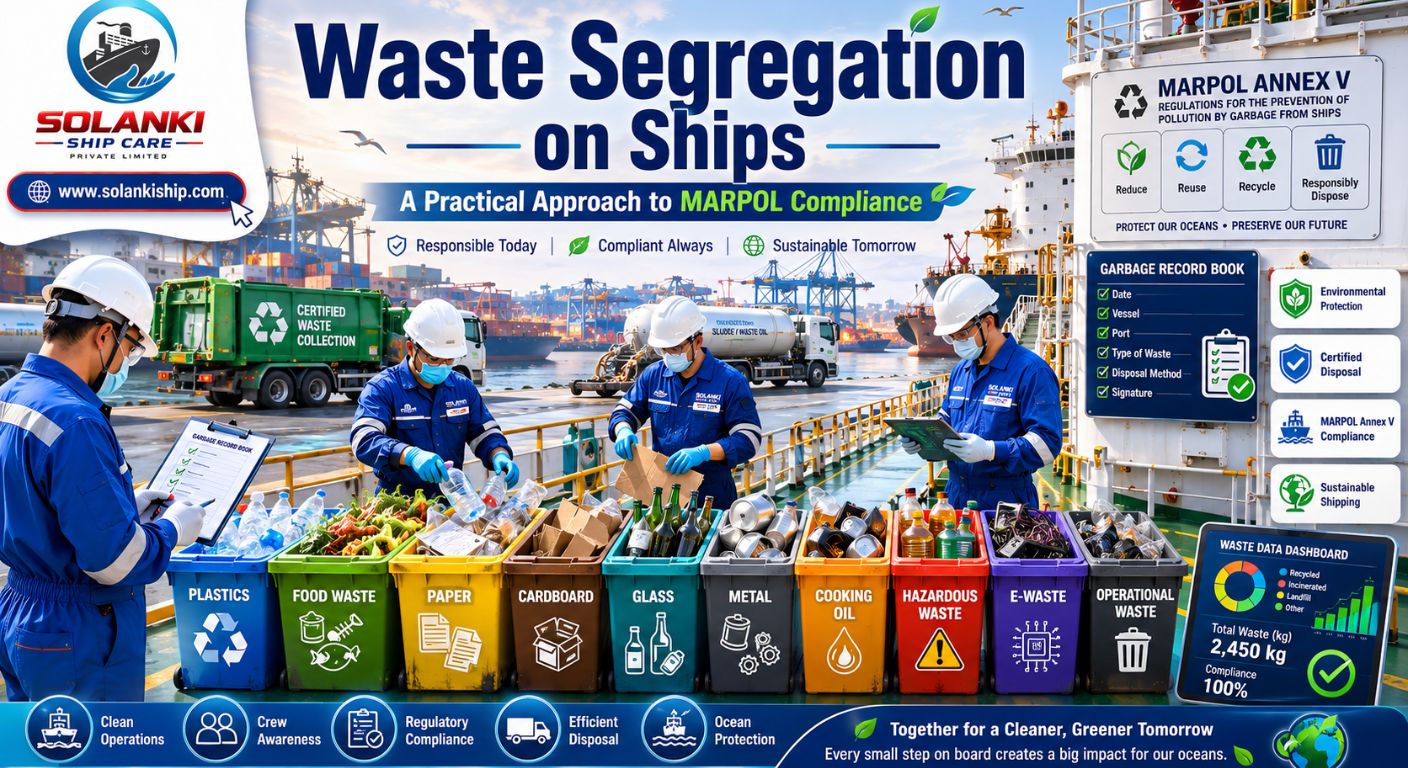
waste management is vital in maritime operations. Ships generate sludge, bilge
water, garbage, sewage, food waste, and hazardous materials. Without planning,
waste builds up quickly, causing storage and compliance issues. Waste inventory
management helps track waste, plan disposal, and ensure smooth port operations.
Solanki Ship Care supports compliance across major and minor Indian ports.
Understanding
the Importance of Waste Inventory Management on Ships
Waste inventory management involves
recording, monitoring, and estimating the waste generated onboard during a
voyage. It helps crews track storage capacity, plan disposal before reaching
port, and stay compliant with MARPOL regulations. Proper planning reduces
risks, prevents overflow, and supports timely, responsible waste disposal.
Learn more at Solanki Ship Care.
1. Tracking
Waste Accumulation Throughout the Voyage
Every voyage generates different
amounts of waste based on vessel size, crew, cargo, and duration. Maintaining a
waste inventory helps track daily waste, monitor storage capacity, and identify
trends.
Tracking includes sludge, bilge
water, garbage, food waste, sewage, and hazardous waste. This ensures timely
decisions before storage limits are reached and supports regulatory compliance.
2. Estimating
Waste Disposal Requirements Before Port Arrival
Estimating waste before port arrival
allows ships to plan disposal services in advance and avoid delays.
It helps in booking certified
services, preparing documentation, coordinating with port authorities, and
reducing turnaround time. This improves efficiency and ensures safe, compliant
disposal.
3. Importance of
Inventory Planning for MARPOL Compliance
A well-maintained waste inventory is
essential for MARPOL compliance. Authorities check waste records, disposal
receipts, and documentation during inspections.
Proper planning supports accurate
record books, compliance with MARPOL Annex I and V, and smooth audits, reducing
the risk of penalties.
4. Avoiding
Onboard Storage Limitations Through Proper Planning
Ships have limited waste storage
space, and poor planning can lead to overflow and safety risks.
Inventory management helps optimize
storage, maintain hygiene, improve safety, and ensure smooth operations by
planning disposal before capacity is reached.
5. How Solanki
Ship Care Supports Planned Waste Disposal
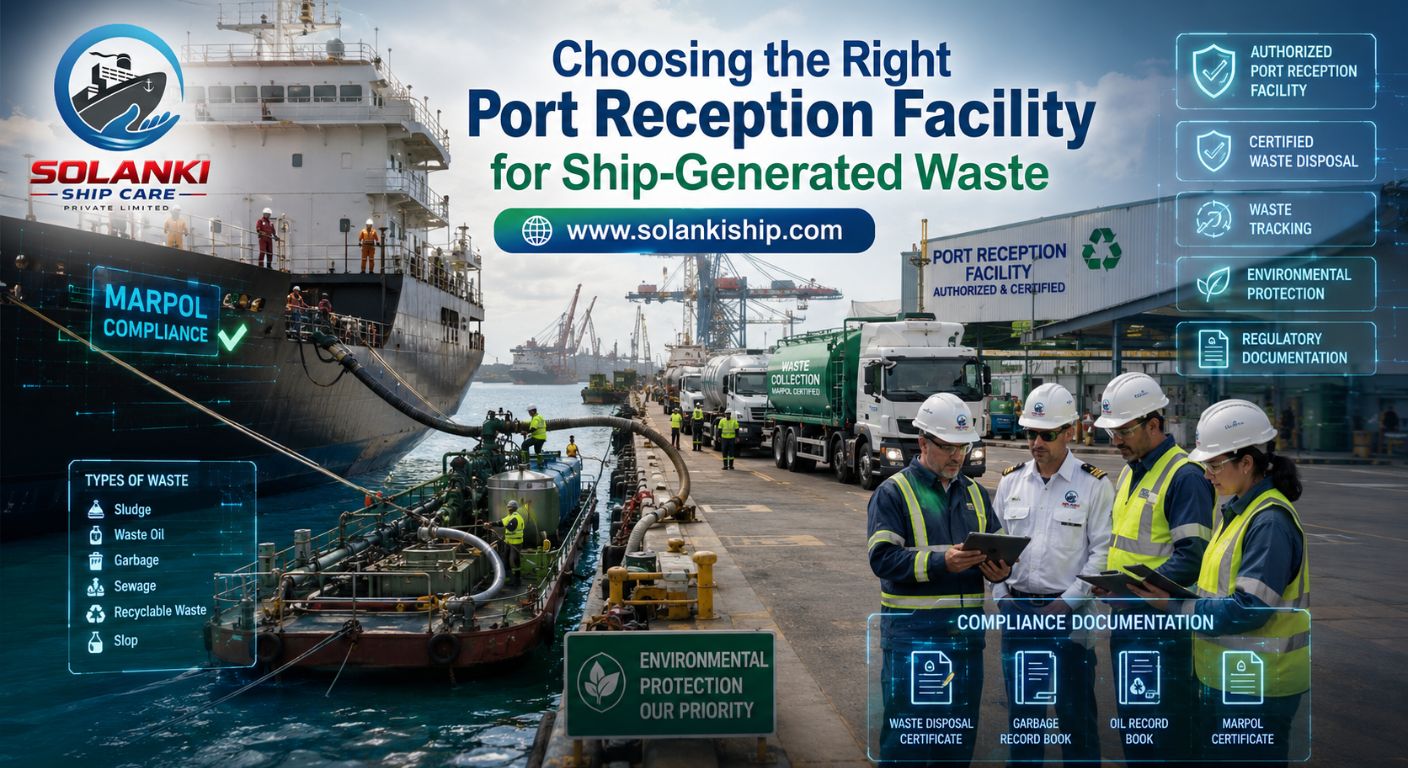
Solanki Ship Care offers reliable
waste disposal services across major Indian ports. Their team helps plan waste
collection based on inventory, ensuring compliance.
Services include sludge removal,
bilge water disposal, garbage collection, hazardous waste handling,
documentation, and coordination with port authorities, helping vessels operate
efficiently and responsibly.
Conclusion
Effective waste inventory management
plays a vital role in ensuring safe, efficient, and environmentally responsible
maritime operations. By tracking waste accumulation, estimating disposal
requirements before port arrival, planning inventory accurately, and managing
onboard storage effectively, vessels can maintain continuous compliance with
MARPOL regulations throughout their voyage. Solanki Ship Care supports shipowners
and operators with professional waste disposal solutions, helping vessels plan
ahead, avoid operational disruptions, and meet environmental standards across
Indian ports.
Visit Solanki Ship Care
for more details.
Frequently Asked
Questions (FAQ)
Q1. What is waste inventory
management on ships?
It involves tracking and planning onboard waste to ensure safe storage and
compliance.
Q2. Why is waste inventory planning
important?
It helps estimate disposal needs, avoid storage issues, and meet MARPOL rules.
Q3. What types of waste are
included?
Sludge, bilge water, garbage, food waste, sewage, and hazardous waste.
Q4. How does it improve port
operations?
It allows advance scheduling of disposal services, reducing delays.
Q5. How does Solanki Ship Care help?
They offer planned waste disposal, documentation, and efficient coordination
across Indian ports.