
Jul 10, 2026
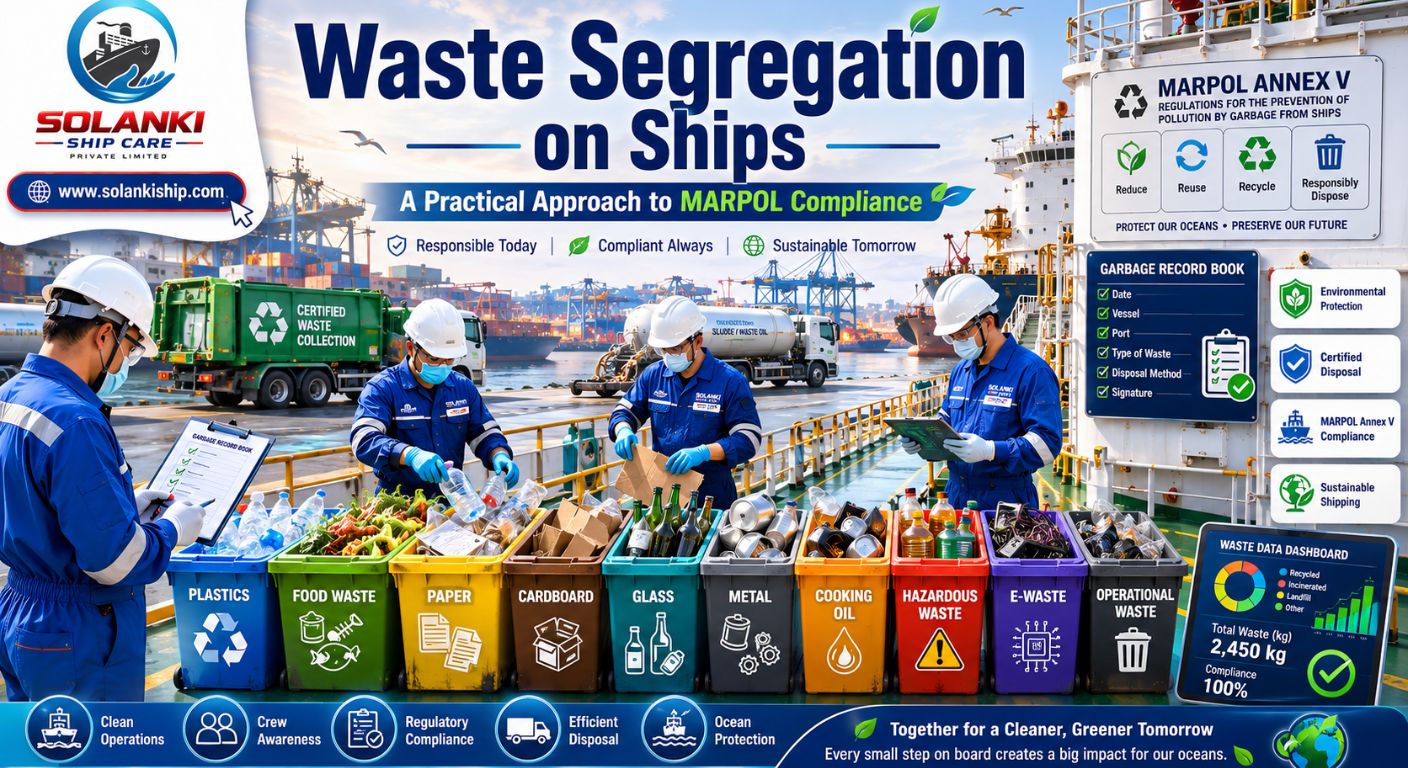
Waste Segregation on Ships: A Practical Approach to MARPOL Compliance
Waste segregation on ships is
essential for preventing pollution and meeting MARPOL regulations. Solanki Ship
Care supports vessels with reliable waste management services across Indian
ports.
Understanding
Waste Segregation and MARPOL Compliance
Waste segregation involves
separating different types of waste before disposal. It helps reduce
contamination, improve recycling, and ensures compliance with MARPOL
guidelines. Learn more at Solanki Ship Care.
1. Categories of
Ship-Generated Waste
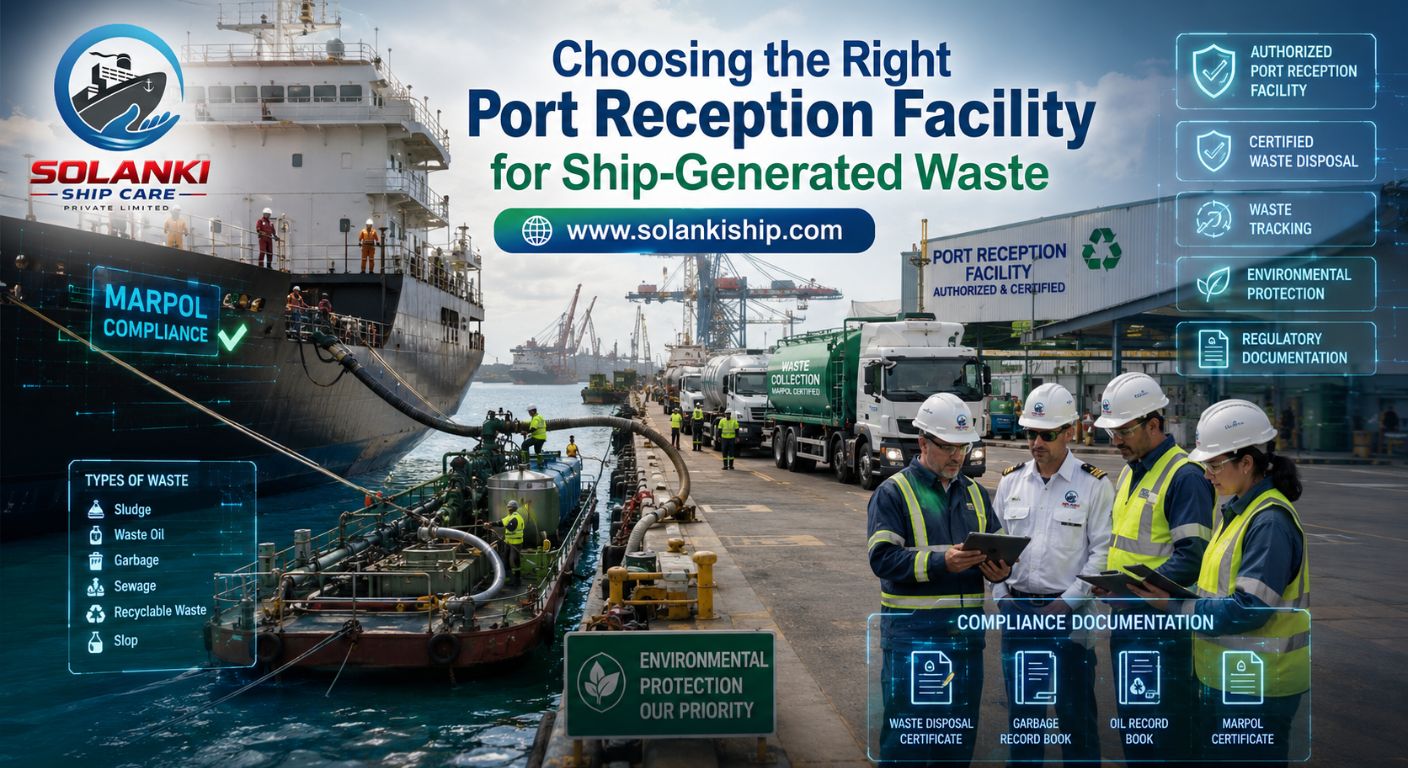
Ships generate a wide range of waste
during daily operations, and each category must be handled carefully to meet
MARPOL regulations. Common types of ship-generated waste include plastics, food
waste, paper and cardboard, glass, metal, cargo residues, operational waste,
oily rags, sludge, waste oil, and sewage. Hazardous waste such as chemicals and
contaminated materials also requires special attention. Proper identification
and segregation of these waste types are essential to prevent contamination,
ensure safe storage, and enable efficient disposal at port reception
facilities.
2. Importance of
Proper Waste Segregation Procedures
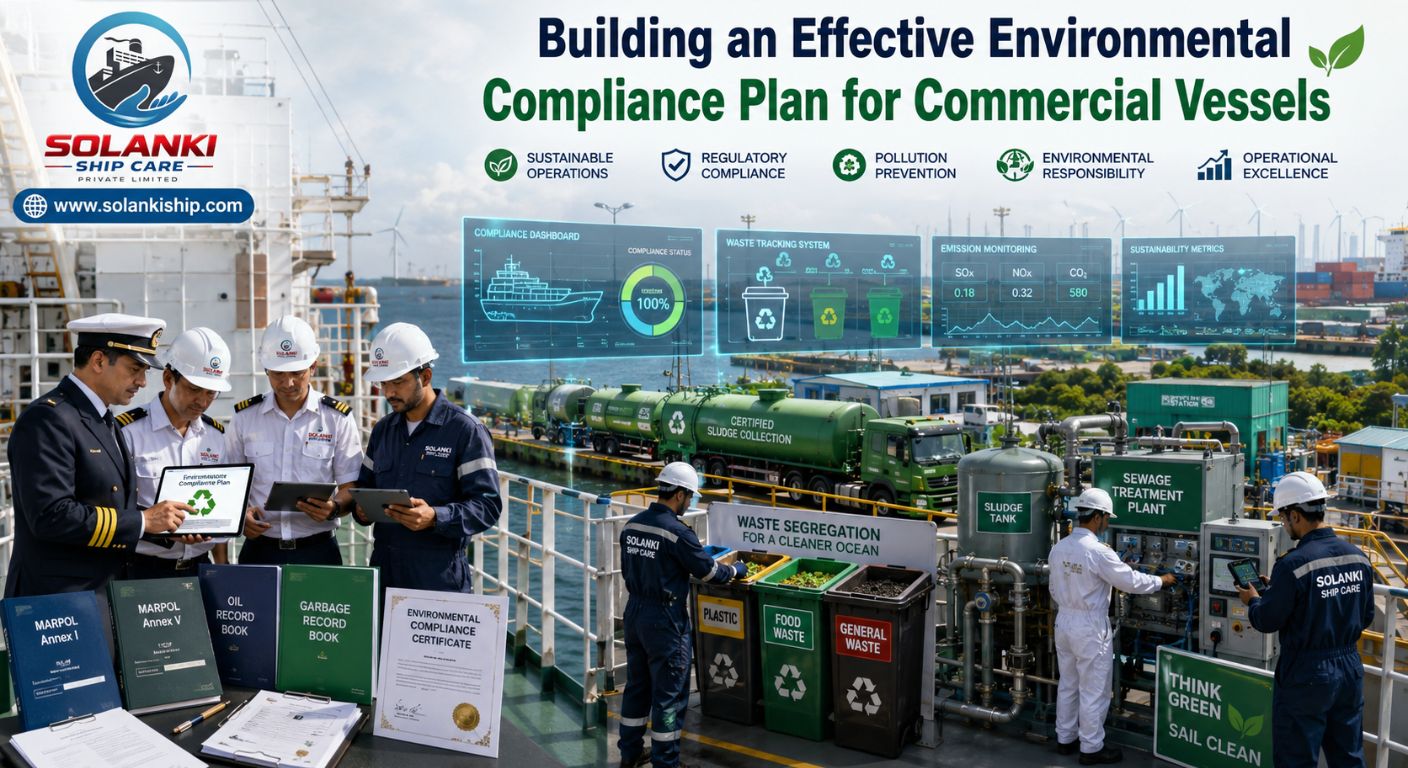
Proper waste segregation plays a
crucial role in maintaining environmental compliance and operational efficiency
onboard. By separating waste at the source, vessels can reduce the risk of
pollution, improve recycling opportunities, and simplify disposal procedures. Effective
segregation also helps in maintaining accurate records in the Garbage Record
Book, which is essential during inspections. Following MARPOL Annex V
guidelines ensures that vessels avoid penalties, delays, and reputational risks
while demonstrating a strong commitment to environmental responsibility.
3. Crew
Responsibilities in Waste Handling
Crew members are directly
responsible for implementing waste segregation practices onboard. They must
ensure that waste is sorted correctly at the point of generation and placed in
designated, clearly labeled containers. Following the vessel’s Garbage
Management Plan is essential, along with maintaining accurate documentation of
all waste handling activities. Crew members should also remain vigilant to
prevent accidental discharge of waste into the sea and report any
irregularities immediately. Regular training and awareness programs help
reinforce proper waste management practices among the crew.
4. Reducing
Environmental Impact Through Responsible Waste Management
Responsible waste management
significantly reduces the environmental footprint of shipping operations. By
properly segregating and disposing of waste, vessels help prevent marine
pollution, protect aquatic ecosystems, and support global sustainability
efforts. Efficient waste handling also minimizes the risk of contamination and
promotes recycling wherever possible. Adhering to environmental regulations not
only safeguards marine life but also enhances the vessel’s operational
reputation and commitment to sustainable maritime practices.
5. How Solanki
Ship Care Supports Compliant Waste Management
Solanki Ship Care provides
comprehensive waste management solutions designed to help vessels meet MARPOL
compliance requirements efficiently. Their services include garbage collection,
sludge removal, waste oil disposal, and coordination with authorized disposal
facilities. They also assist with MARPOL-compliant documentation, ensuring that
all waste handling processes are properly recorded and verified. With reliable
support across major Indian ports, Solanki Ship Care helps shipowners and
operators manage waste responsibly while minimizing operational delays and
environmental impact.
Conclusion
Waste segregation is crucial for
environmental protection and MARPOL compliance. With proper practices and
support from Solanki Ship Care, vessels can manage waste efficiently.
Visit Solanki Ship Care
for more details.
Frequently Asked
Questions (FAQ)
Q1. What is waste segregation on
ships?
Separating different types of waste for safe disposal.
Q2. Why is it important?
It prevents pollution and ensures compliance.
Q3. What types of waste are
generated?
Plastic, food waste, sludge, waste oil, and sewage.
Q4. What are crew responsibilities?
Segregate waste and follow procedures.
Q5. How does Solanki Ship Care help?
Provides waste collection and disposal services.