
Jul 04, 2026
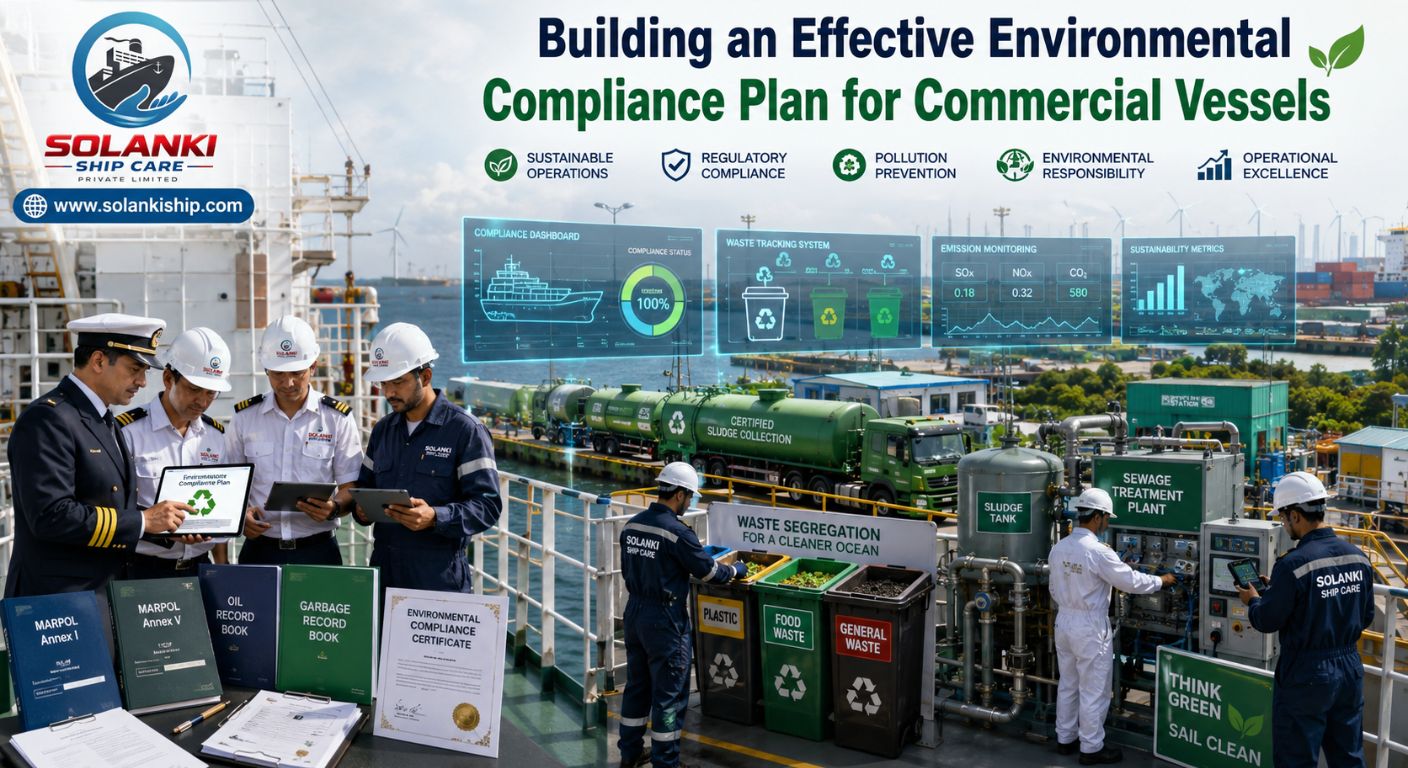
Building an Effective Environmental Compliance Plan for Commercial Vessels
Environmental compliance is
essential in modern shipping. A proper plan helps vessels manage waste, prevent
pollution, follow regulations, and operate efficiently. Solanki Ship Care
provides certified waste disposal and compliance support across major Indian
ports.
Understanding
Environmental Compliance Planning for Commercial Vessels
Environmental compliance planning
involves developing systematic procedures that ensure ships operate in
accordance with international environmental regulations such as MARPOL. A
comprehensive compliance plan includes waste management practices, pollution
prevention measures, documentation procedures, crew responsibilities, and
coordination with certified environmental service providers. Proper planning
minimizes environmental risks, avoids regulatory penalties, and strengthens a
vessel's commitment to sustainable maritime operations. Solanki Ship Care
assists vessels in implementing efficient environmental compliance solutions
that support smooth port operations. learn more at Solanki Ship Care
1. Importance of
Environmental Planning in Shipping
An effective environmental
compliance plan helps commercial vessels identify risks early and manage waste
such as oily residues, sludge, garbage, sewage, and hazardous materials
properly. It ensures compliance with MARPOL regulations, reduces pollution,
avoids fines, and improves operational efficiency while supporting responsible
and sustainable shipping practices.
2. Establishing
Effective Waste Management Procedures Onboard
Waste management is a key part of an
environmental compliance plan. Vessels should have clear procedures for waste
segregation, storage, labeling, collection, and disposal. Different waste types
such as plastics, food waste, sludge, oily residues, sewage, and hazardous
materials must be handled according to regulations. Proper use of onboard
equipment and timely disposal through authorized facilities helps prevent
pollution and ensures MARPOL compliance.
3. Crew
Responsibilities and Environmental Documentation
Successful environmental compliance
relies on a well-trained and responsible crew. Crew members should understand
pollution prevention, waste handling, emergency response, and reporting
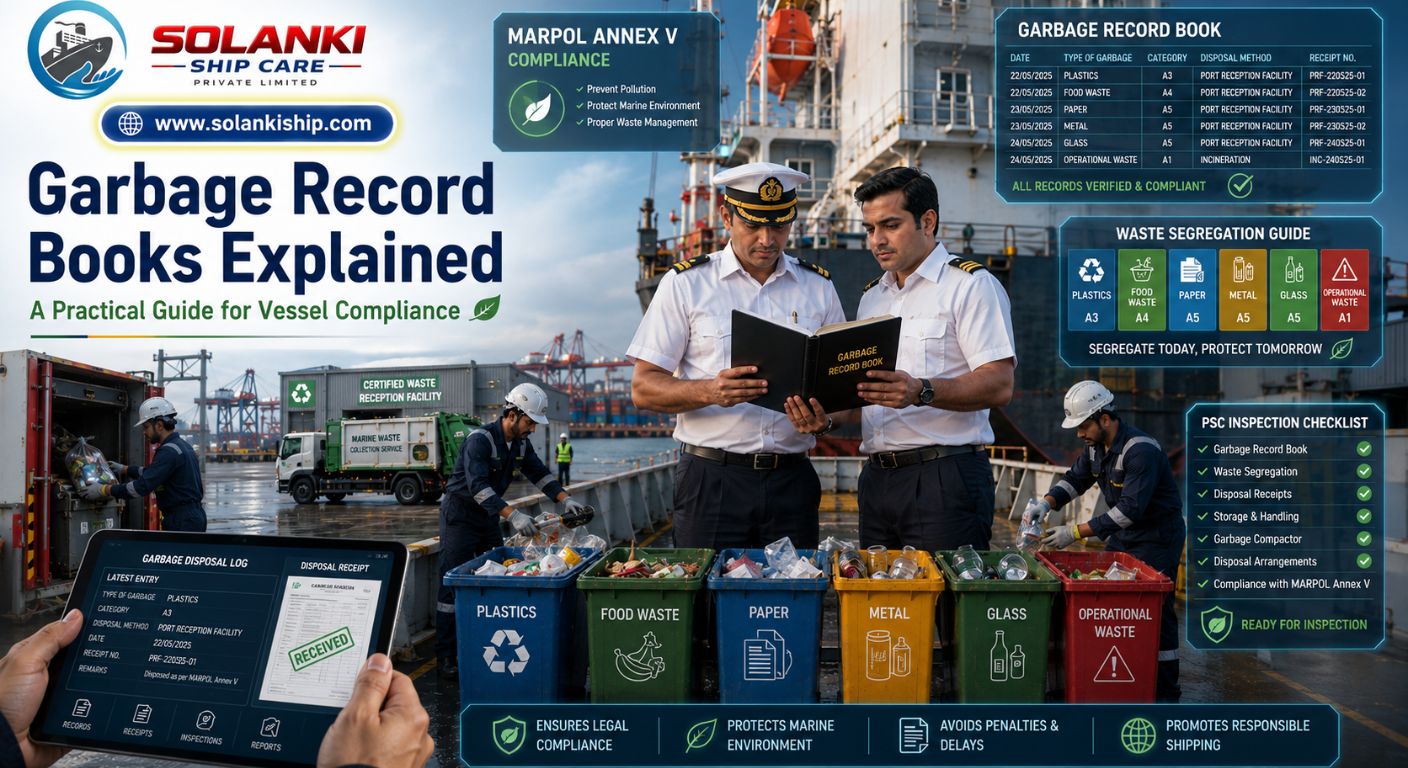
procedures. Officers must maintain accurate records such as the Garbage Record
Book, Oil Record Book, Ballast Water Record Book, and disposal documentation.
Regular training and inspections help ensure compliance and readiness for
audits and PSC inspections.
4. Staying
Compliant with International Maritime Regulations
Commercial vessels operate under
strict international environmental regulations to protect marine ecosystems.
MARPOL conventions set requirements for controlling pollution from oil,
chemicals, sewage, garbage, air emissions, and ballast water. Maintaining
compliance involves proper documentation, regular inspections, and timely waste
disposal through certified facilities. Proactive compliance helps reduce
penalties, delays, and environmental risks while supporting sustainable
shipping.
5. How Solanki
Ship Care Supports Environmental Compliance
Solanki Ship Care provides
environmental compliance services for commercial vessels across major Indian
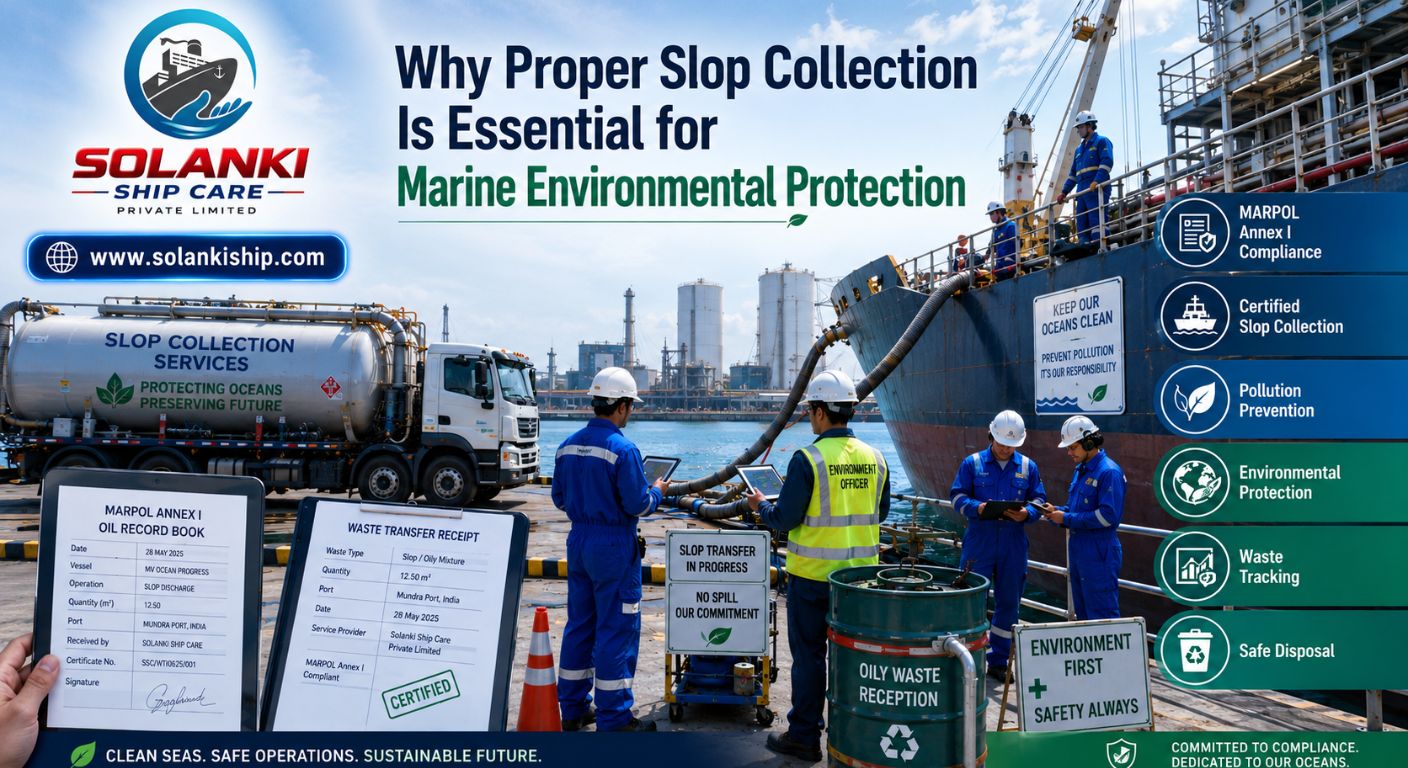
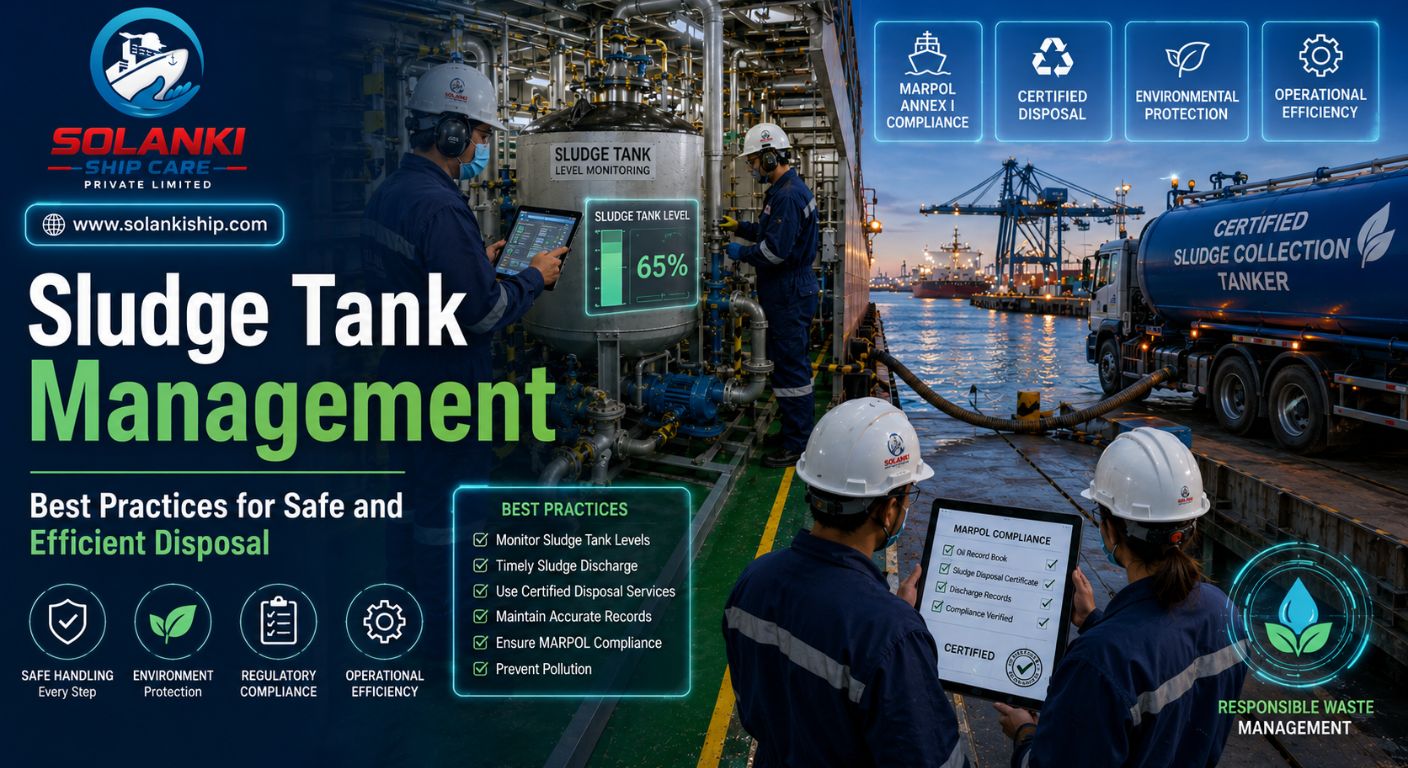
ports. Our team supports sludge removal, slop collection, waste oil and garbage
disposal, MARPOL-compliant documentation, and coordination with authorized
facilities. We ensure timely services that reduce delays while helping vessels
maintain full regulatory compliance.
Conclusion
Building an effective environmental
compliance plan is essential for protecting marine ecosystems and ensuring
regulatory compliance. Proper planning, waste management, trained crew, and
accurate documentation help reduce environmental risks and support sustainable
shipping. By partnering with Solanki Ship Care, vessels benefit from certified
compliance services and MARPOL-compliant documentation across major Indian
ports. Visit Solanki
Ship Care
Frequently Asked
Questions (FAQ)
Q1. What is an environmental
compliance plan?
A plan for managing pollution, waste, and regulatory compliance on vessels.
Q2. Why is it important?
It prevents pollution, ensures MARPOL compliance, and avoids penalties.
Q3. What waste is included?
Sludge, slop, oily waste, sewage, garbage, chemicals, and ballast water.
Q4. What documents are required?
Oil, Garbage, and Ballast Water Record Books, plus disposal certificates.
Q5. How does Solanki Ship Care help?
They provide waste disposal, documentation, and compliance support.