

Jun 30, 2026
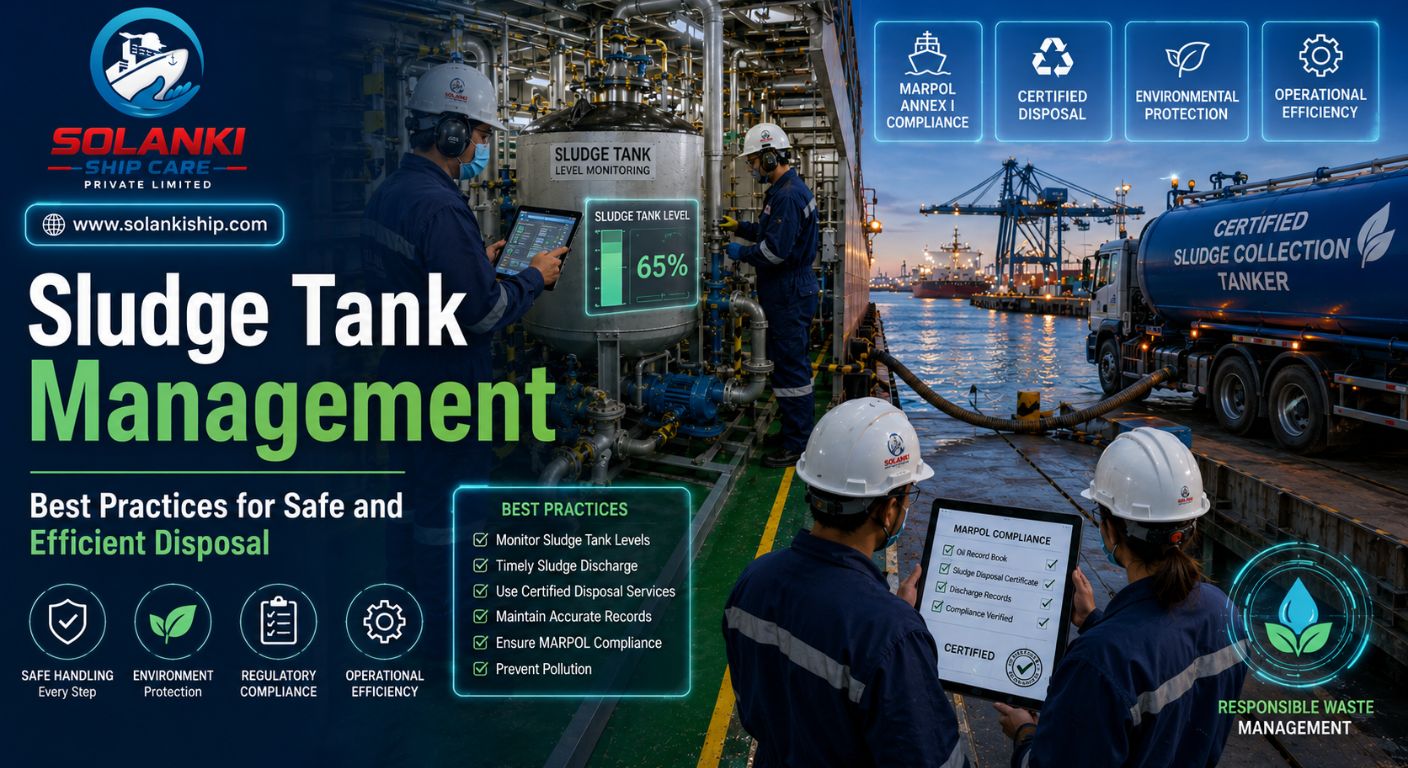
Sludge Tank Management: Best Practices for Safe and Efficient Disposal
Sludge from fuel purification and
engine operations is a routine part of vessel activities. Proper sludge tank
management is essential for maintaining efficiency, protecting the environment,
and ensuring compliance with regulations. Timely removal helps prevent
disruptions and supports MARPOL compliance. Solanki Ship Care offers
professional, certified sludge removal services across major Indian ports.
Understanding
Sludge Tank Operations
A sludge tank collects oily residues
and waste from fuel purifiers, lubricating oil separators, engine drainage, and
machinery operations. These residues build up over time and require proper
monitoring, storage, and disposal. Effective sludge tank management includes
regular level checks, accurate record keeping, and timely discharge to
authorized facilities, ensuring safe operations and environmental compliance.
Learn more at Solanki Ship Care.
1. Importance of
Timely Sludge Discharge
Regular sludge discharge is
essential for smooth vessel operations. Delays can reduce tank capacity, affect
machinery performance, and increase the risk of inspection delays. Planned
disposal ensures adequate storage, supports efficient engine room management,
and helps maintain accurate Oil Record Book entries while promoting responsible
environmental practices.
2. Risks of
Overfilled Sludge Tanks
Overfilled sludge tanks can create
serious operational and environmental hazards. Limited storage capacity may
lead to equipment malfunction, overflow risks, increased maintenance
requirements, and potential oil pollution incidents. Excess sludge can
interfere with engine room operations, increase fire hazards, and result in
regulatory penalties if handled improperly. Regular monitoring and scheduled
sludge removal significantly reduce these risks while improving overall vessel
reliability and operational efficiency.
3. MARPOL
Compliance Requirements for Sludge Disposal
The International Convention for the
Prevention of Pollution from Ships (MARPOL Annex I) sets strict rules
for handling oily residues and sludge onboard. Ship operators must store sludge
safely, record it in the Oil Record Book, and discharge it only through
authorized facilities with proper documentation. Maintaining accurate records
and certified disposal is essential for inspections and compliance, helping
protect the environment and avoid penalties.
4. Best
Practices for Safe and Efficient Sludge Tank Management
Effective sludge tank management
includes routine inspections, accurate level monitoring, preventive
maintenance, and timely disposal planning. Crew should follow safety
procedures, check pipelines and pumps for leaks, maintain proper waste
segregation, and ensure correct documentation. These practices improve
efficiency, reduce risks, and support regulatory compliance.
5. How Solanki
Ship Care Provides Certified Sludge Removal Services
Solanki Ship Care
offers professional sludge removal services at major Indian ports. Our
team ensures safe collection, transport, and disposal through authorized
facilities in full compliance with MARPOL regulations. We provide certified
disposal documentation, including MARPOL certificates, helping shipowners
maintain regulatory compliance with reliable and efficient service.
Conclusion
Proper sludge tank management
is a vital part of responsible vessel operations. Timely sludge discharge,
routine monitoring, and strict adherence to MARPOL regulations help
prevent environmental pollution, improve engine room efficiency, and reduce
operational risks. By partnering with Solanki Ship Care for certified
sludge removal services, vessel owners can ensure safe waste disposal, maintain
regulatory compliance, and support sustainable maritime operations across
Indian ports. Visit Solanki Ship Care to
learn more about our comprehensive marine environmental services.
Frequently Asked Questions (FAQ)
Q1. What is a
sludge tank on a ship?
A tank that stores oily waste from
engine operations.
Q2. Why is
timely sludge discharge important?
Prevents overflow and ensures
compliance.
Q3. What are the
risks of overfilled sludge tanks?
Pollution, equipment issues, and
penalties.
Q4. What is
MARPOL compliance for sludge disposal?
Proper storage, recording, and
certified disposal.
Q5. How does
Solanki Ship Care provide sludge removal services?
Safe, certified sludge removal across Indian ports.