
Jun 25, 2026
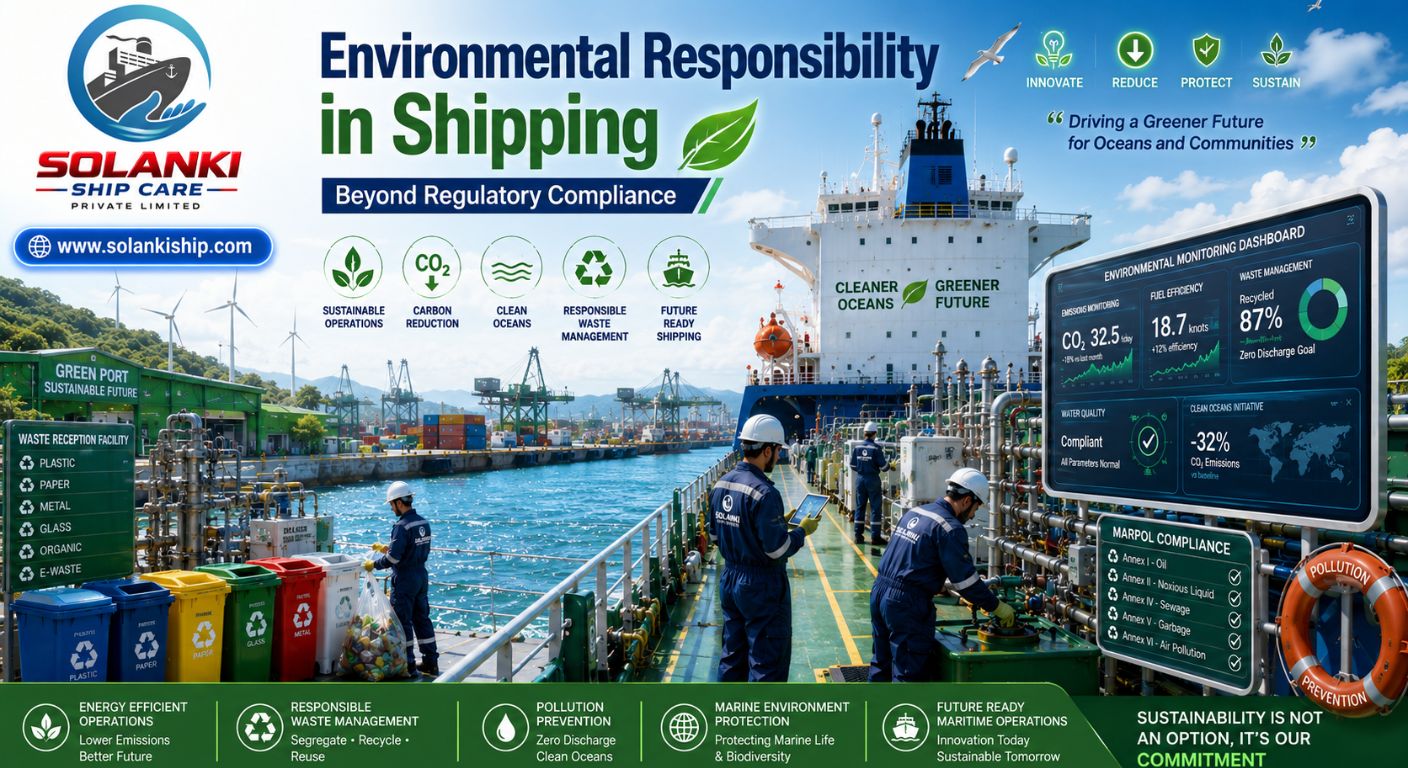
Environmental Responsibility in Shipping: Beyond Regulatory Compliance
Environmental responsibility in
shipping is now a key priority as the maritime industry moves toward
sustainability. Beyond complying with regulations like MARPOL, companies must reduce
pollution, conserve resources, and protect marine ecosystems through
responsible operations and effective waste management.
Growing
Sustainability Expectations in Maritime Trade
The maritime industry carries over
80% of global trade and is under growing pressure to reduce its environmental
impact through cleaner operations, lower emissions, proper waste management,
and sustainable practices; as a result, modern vessels are adopting
fuel-efficient technologies, energy-saving systems, and eco-friendly
procedures, making sustainability a key competitive advantage while ensuring
compliance and operational efficiency. learn more at Solanki Ship Care.
1. Reducing
Environmental Impact During Port Operations
Port operations can reduce
environmental impact through careful planning and efficient resource use by
ensuring activities like bunkering, cargo handling, freshwater supply, sludge
removal, and ship chandling follow strict environmental controls to prevent pollution
and waste; key practices include preventing spills, using safe handling
methods, minimizing idle time to reduce emissions, coordinating efficiently
with port authorities, and following approved environmental systems, all of
which protect marine ecosystems while improving operational efficiency.
2. Importance of
Responsible Waste Handling
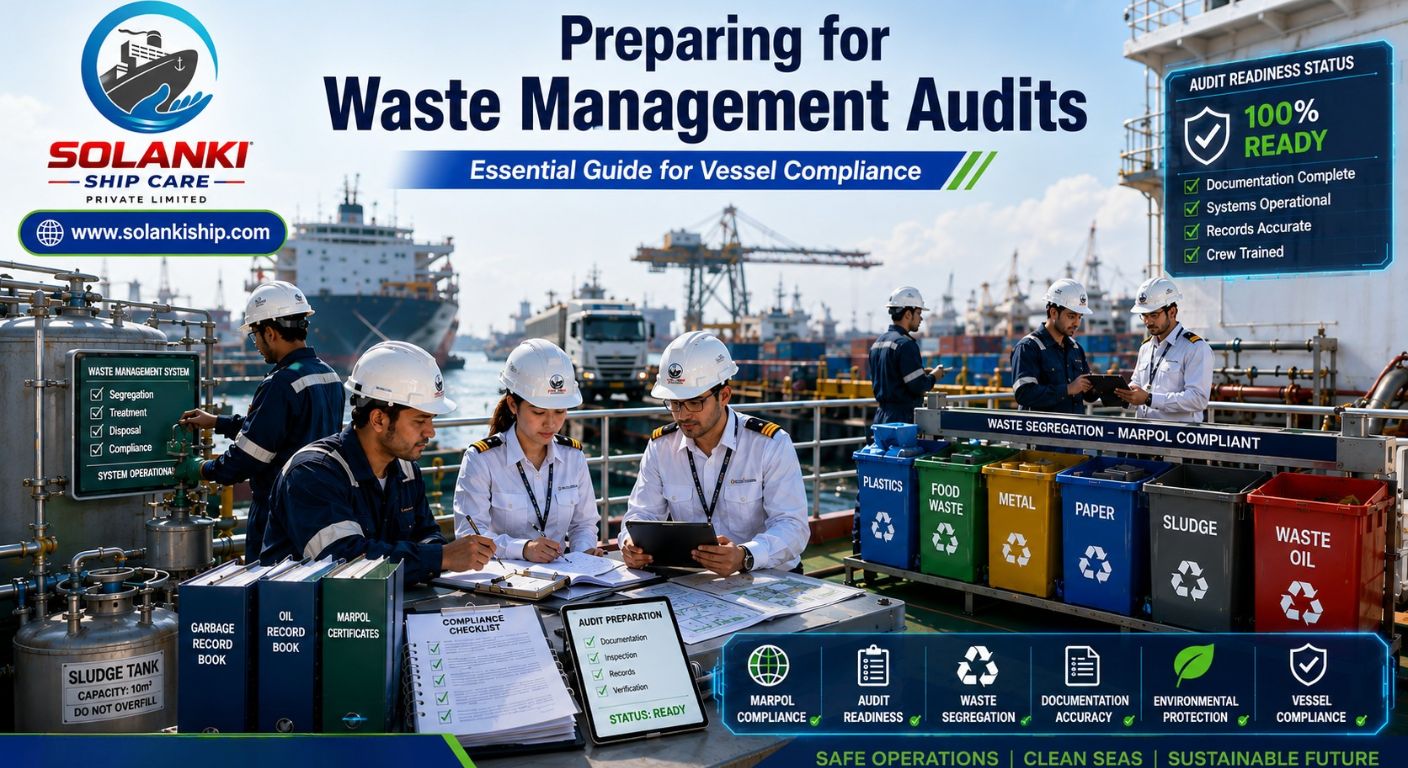
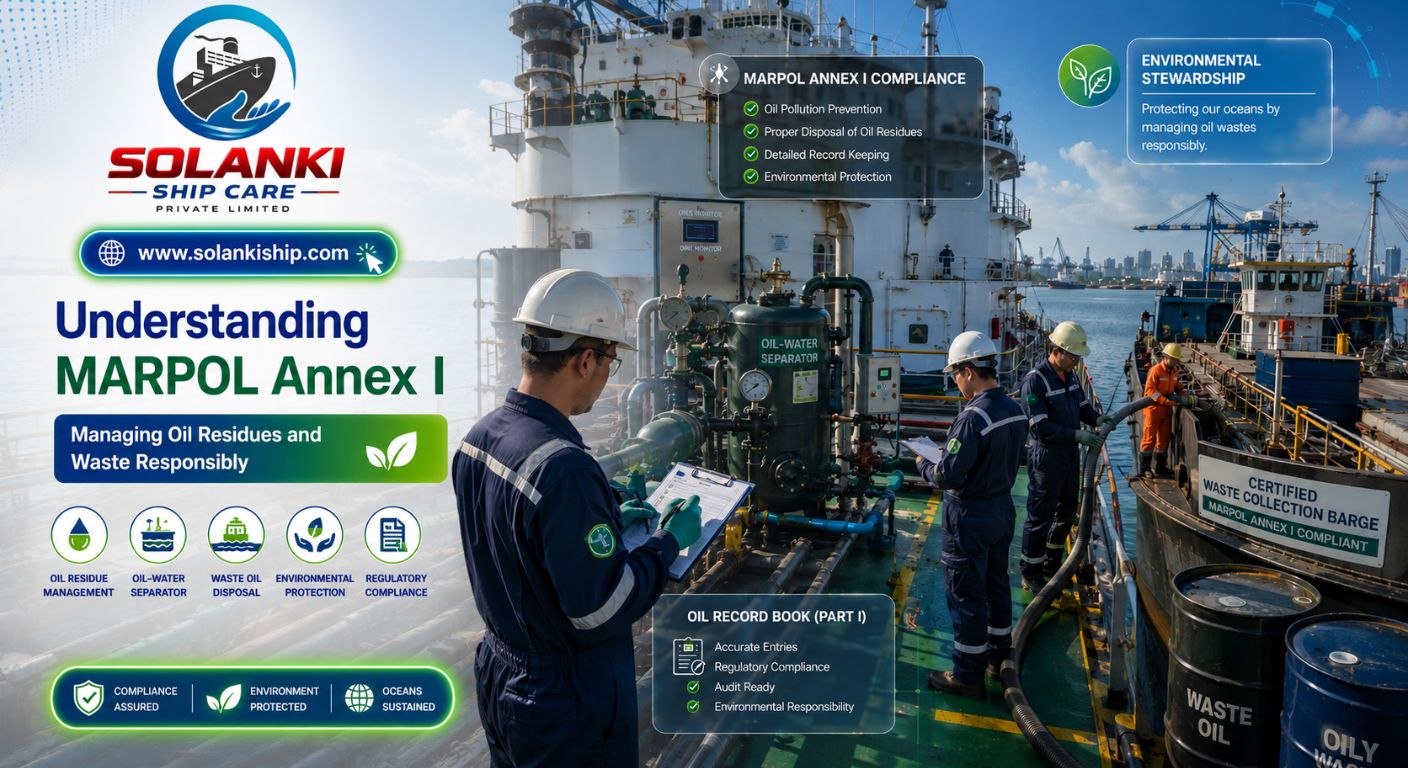
Effective waste management is
essential for sustainable shipping, as vessels generate various wastes such as
sludge, waste oil, bilge water, garbage, plastics, sewage, and hazardous
materials, and improper disposal can harm marine ecosystems and lead to legal
and financial consequences; therefore, responsible handling includes proper
segregation, safe storage, disposal through authorized Port Reception Facilities,
maintaining accurate documentation, and complying with MARPOL and local
regulations, all of which help reduce pollution, ensure inspection readiness,
and demonstrate environmental commitment.
3. Building a
Positive Environmental Culture Onboard
Environmental responsibility begins
with people, and a strong onboard culture encourages crew members to protect
the marine environment through daily practices such as regular training, proper
waste segregation, prompt reporting of hazards, efficient use of resources, and
adherence to pollution prevention procedures, ultimately leading to higher
compliance and long-term sustainability.
4. Sustainable
Shipping Beyond Regulatory Compliance
Today's leading shipping companies
recognize that compliance is just the beginning and go further by adopting
proactive environmental initiatives such as reducing emissions, improving
energy efficiency, supporting eco-friendly procurement, minimizing single-use
plastics, promoting digital documentation, and continuously enhancing
sustainability practices, which helps strengthen their reputation, meet
customer expectations, and contribute to cleaner oceans.
5. How Solanki
Ship Care Contributes to Sustainable Shipping Practices
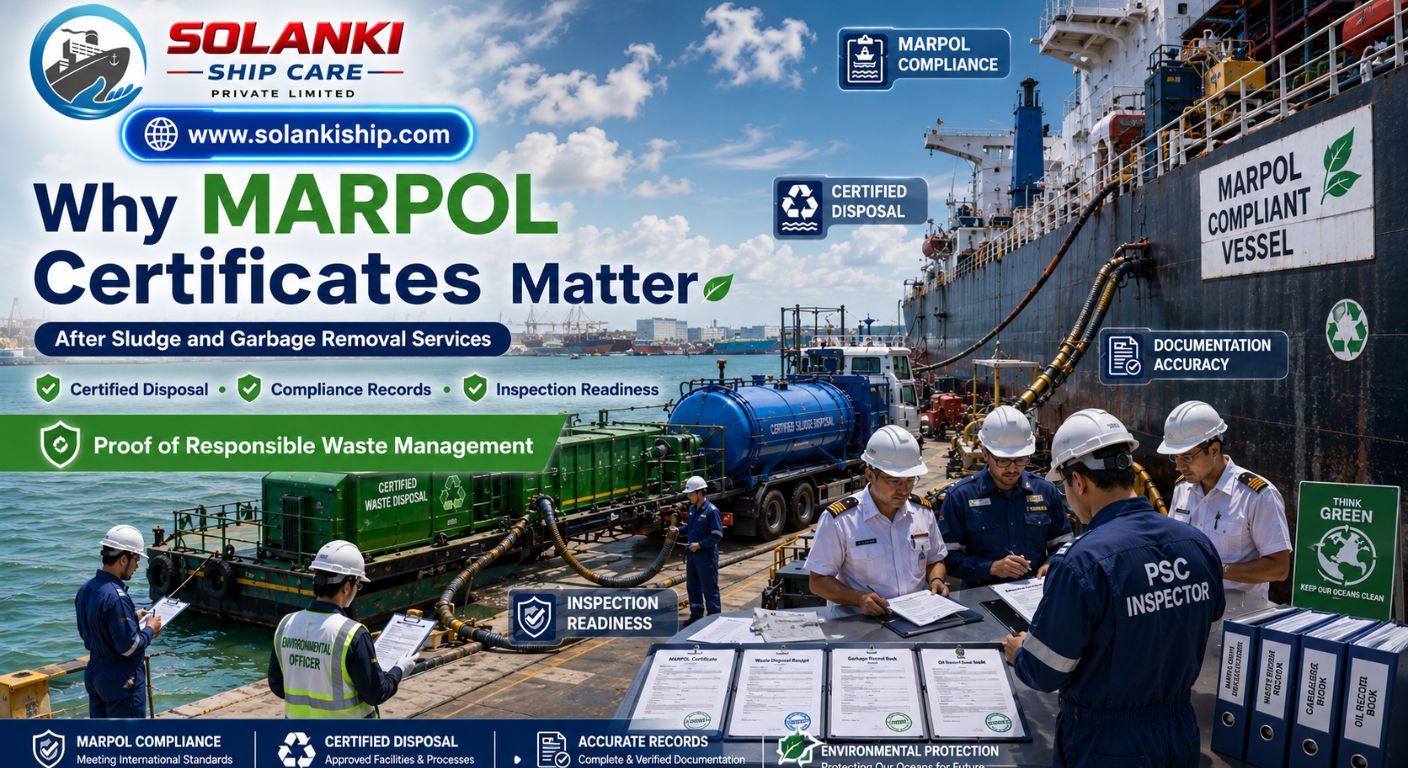
Solanki Ship Care actively supports
environmentally responsible shipping by providing reliable, compliant, and
efficient marine support services that help vessels maintain high environmental
standards during port operations, including MARPOL-compliant sludge and waste
oil removal, responsible garbage disposal, freshwater supply, ship chandling,
environmental documentation support, coordination with authorized facilities,
and timely services that reduce delays and emissions, ultimately helping
shipping companies achieve operational efficiency, regulatory compliance, and
long-term sustainability.
Conclusion
Environmental responsibility in
shipping goes beyond regulatory compliance. Sustainable operations require
improvements in waste management, pollution prevention, efficient port
practices, and crew awareness. As expectations for greener shipping grow,
adopting responsible practices is essential for long-term success. Solanki Ship
Care supports sustainable shipping through reliable, environmentally
responsible marine services. visit Solanki Ship Care.
Frequently Asked
Questions (FAQ)
Q1. What is
environmental responsibility in shipping?
It means reducing pollution,
conserving resources, and protecting marine ecosystems beyond compliance.
Q2. Why is
sustainable shipping important?
It lowers environmental impact,
improves efficiency, and supports ocean protection.
Q3. How can
ships reduce their environmental impact during port operations?
By preventing spills, managing
waste, reducing emissions, and following proper procedures.
Q4. Why is
responsible waste handling important onboard vessels?
It prevents pollution, ensures
compliance, and avoids fines.
Q5. How does
Solanki Ship Care support sustainable shipping?
By providing compliant waste
management, disposal, and marine support services.