
Jul 18, 2026
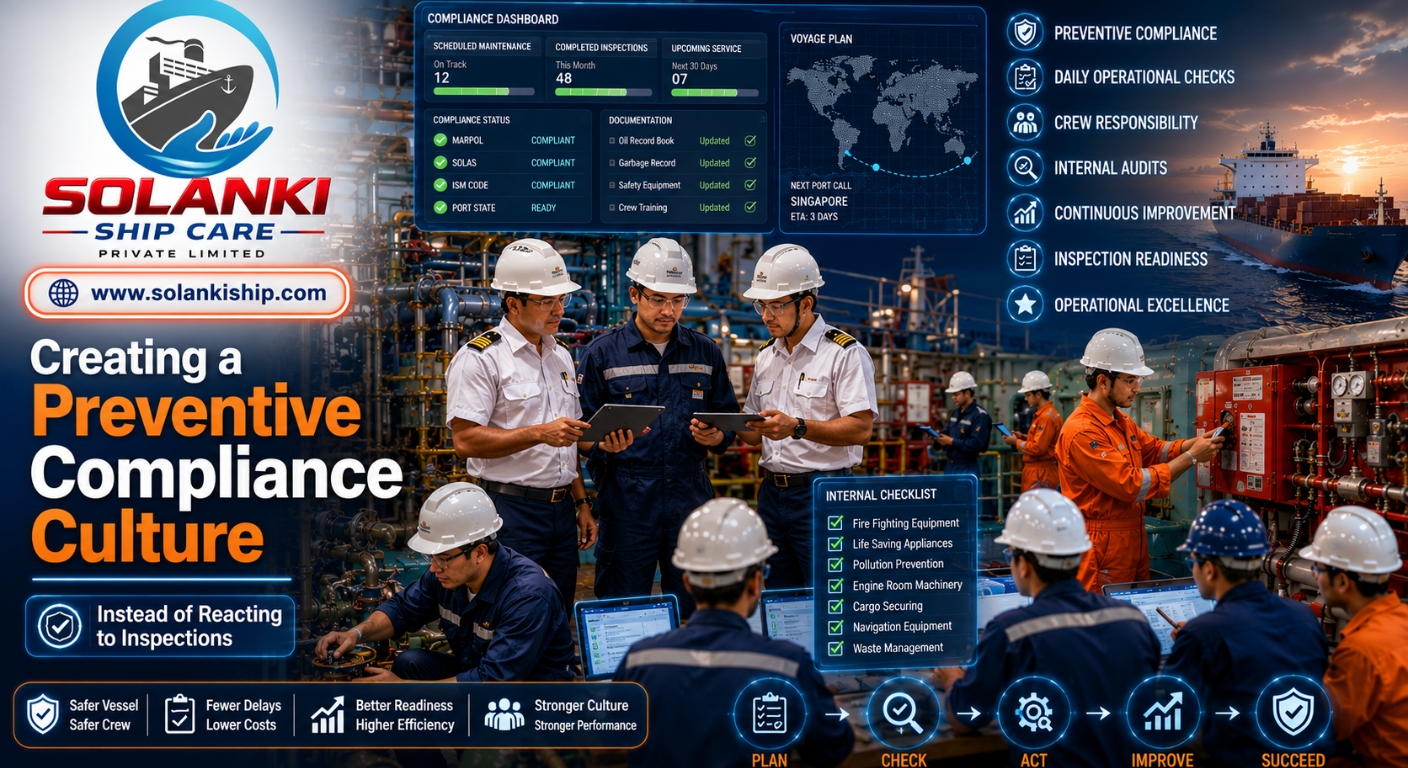
Creating a Preventive Compliance Culture Instead of Reacting to Inspections
Vessel
compliance should not begin only when an inspection is announced. A preventive
compliance culture built through daily discipline, crew awareness, and routine
checks keeps vessels inspection-ready at all times. Solanki Ship Care supports
shipowners in maintaining compliance, improving efficiency, and reducing
last-minute stress.
Building a
Preventive Compliance Culture in Maritime Operations
A strong compliance culture comes
from consistent daily practices rather than temporary preparation. Every crew
member contributes to vessel safety, environmental protection, and
documentation accuracy. Preventive compliance reduces disruptions, lowers
detention risks, and ensures adherence to regulations like MARPOL and SOLAS.
With Solanki Ship Care, vessels can maintain smooth and compliant operations
across Indian ports. Learn more at Solanki ship care.
1. Daily
Operational Habits Build Long-Term Compliance
Simple daily routines such as
equipment checks, waste management, record keeping, and housekeeping form the
foundation of compliance. These practices help vessels stay prepared for
inspections without emergency fixes.
Consistent routines also help detect
minor issues early, reducing repair costs and improving overall efficiency.
2. Crew
Awareness and Responsibilities
Compliance depends on well-informed
crew members. Regular training in safety, environmental protection, and
documentation ensures everyone understands their role.
When compliance becomes a shared
responsibility, it improves teamwork, reduces errors, and strengthens the
vessel’s Safety Management System (SMS).
3. Regular
Internal Checks Prevent Issues
Routine internal inspections help
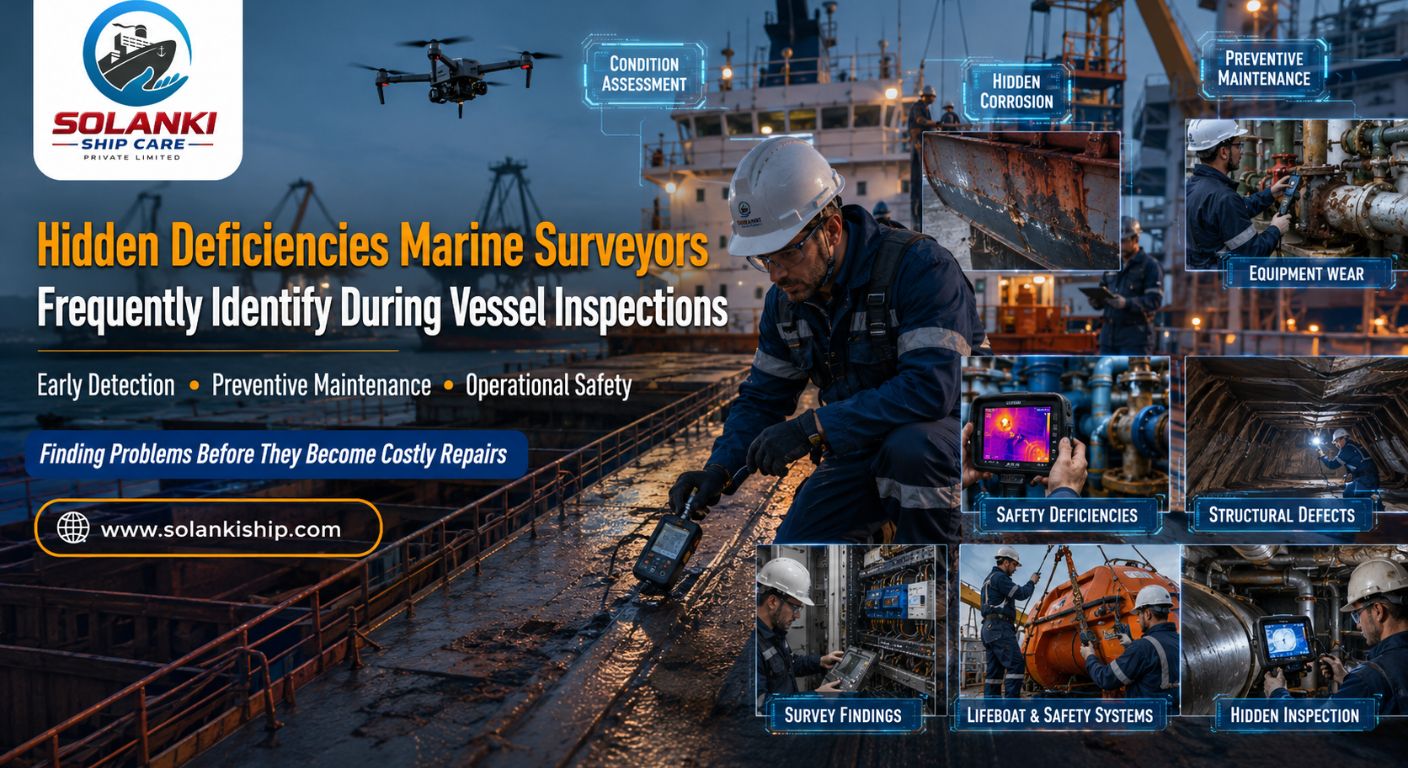
identify problems before official inspections. These checks include reviewing
safety equipment, MARPOL records, firefighting systems, and machinery
condition.
Early detection allows timely
corrections, improving inspection readiness and reducing operational risks.
4. Reducing
Last-Minute Inspection Pressure
Preparing only after inspection
notice creates stress and increases the chance of errors. Continuous compliance
removes the need for rushed preparation.
Vessels that follow preventive
practices remain ready for PSC, Flag State, and other inspections with minimal
disruption.
5. How Solanki
Ship Care Supports Vessel Compliance
Solanki Ship Care assists shipowners
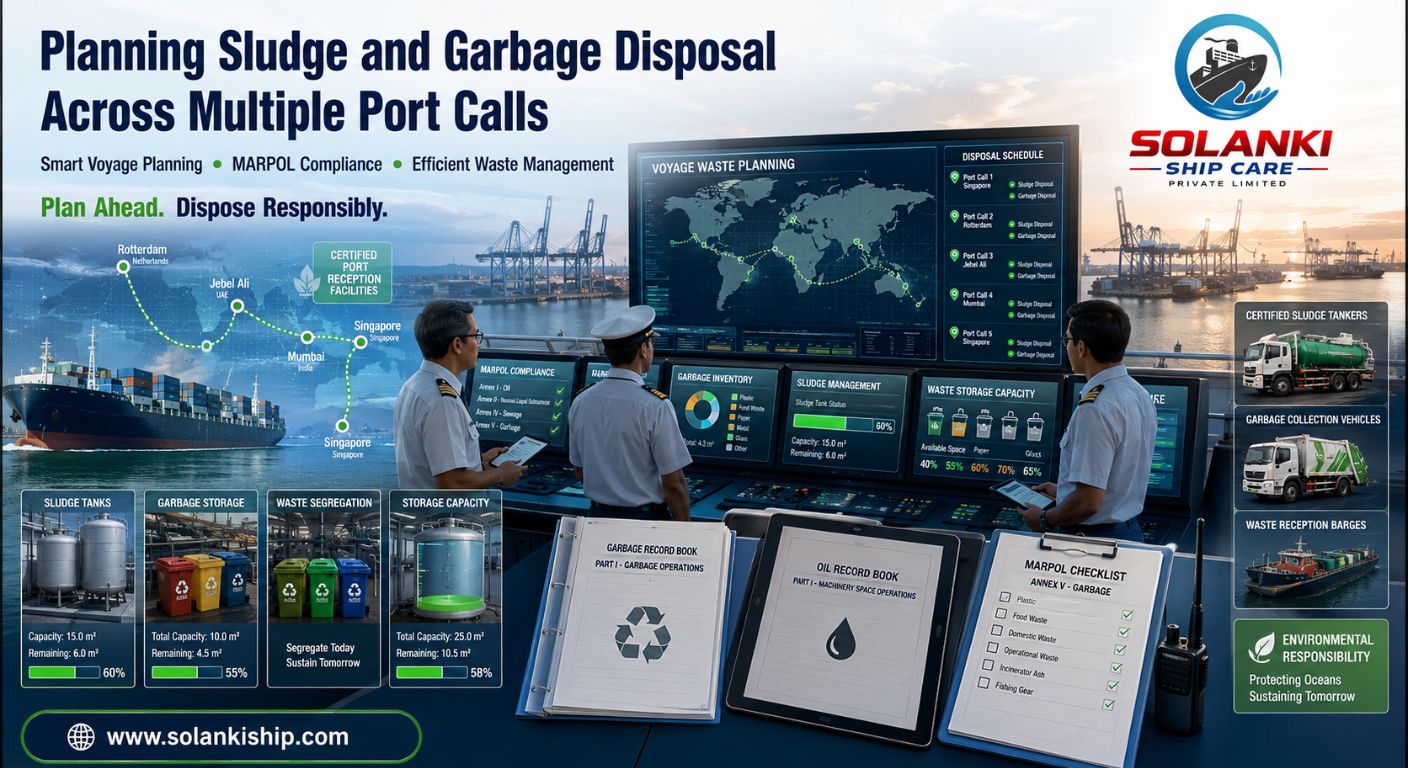
with inspections, documentation, MARPOL compliance, safety coordination, waste
management, and marine services across Indian ports.
Their proactive approach helps
reduce deficiencies, improve efficiency, and maintain continuous compliance.
Conclusion
A preventive compliance culture
ensures long-term safety and efficiency. Daily routines, trained crews, and
regular checks reduce inspection pressure and improve vessel performance.
Solanki Ship Care supports this approach by helping vessels stay compliant and
inspection-ready at all times. visit at Solanki
ship care
Frequently Asked Questions (FAQ)
Q1. What is a
preventive compliance culture in shipping?
It focuses on maintaining continuous
compliance through daily practices instead of preparing only before
inspections.
Q2. Why are
daily operational habits important?
They help detect issues early,
improve safety, and keep vessels inspection-ready.
Q3. How do
internal inspections help?
They identify deficiencies early,
allowing timely corrections and reducing risks.
Q4. Why is crew
awareness important?
Trained crew members reduce errors
and support continuous compliance.
Q5. How does
Solanki Ship Care help?
They provide compliance support,
documentation assistance, and marine services to keep vessels inspection-ready.