
Jun 26, 2026
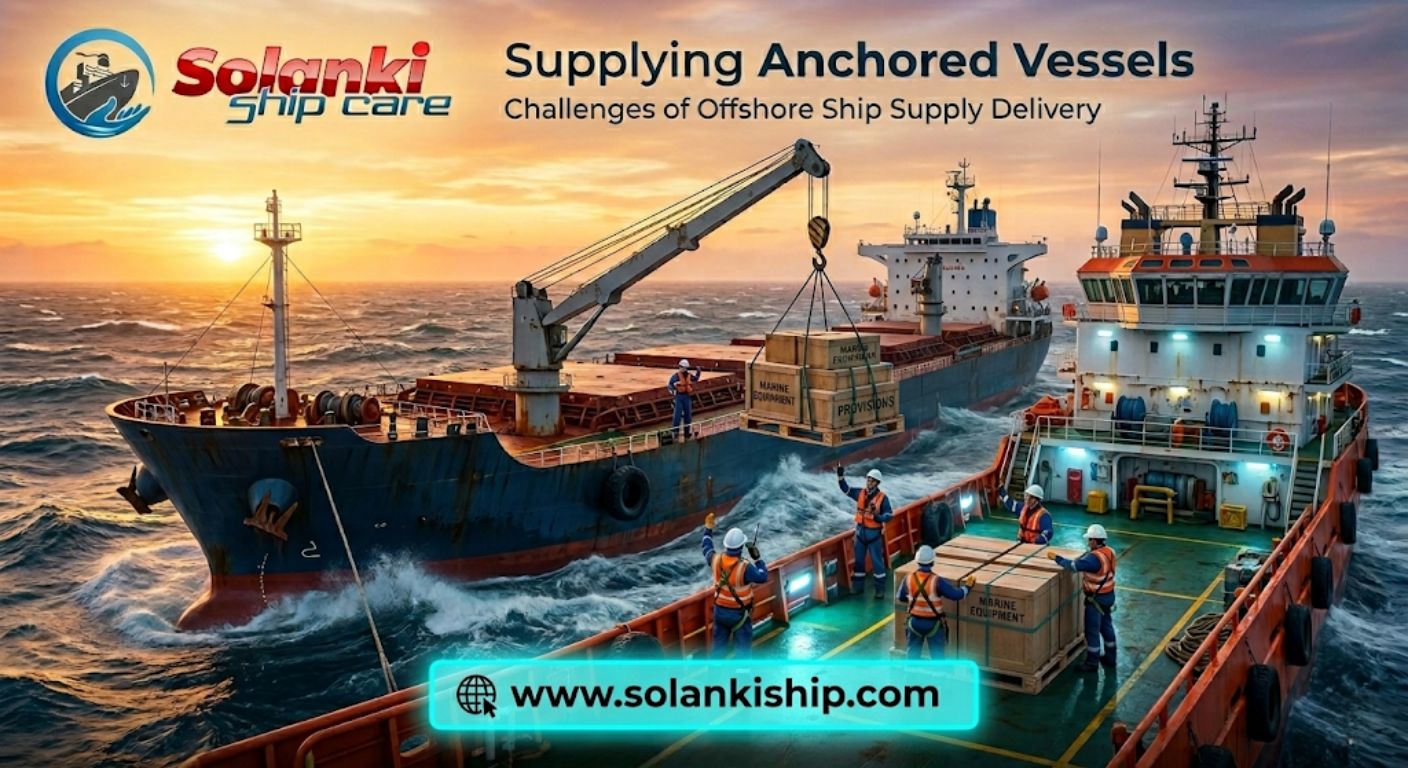
Supplying Anchored Vessels: Challenges of Offshore Ship Supply Delivery
Offshore
ship supply delivery is essential for maintaining smooth vessel operations when
ships are anchored offshore instead of berthed at port terminals. Delivering
provisions, technical stores, safety equipment, and engine supplies requires
proper coordination, weather monitoring, and safe handling procedures. Solanki
Ship Care ensures timely and reliable offshore supply delivery even in
challenging marine conditions.
WHY OFFSHORE SHIP SUPPLY DELIVERY IS IMPORTANT
Vessels waiting at anchorage still
require continuous support through provisions, engine consumables, deck stores,
and crew essentials. Offshore ship supply delivery helps vessels continue
operations without waiting for berth availability. Reliable marine logistics
and timely delivery services are important for smooth vessel management. Learn
more at www.solankiship.com
1. DIFFERENCE BETWEEN BERTH AND ANCHORAGE DELIVERIES
Berth deliveries are made directly
at port terminals where vessels are docked. Anchorage deliveries are more
complex because vessels remain offshore and supplies must be transported using
launch boats or barges.
Unlike berth deliveries, offshore supply
operations depend on weather conditions, sea movement, communication, and
proper marine coordination. These deliveries require additional planning and
safety management.
2. TRANSPORTING SUPPLIES SAFELY TO ANCHORED VESSELS
Safe transportation is one of the
biggest challenges in offshore ship supply delivery. Marine provisions,
technical stores, lubricants, spare parts, and safety equipment must be
properly packed and protected during transfer operations.
Launch boats and barges follow
strict safety procedures to ensure secure cargo handling and safe delivery to
anchored vessels. Proper loading and careful coordination help reduce risks
during offshore supply operations.
3. WEATHER AND TIMING CHALLENGES IN OFFSHORE DELIVERY
Weather conditions greatly affect
offshore supply operations. Strong winds, rough seas, rain, and tidal changes
can delay launch movements and cargo transfer activities.
Timing is also important because
offshore deliveries often depend on vessel schedules, port approvals, and tide
conditions. Proper planning and weather monitoring help avoid operational
delays.
4. COORDINATING LAUNCH AND BARGE MOVEMENTS
Offshore deliveries require close
coordination between supply teams, launch operators, vessel crew, and port
authorities. Launch boats and barges must follow proper schedules and marine
routes for smooth operations.
Effective communication and
logistics planning help manage urgent deliveries and ensure safe offshore cargo
transfer without unnecessary delays.
5. HOW SOLANKI SHIP CARE MANAGES OFFSHORE SUPPLY DELIVERY
Solanki Ship Care provides reliable
offshore ship supply services for anchored vessels. Their team manages
sourcing, logistics coordination, launch arrangements, and timely delivery of
marine supplies.
They supply fresh provisions, engine
stores, deck supplies, technical consumables, and safety equipment while
ensuring smooth offshore delivery operations even under challenging conditions.
CONCLUSION
Offshore ship supply delivery
requires proper planning, marine coordination, weather monitoring, and safe
transportation systems. Compared to berth deliveries, supplying anchored
vessels involves additional operational challenges that demand experience and
efficient logistics support.
Solanki Ship Care provides
dependable offshore ship supply services that help vessels receive safe and
timely deliveries while stationed at anchorage.
For reliable and professional ship
supply services, visit www.solankiship.com
FREQUENTLY ASKED QUESTIONS (FAQ)
Q1. What is
anchorage delivery in shipping?
Anchorage delivery refers to
supplying vessels located offshore using launch boats or barges instead of
direct port delivery.
Q2. Why are
offshore ship supply deliveries challenging?
They involve weather risks, sea
movement, marine coordination, timing restrictions, and safe cargo handling.
Q3. What
supplies are delivered to anchored vessels?
Fresh provisions, technical stores,
lubricants, spare parts, deck supplies, and safety equipment are commonly
delivered offshore.
Q4. How do
weather conditions affect offshore delivery?
Bad weather and rough sea conditions
can delay launch operations and affect safe cargo transfer.
Q5. How does
Solanki Ship Care support offshore deliveries?
They manage marine logistics, launch
coordination, and timely delivery of essential ship supplies to anchored
vessels.