
Jun 26, 2026
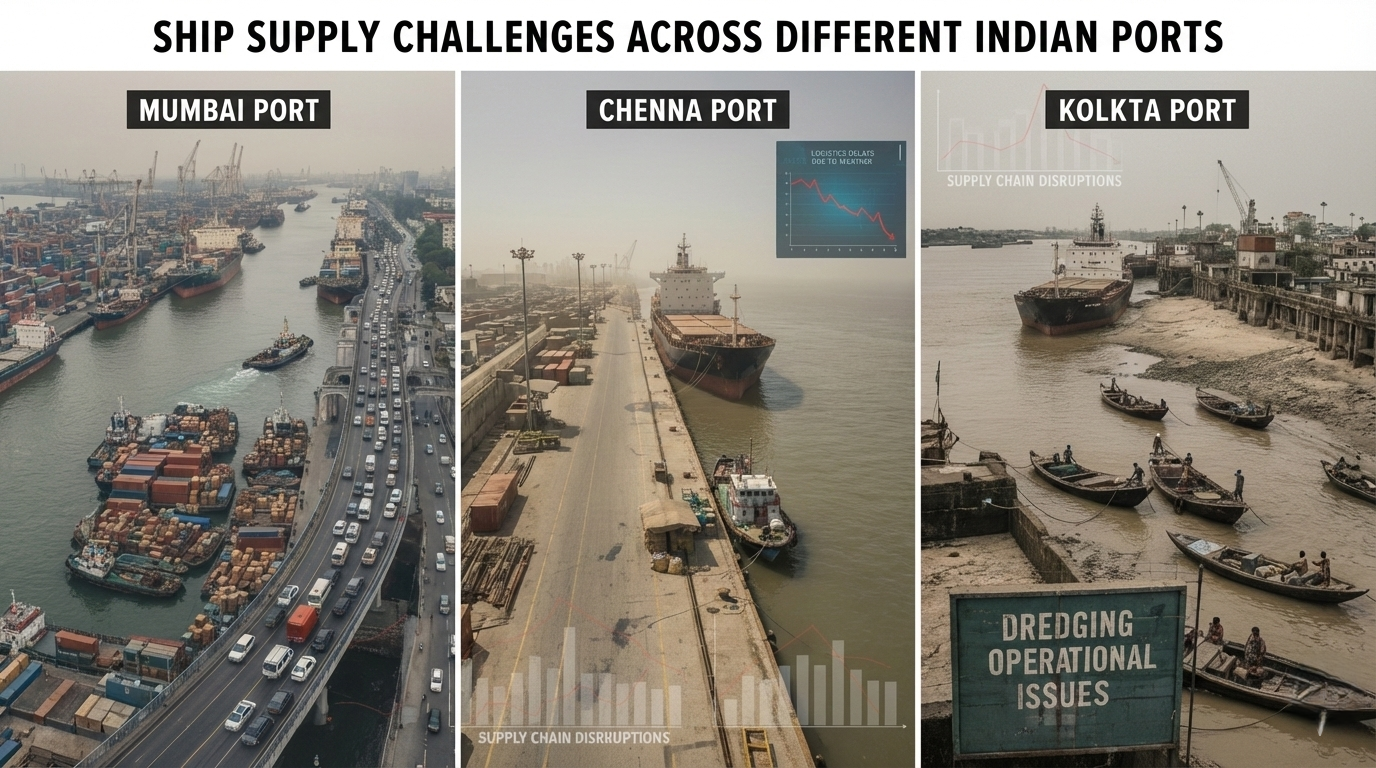
SHIP SUPPLY CHALLENGES ACROSS DIFFERENT INDIAN PORTS
Introduction
India’s coastline hosts a diverse range of major and minor ports, each
operating under unique conditions. For ship supply and chandling operations,
these differences create distinct challenges related to access, regulations,
logistics, and environmental factors. From high-traffic commercial ports to
regionally governed terminals, suppliers must adapt quickly to ensure timely
and compliant deliveries. Solanki Ship Care addresses these port-specific
challenges through detailed planning, local coordination, and flexible
operational strategies.
1. Operational Differences Between
Major Ports
Variation in Port Infrastructure and Processes
Each Indian port differs in terms of size, automation level, traffic volume,
and operational procedures.
Key Differences
• Congestion levels at high-traffic ports versus smoother flow at smaller ports
• Automated gate systems versus manual documentation checks
• Variations in working hours and berth allocation processes
Why It Matters
Understanding operational differences helps prevent delays, optimize delivery
schedules, and ensure seamless coordination with port authorities and vessel
operators.
2. Local Restrictions and Access
Issues
Port-Specific Security and Entry Controls
Indian ports enforce strict security and access regulations that vary by
location.
Common Access Challenges
• Limited time windows for supplier entry
• Different port pass rules for manpower and vehicles
• Restricted access zones near sensitive terminals
Why It Matters
Failure to comply with local access rules can result in missed delivery
windows, increased waiting time, or denied entry, impacting vessel schedules.
3. Logistics Constraints and Weather
Impacts
Environmental and Infrastructure-Driven Challenges
Weather conditions and logistics infrastructure significantly influence ship
supply operations.
Key Constraints
• Monsoon-related delays affecting road transport and port operations
• Tidal restrictions at select ports
• Limited storage or staging areas near berths
Why It Matters
Weather and logistics disruptions can affect supply timing and quality, making
proactive planning essential for reliable marine supply.
4. Planning Port-Wise Supply
Strategies
Customized Approach for Each Port
A uniform supply strategy does not work across all Indian ports.
Strategic Planning Measures
• Port-specific delivery timelines and routing
• Local vendor coordination for faster sourcing
• Advance documentation and access approvals
Why It Matters
Port-wise strategies reduce operational risks, improve efficiency, and ensure
vessels receive supplies without unnecessary delays.
5. How Solanki Ship Care Adapts to
Port-Specific Challenges
Flexible and Experience-Driven Operations
Solanki Ship Care leverages its operational experience to manage port-specific
complexities effectively.
Key Adaptation Practices
• In-depth knowledge of individual port procedures
• Strong coordination with port authorities and agents
• Advance planning for weather and congestion risks
• Dedicated teams for monitoring port-wise operations
Why Choose Solanki Ship Care
• Reliable ship supply across diverse Indian ports
• Reduced delays through local expertise
• Compliance with port-specific regulations
• Consistent service quality under varying conditions
Conclusion
Managing Complexity for Reliable Ship Supply
Ship supply operations across Indian ports involve navigating diverse
operational frameworks, access controls, logistical constraints, and
environmental factors. Successfully managing these challenges requires local
knowledge, flexibility, and strategic planning. By adapting its processes to
each port’s unique requirements, Solanki Ship Care ensures dependable, timely,
and compliant marine supply services that support smooth vessel operations
across India’s maritime network.