
Jun 26, 2026
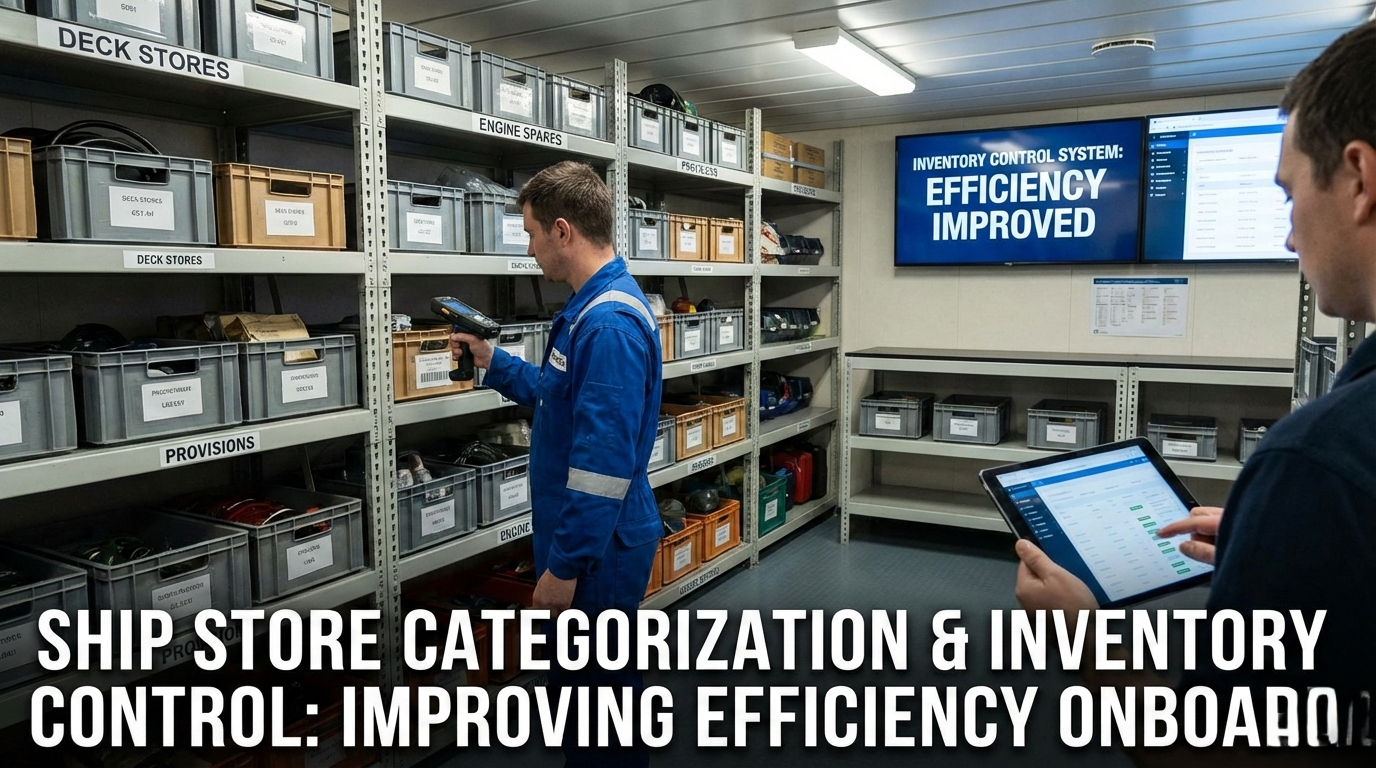
SHIP STORE CATEGORIZATION & INVENTORY CONTROL: IMPROVING EFFICIENCY ONBOARD
Introduction
Efficient shipboard operations depend heavily on how well stores are organised
and controlled onboard a vessel. Poorly categorised stores, unclear inventory
records, or misplaced items can lead to operational delays, safety risks,
failed inspections, and unnecessary costs. With vessels carrying a wide range
of engine, deck, cabin, and safety stores, systematic categorisation and inventory
control are essential for smooth day-to-day functioning. Proper store
management not only improves efficiency for the crew but also ensures
compliance with maritime regulations and readiness for audits. Solanki ShipCare supports vessels in establishing well-structured ship store systems that
enhance visibility, control, and operational reliability.
1. Importance of Proper Store
Categorisation
Creating Structure and Accessibility
Clear categorisation of ship stores forms the foundation of effective inventory
management. When items are logically grouped and clearly labelled, crew members
can locate required materials quickly, reducing downtime and confusion during
routine operations or emergencies.
Key
benefits of proper store categorisation include:
• Faster identification and retrieval of required items
• Reduced risk of mixing incompatible or hazardous materials
• Better space utilisation within store rooms
• Improved accountability and tracking of consumables
• Enhanced readiness during inspections and audits
2. Managing Engine, Deck, Cabin
& Safety Stores
Dedicated Systems for Different Store Types
Each category of ship stores serves a distinct operational purpose and requires
tailored management practices. Treating all stores uniformly often leads to
misplacement, damage, or loss.
Effective
management practices include:
• Segregating engine spares, lubricants, and tools from
other stores
• Organising deck stores such as ropes, wires, paints, and fittings separately
• Maintaining cabin and provision stores with FIFO (First-In, First-Out)
principles
• Ensuring safety equipment and PPE are clearly marked, accessible, and
inspection-ready
• Assigning responsibility for each store category to designated crew members
3. Preventing Loss, Damage &
Misplacement
Control Measures That Reduce Risk
Uncontrolled ship stores often result in lost items, damaged materials, or
expired consumables, leading to avoidable reordering and cost escalation.
Strong inventory discipline helps prevent these issues.
Preventive
measures include:
• Clear labelling and standardised storage locations
• Proper shelving, containment, and environmental protection
• Regular stock checks and condition monitoring
• Recording issuance and consumption of stores
• Training crew on correct storage and handling practices
4. Inventory Visibility for
Inspections
Inspection-Ready at All Times
Port State Control inspections, class surveys, and internal audits require
clear evidence of organised and traceable ship stores. Poor inventory visibility
can raise red flags, even if equipment is physically available onboard.
Improved
inventory visibility ensures:
• Quick verification of safety and operational equipment
• Accurate stock records aligned with physical inventory
• Easier demonstration of compliance during inspections
• Reduced stress for crew during audits
• Better planning for replenishment and resupply
5. How Solanki Ship Care Supports
Organized Ship Stores
Practical Solutions for Efficient Store Management
Solanki Ship Care understands the operational realities onboard vessels and
provides practical support to improve ship store organisation and inventory
control. Their approach focuses on structure, visibility, and long-term
efficiency rather than short-term fixes.
Their
support includes:
• Guidance on logical categorisation of ship stores
• Assistance in setting up clear storage layouts and labelling systems
• Inventory control support aligned with inspection requirements
• Recommendations to reduce loss, damage, and overstocking
• Ongoing advisory support for efficient shipboard store practices
Conclusion
Building Efficiency Through Better Store Management
Well-categorised ship stores and effective inventory control play a critical
role in enhancing operational efficiency, safety, and compliance onboard
vessels. By organising engine, deck, cabin, and safety stores systematically,
ships can reduce losses, improve inspection readiness, and support crew
efficiency. With its hands-on experience and structured approach, Solanki Ship
Care helps vessels maintain organised, transparent, and inspection-ready ship
stores, contributing to smoother operations and better voyage performance.