
Jun 26, 2026
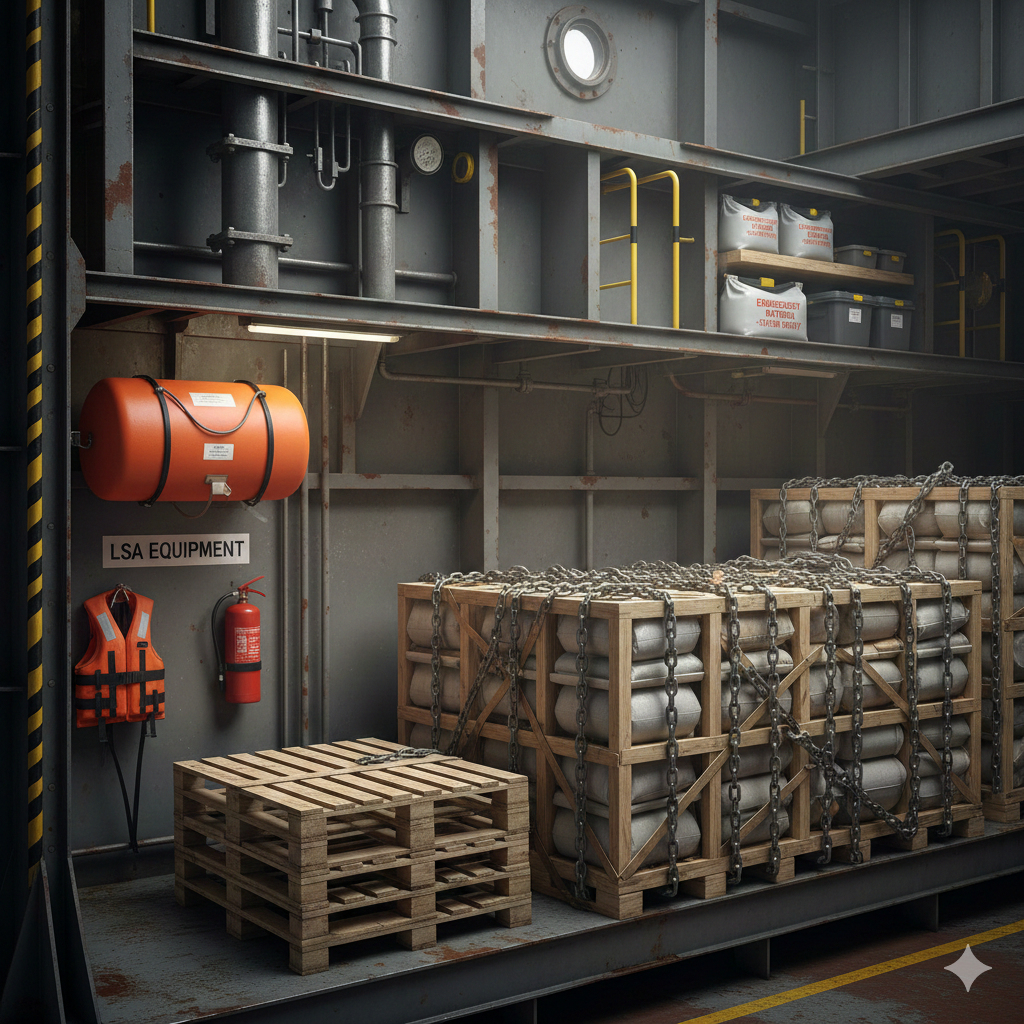
SHIP SAFETY & CARGO PROTECTION: DUNNAGE, LASHING, LSA EQUIPMENT & EMERGENCY RATIONS
Safe maritime operations depend
heavily on proper cargo securing practices and reliable Life Saving Appliances
(LSA). Dunnage, lashing systems, emergency rations, and potable water storage
all play essential roles in preventing accidents, ensuring cargo integrity, and
safeguarding crew survival during emergencies.
Using certified, SOLAS-approved equipment is not just a best practice it is a
regulatory requirement for all seagoing vessels.
1. Dunnage & Packing: The
Foundation of Cargo Safety
Dunnage and proper packing form the first layer of protection against cargo
movement and damage. They help maintain stability during rough weather, vessel
motion, and long voyages.
Types & Applications:
• Wooden Dunnage: Provides cushioning and keeps cargo elevated from moisture
• Airbags & Inflatable Dunnage: Fills voids between cargo units to prevent
shifting
• Plastic/Polymer Dunnage: Lightweight, reusable options for specific cargo
types
Why It Matters
Correct dunnage distributes load, minimizes impact damage, prevents cargo
shifting, and protects both the cargo and the vessel’s structural integrity.
2. Lashing Systems: Rope, Chain, Web
& Certified Equipment
Lashing ensures cargo stays firmly secured throughout the voyage. Different
materials and equipment suit different load requirements.
Types of Lashing:
• Rope Lashing: Flexible; suitable for light cargo and general securing
• Chain Lashing: High-strength; used for heavy, oversized, or project cargo
• Web Lashing: Polyester webbing; strong with low surface damage risk
• Certified Securing Equipment: Ratchet tensioners, turnbuckles, lashing bars,
twist locks
Why It Matters
Using the right lashing prevents sliding, tipping, rolling, and cargo loss.
Certified equipment ensures compliance with IMO Cargo Securing Manual (CSM)
standards and guarantees tested load capacities.
3. LSA Requirements: Emergency
Rations & Potable Water
Every lifeboat and life raft must carry SOLAS-compliant emergency supplies to
ensure survival during rescue delays.
Required Supplies:
• Emergency Rations: High-energy food packs, minimum 10,000 kJ per person
• Potable Water: Minimum 3 liters per person, packed in sealed, tamper-proof
containers
• Stable Storage: Designed to withstand extreme temperatures and long shelf
life
Why It Matters
These supplies can be the difference between life and death during an emergency
evacuation. Compliance ensures vessels are fully prepared for unforeseen
situations.
4. Certified IMO/SOLAS-Approved
Supplies
All securing materials, LSA equipment, emergency rations, and potable water
must come from internationally approved manufacturers.
What Certification Ensures:
• Products meet performance and endurance standards
• Materials are tested for marine environments
• Reliability during critical situations
• Full compliance during PSC checks and audits
Why It Matters
Uncertified equipment increases safety risks, leads to non-compliance
penalties, and can jeopardize survival or cargo safety in emergencies.
5. Ensuring Safe Cargo Handling
& Crew Survival
Reliable cargo protection and preparedness begin with proper securing materials
and certified LSA supplies.
Key Best Practices Include:
• Using appropriate dunnage for each cargo type
• Choosing the correct lashing method and certified equipment
• Regular inspection and maintenance of securing gear
• Strict adherence to SOLAS safety supply guidelines
• Verifying all materials are sourced from approved manufacturers
These measures ensure cargo
integrity, vessel stability, and readiness for emergency situations on every
voyage.
Final Thoughts
Ship safety and cargo protection rely on strong foundations: correct dunnage,
proper lashing techniques, and high-quality SOLAS-certified emergency supplies.
With the right materials and strict adherence to international standards,
vessels can operate safely, minimize risks, and guarantee protection for both
cargo and crew throughout the journey.