
Jun 26, 2026
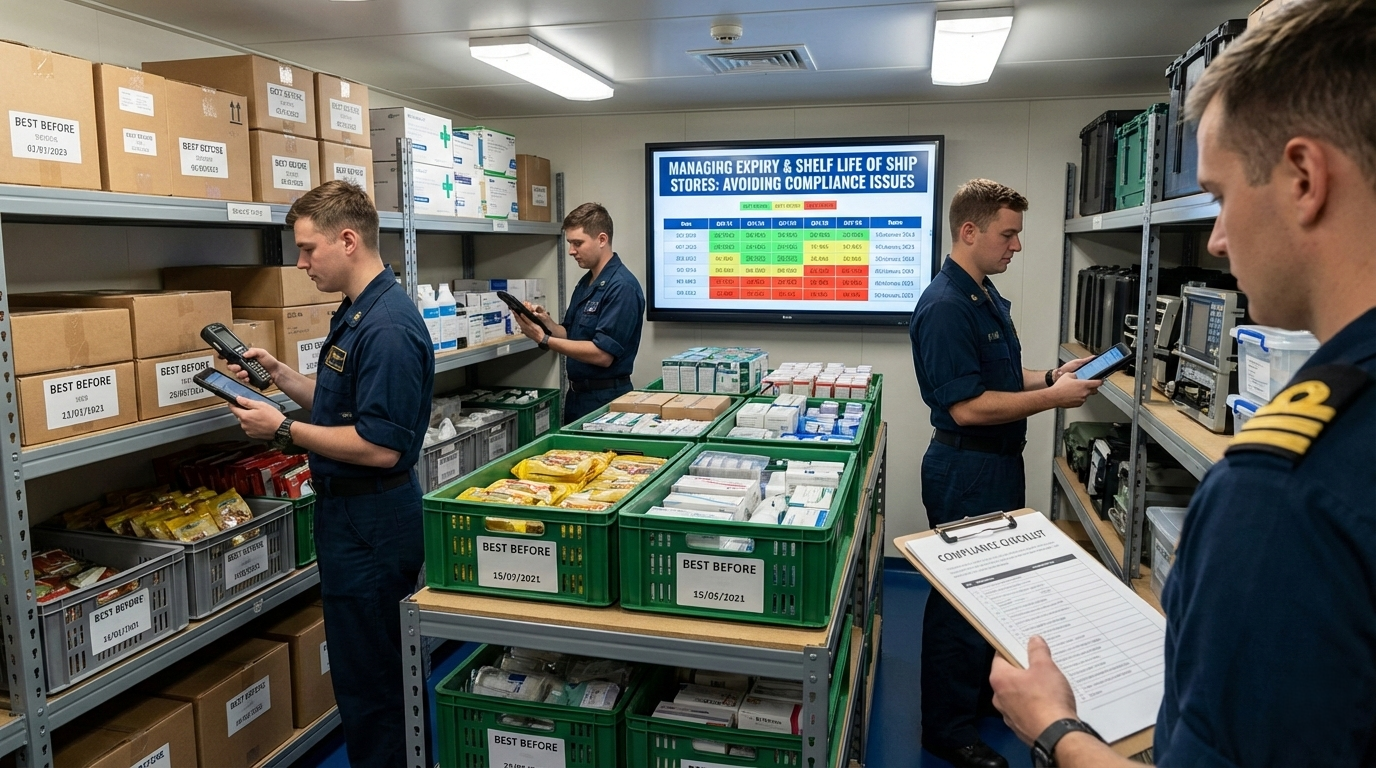
MANAGING EXPIRY & SHELF LIFE OF SHIP STORES: AVOIDING COMPLIANCE ISSUES
Introduction
Effective management of expiry dates and shelf life of ship stores is a crucial
responsibility onboard any vessel. Expired food, medicines, or chemicals can
lead to serious health risks, inspection deficiencies, and regulatory
non-compliance. Solanki Ship Care supports vessels by supplying
compliant, in-date ship stores and helping operators maintain the highest
standards of safety and readiness.
1. Importance of Monitoring Expiry
Dates Onboard
Ensuring Health, Safety, and Regulatory Compliance
Regular monitoring of expiry dates helps prevent the use of unsafe or
ineffective items onboard. Maritime inspectors closely examine ship stores
during audits and port state control inspections, making expiry management a
key compliance area.
Key importance areas include:
• Protection of crew health and wellbeing
• Avoidance of inspection remarks or detentions
• Compliance with flag state and port authority regulations
• Strong inventory and safety management onboard
2. High-Risk Items Onboard
Food, Medicines, and Chemicals
Some ship stores pose higher compliance and safety risks if expired or
mishandled. These items require strict monitoring and proper storage due to
their direct impact on crew safety and vessel operations.
High-risk items include:
• Food provisions prone to spoilage and contamination
• Medicines with limited shelf life and strict storage conditions
• Chemicals such as cleaners, paints, oils, and lubricants
• Safety-related consumables critical for emergency use
3. Storage Practices to Extend Shelf
Life
Proper Handling and Inventory Control
Correct storage conditions significantly improve shelf life and reduce wastage.
Temperature control, clear labeling, and systematic inventory practices help
maintain product quality throughout the voyage.
Best storage practices include:
• Storing products as per manufacturer instructions
• Clear marking of expiry dates and batch numbers
• Following first-in, first-out inventory methods
• Regular checks of storage spaces for cleanliness and ventilation
4. Inspection-Related Risks
Avoiding Deficiencies and Operational Delays
Expired ship stores are a common cause of inspection observations. Poor
documentation or storage practices may result in penalties, operational delays,
or vessel detention. Proactive monitoring minimizes these risks and
demonstrates strong onboard management.
Common inspection findings include:
• Expired food or medical supplies onboard
• Missing or unclear expiry labels
• Improper chemical storage
• Inadequate inventory records
5. How Solanki Ship Care Supports
Compliance
Supplying In-Date and Approved Ship Stores
Solanki Ship Care ensures that all supplied ship stores meet regulatory
requirements and are well within their expiry period. Strict quality checks and
reliable sourcing help vessels stay inspection-ready at all times.
Compliance support includes:
• Fresh and compliant food provisions
• Medicines supplied with valid shelf life and documentation
• Approved chemicals and consumables
• Timely delivery to reduce overstocking and expiry risks
Conclusion
Reliable Expiry Management for Safe and Compliant Operations
Managing the expiry and shelf life of ship stores is essential for maintaining
safety, compliance, and smooth vessel operations. With disciplined onboard
practices and dependable suppliers, inspection risks can be significantly
reduced. Solanki Ship Care remains committed to delivering compliant, in-date
ship stores that support safe voyages and hassle-free inspections across the
marine industry.