
Jun 26, 2026
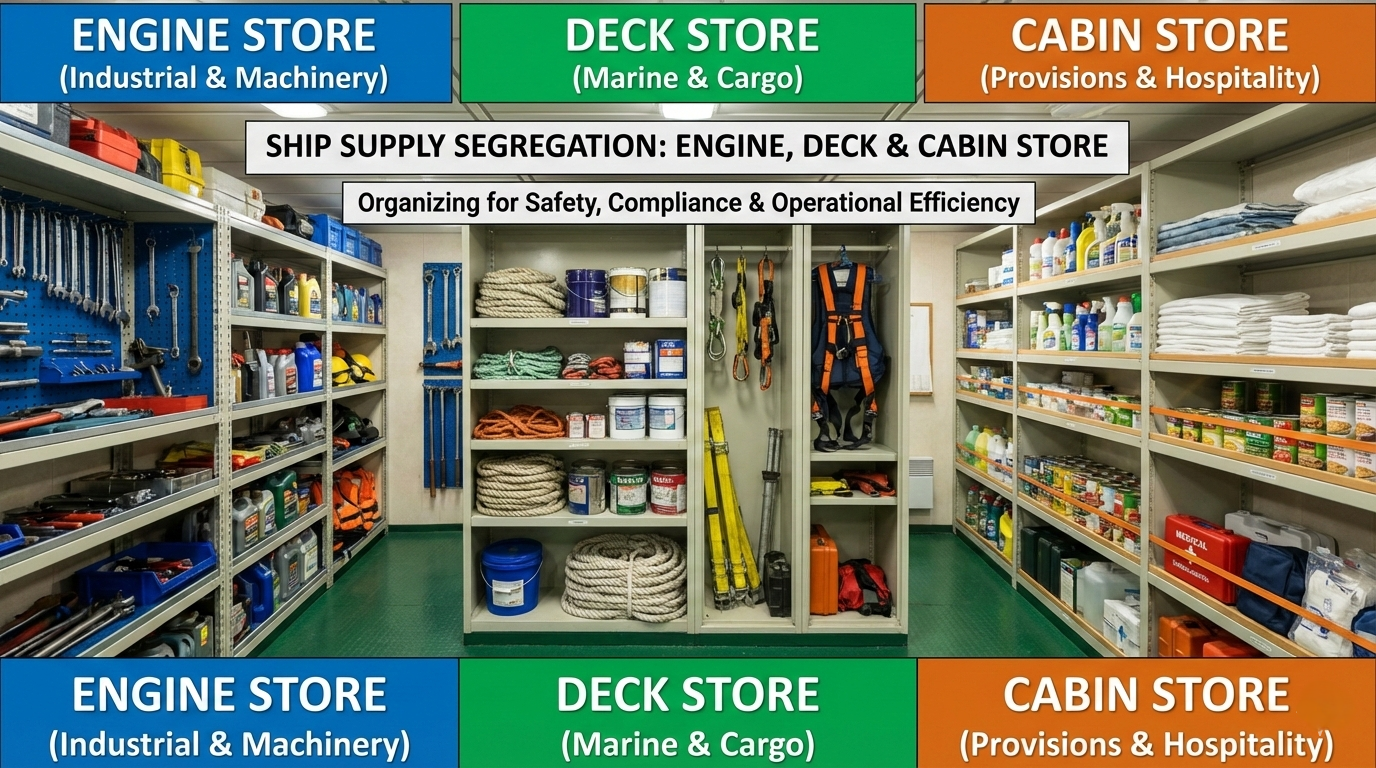
ENGINE, DECK & CABIN STORE SEGREGATION: ORGANIZING SHIP SUPPLIES FOR SAFETY & EFFICIENCY
Introduction
Proper segregation of ship stores is a fundamental requirement for safe,
efficient, and compliant vessel operations. Engine, deck, and cabin stores each
serve distinct operational purposes and demand specific storage conditions.
Improper segregation can lead to safety hazards, operational delays, inspection
deficiencies, and material damage. By implementing structured store segregation
practices, vessels can enhance onboard safety, improve workflow efficiency, and
maintain better inventory control. Solanki Ship Care supports vessel operators
by supplying clearly categorized ship stores aligned with operational and
regulatory requirements.
1. Importance of Proper Store
Segregation Onboard
Creating Order, Safety, and
Operational Discipline
Store segregation ensures that supplies are organized according to function,
risk level, and frequency of use, allowing smooth daily operations and
emergency preparedness.
Key Reasons Store Segregation
Matters
• Prevents cross-contamination between different categories of stores
• Improves crew efficiency and reduces time spent locating items
• Enhances fire safety and risk control
• Supports compliance with maritime safety and inspection standards
• Enables accurate inventory tracking and replenishment
Why This Is Important
A well-segregated storage system minimizes operational confusion, reduces
onboard risks, and reflects strong vessel management during inspections.
2. Differences Between Engine, Deck
& Cabin Stores
Understanding Functional Separation
Onboard
Engine Stores
Engine stores include lubricants, chemicals, spare parts, tools, and
maintenance consumables. These items are often hazardous or flammable and
require controlled access, proper ventilation, and strict fire safety
arrangements.
Deck Stores
Deck stores consist of mooring ropes, wires, shackles, paints, safety
equipment, and cargo-handling tools. These items are frequently exposed to
weather and heavy use, requiring durable storage and easy accessibility.
Cabin Stores
Cabin stores cover provisions, cleaning materials, linen, toiletries, and
catering supplies. These items directly affect crew hygiene, comfort, and
wellbeing and must be stored in clean, dry, and contamination-free conditions.
Why This Is Important
Clear differentiation between store categories ensures appropriate storage
conditions, extends product life, and improves overall onboard organization.
3. Safety Risks of Incorrect Storage
When Poor Segregation Becomes a
Hazard
Incorrect or mixed storage of ship supplies can create serious safety and
operational risks.
Common Risks of Improper Storage
• Fire and explosion hazards from flammable materials stored incorrectly
• Chemical reactions due to incompatible substances kept together
• Crew injuries caused by cluttered or obstructed storage spaces
• Contamination or spoilage of provisions and consumables
• Delays during emergencies due to poor access to critical supplies
Why This Is Important
Correct store segregation significantly reduces onboard hazards and protects
crew, cargo, and the vessel itself.
4. Inspection and Operational
Benefits
Supporting Compliance and Smooth
Vessel Operations
Clearly segregated and well-maintained stores play a key role in inspection
readiness and daily efficiency.
Key Benefits
• Faster and smoother port state and class inspections
• Clear demonstration of safety management standards
• Improved accountability and stock control
• Reduced downtime during maintenance and emergencies
• Enhanced crew discipline and operational efficiency
Why This Is Important
Inspection readiness reflects the overall quality of vessel management. Proper
store segregation helps avoid deficiencies, penalties, and operational
disruptions.
5. How Solanki Ship Care Supplies
Clearly Categorized Ship Stores
Delivering Structured and Reliable
Ship Supply Solutions
Solanki Ship Care ensures that ship stores are supplied with clear
categorization aligned to engine, deck, and cabin requirements.
Service Highlights
• Clearly labeled and categorized ship stores by function
• Alignment with vessel storage plans and safety standards
• Support for segregation of hazardous and non-hazardous items
• Consistent quality and compliance-focused supply practices
• Reliable delivery supporting inspection and operational readiness
Why Choose Solanki Ship Care
• Strong understanding of onboard storage and segregation needs
• Focus on safety, efficiency, and regulatory compliance
• Customized ship supply solutions based on vessel operations
• Trusted support across multiple ports and vessel types
Conclusion
Strengthening Safety and Efficiency
Through Smart Store Segregation
Engine, deck, and cabin store segregation is a critical element of safe and
efficient ship operations. Proper segregation minimizes risks, improves
inspection outcomes, and enhances daily workflow onboard. By understanding the
unique requirements of each store category and implementing structured storage
practices, vessel operators can achieve higher safety standards and operational
efficiency. With Solanki Ship Care as a trusted supply partner, vessels benefit
from clearly categorized, compliance-ready ship stores that support long-term
operational excellence.