
Jun 26, 2026
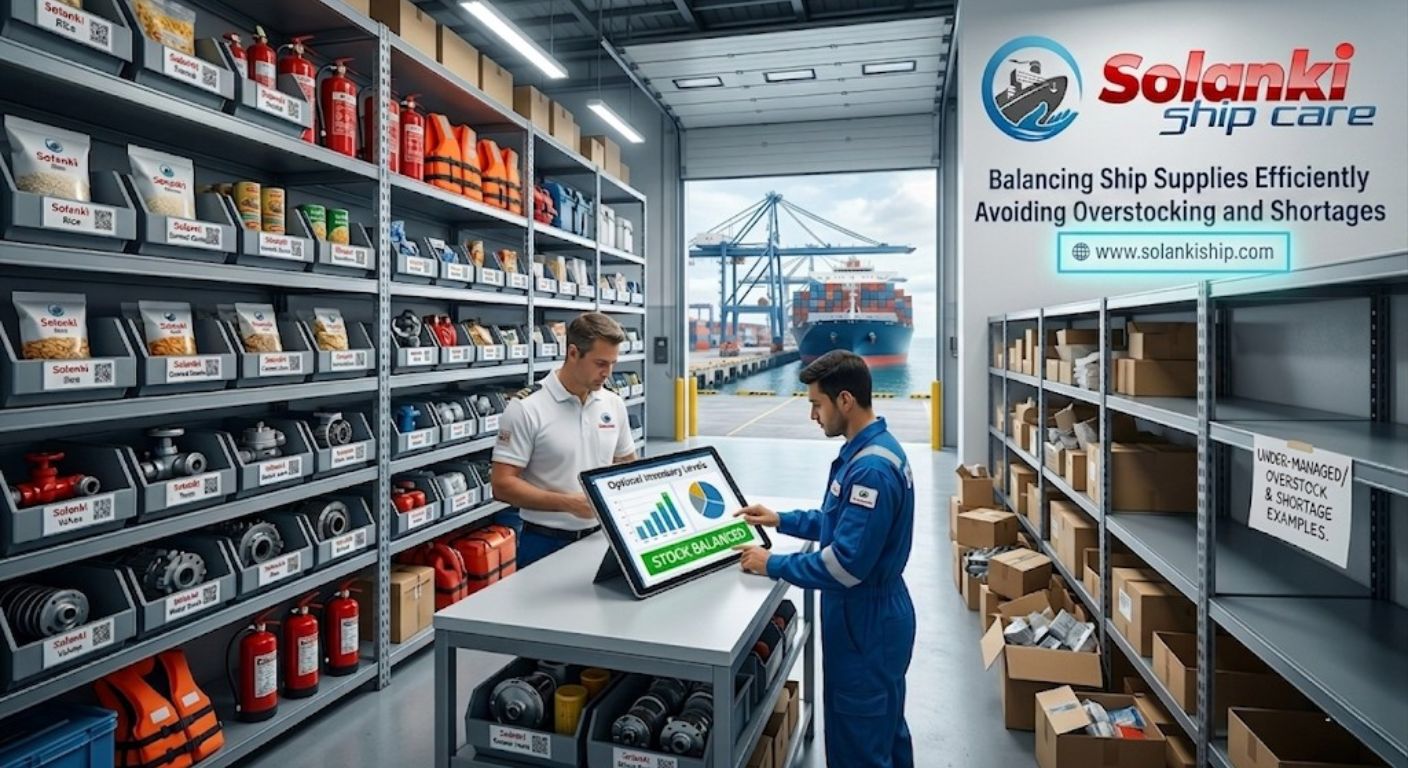
Balancing Ship Supplies Efficiently: Avoiding Overstocking and Shortages
Efficient
ship supply management helps maintain smooth vessel operations throughout the
voyage. Overstocking causes wastage and storage issues, while shortages can
disrupt onboard activities. Solanki Ship Care provides balanced marine supply
solutions based on vessel requirements and voyage needs.
WHY BALANCING
SHIP SUPPLIES IS IMPORTANT
Proper ship supply management helps
vessels operate efficiently without facing inventory shortages or excessive
stock accumulation. Accurate planning improves onboard storage management,
reduces operational costs, supports crew welfare, and ensures uninterrupted
vessel performance throughout the voyage. Effective supply balancing also
minimizes emergency procurement and avoids unnecessary wastage of perishable
and technical materials. Learn more at Solanki Ship Care
1. PROBLEMS
CAUSED BY OVERSTOCKING SHIP SUPPLIES
Excessive ship supplies can create
multiple operational challenges onboard vessels. Overstocking provisions may
result in food spoilage, expired products, and storage congestion. Technical
stores and spare parts can occupy valuable storage space and increase inventory
management difficulties. Excess inventory also increases operational costs and
may lead to wastage of unused consumables during long voyages. Proper inventory
planning helps vessels avoid unnecessary stock accumulation and improve onboard
efficiency.
2. RISKS OF
INSUFFICIENT SHIP SUPPLIES
Insufficient supplies can severely
affect vessel operations and crew welfare. Shortages of food provisions, engine
consumables, safety equipment, or cabin essentials may disrupt daily activities
and create emergency procurement situations. Delays in replenishment can affect
voyage schedules, maintenance activities, and onboard safety compliance.
Reliable supply planning helps vessels avoid operational interruptions caused
by low inventory levels.
3. UNDERSTANDING
ONBOARD CONSUMPTION PATTERNS
Monitoring onboard consumption
patterns is essential for balancing ship supplies effectively. Vessel
departments consume supplies at different rates depending on crew size, voyage
duration, cargo operations, weather conditions, and maintenance requirements.
Galley teams require accurate food consumption tracking, while engine
departments monitor fuel additives, lubricants, and spare part usage. Regular
inventory analysis helps improve forecasting accuracy and prevents both
overstocking and shortages.
4. PLANNING
SUPPLIES ACCORDING TO VOYAGE NEEDS
Every voyage requires customized
supply planning based on operational conditions and travel duration. Long
voyages may require additional provisions, medical supplies, and technical
consumables, while shorter routes may need limited stock quantities. Factors
such as weather conditions, port accessibility, crew strength, cargo type, and
vessel operational schedules must be considered during supply planning.
Accurate voyage-based supply management improves efficiency and reduces
unnecessary inventory buildup.
5. REDUCING
WASTAGE AND EMERGENCY SUPPLY REQUESTS
Proper inventory management helps
reduce material wastage and urgent supply requirements. Maintaining updated
stock records, monitoring expiry dates, and analyzing previous consumption
trends allow vessels to optimize supply quantities. Planned replenishment
reduces the need for costly emergency deliveries and helps maintain smooth
vessel operations. Efficient supply coordination also minimizes delays caused
by urgent procurement processes at ports.
6. HOW SOLANKI
SHIP CARE HELPS BALANCE SUPPLY QUANTITIES
Solanki Ship Care provides reliable
ship chandelling and marine supply services designed to support efficient
onboard inventory management. Their team carefully evaluates vessel
requirements, voyage duration, crew size, and operational needs before arranging
supply deliveries. From fresh provisions and bonded stores to engine
consumables and safety equipment, Solanki Ship Care ensures vessels receive the
right quantity of supplies without overstocking or shortages. Their efficient
logistics coordination helps vessels maintain uninterrupted operations and
improved inventory control.
CONCLUSION
Balancing ship supplies efficiently
is essential for reducing operational costs, preventing shortages, minimizing
wastage, and maintaining smooth vessel performance. Accurate consumption
monitoring, voyage-based planning, and reliable marine supply support help
vessels avoid inventory-related challenges. Solanki Ship Care delivers
professional ship supply solutions that help vessels maintain the perfect
balance between operational readiness and inventory efficiency.
For reliable and professional ship
supply services, visit Solanki Ship Care
FREQUENTLY ASKED
QUESTIONS (FAQ)
Q1. Why is
balancing ship supplies important?
Balancing ship supplies helps
prevent shortages, reduce wastage, improve storage management, and maintain
smooth vessel operations.
Q2. What
problems are caused by overstocking onboard vessels?
Overstocking can lead to storage
congestion, spoiled provisions, expired products, increased operational costs,
and inventory management difficulties.
Q3. How do
vessels monitor onboard consumption patterns?
Vessels monitor inventory usage
through regular stock analysis, department-wise tracking, and consumption
forecasting based on voyage requirements.
Q4. How can
vessels reduce emergency supply requests?
By maintaining updated stock
records, planning replenishment early, and monitoring inventory consumption
regularly.
Q5. How does
Solanki Ship Care help vessels manage supplies efficiently?
Solanki Ship Care provides
customized marine supply solutions based on voyage needs, crew size, and
operational requirements to avoid overstocking and shortages.