
Jul 20, 2026
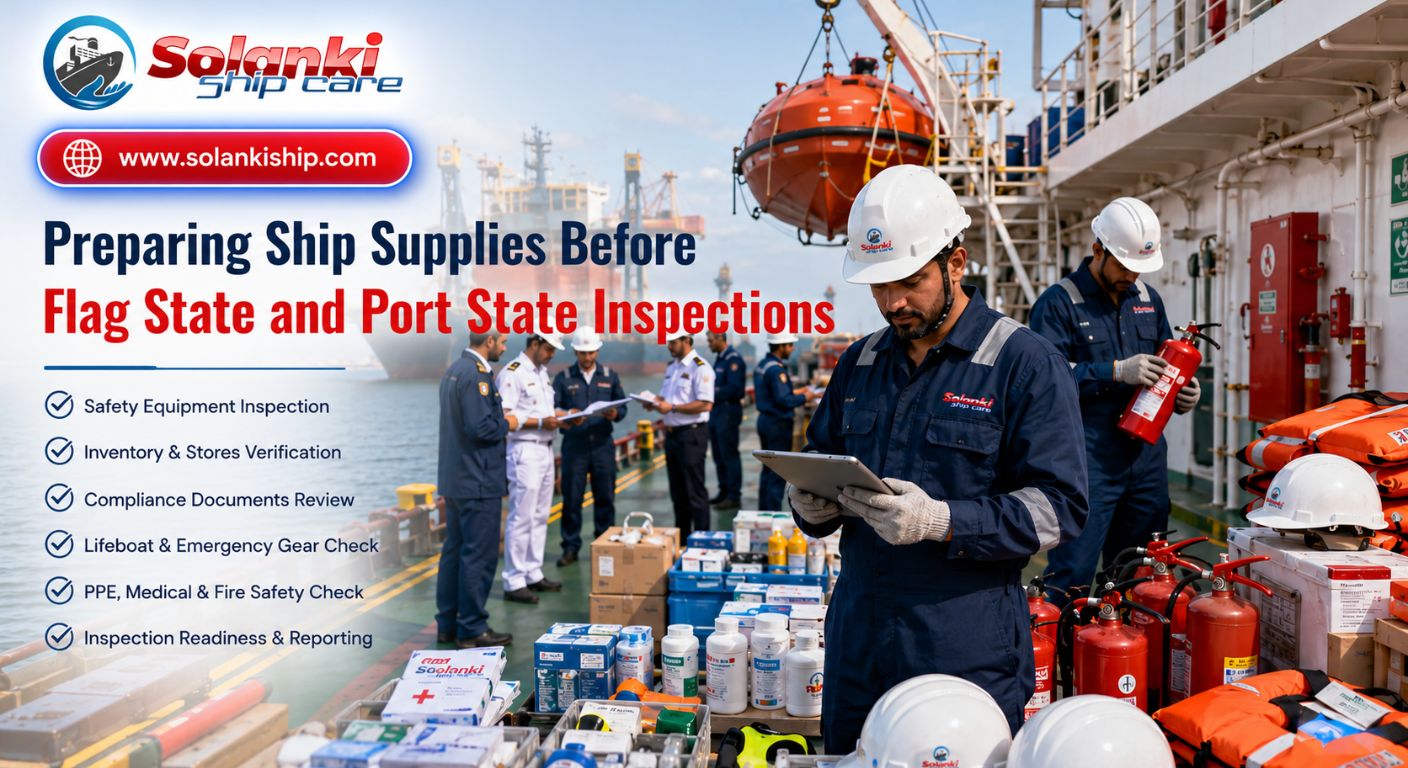
Preparing Ship Supplies Before Flag State and Port State Inspections
Flag
State and Port State inspections ensure vessels meet safety and regulatory
standards. Proper ship supply preparation helps avoid deficiencies and
delays. Solanki Ship Care supports vessels with reliable marine supplies
and inspection readiness assistance.
WHY SHIP SUPPLY
PREPARATION IS IMPORTANT FOR INSPECTIONS
Inspectors conducting Flag State and
Port State examinations often review onboard supplies to confirm that vessels
are adequately equipped for safe operations and crew welfare. When supplies are
expired, damaged, missing, or improperly documented, inspectors may issue
observations, deficiencies, or non-conformities that can affect vessel
operations.
Careful planning and efficient
supply management demonstrate a vessel’s commitment to compliance while
ensuring that all operational and safety requirements are met throughout the
voyage.
1. COMMON
SUPPLY-RELATED INSPECTION OBSERVATIONS
One common cause of inspection
deficiencies is poor management of onboard supplies and equipment. Inspectors
often find expired safety equipment, insufficient PPE, missing emergency
supplies, incomplete medical inventories, inaccurate records, and improper
storage practices.
These issues can result in
inspection remarks, corrective actions, or operational delays if not addressed
promptly. Regular monitoring of onboard supplies helps ensure successful
inspections.
2. ENSURING
REQUIRED ITEMS ARE AVAILABLE ONBOARD
Before any Flag State or Port State
inspection, vessel operators should verify that all required supplies are
available and in good condition. This includes life-saving appliances,
emergency equipment, firefighting consumables, PPE, medical stores, navigation
consumables, engine room materials, crew welfare supplies, and environmental
protection equipment.
Regular inventory checks help ensure
required items are present, functional, and inspection-ready while reducing the
risk of shortages or inspection observations.
3. DOCUMENTATION
AND INVENTORY CHECKS
Accurate documentation is essential
for inspection readiness. Inspectors often compare onboard records with actual
inventory to verify compliance, and any discrepancies may lead to further
scrutiny.
Vessel operators should maintain key
documents such as supply delivery records, inventory logs, safety equipment
certificates, maintenance records, medical inventory documentation, and
inspection reports. Well-organized records help demonstrate compliance and
support a smoother inspection process.
4. AVOIDING
NON-CONFORMITIES THROUGH PROACTIVE PLANNING
Many inspection deficiencies can be
avoided through proactive planning and routine onboard checks. Regular audits,
stock monitoring, replacement of expired items, certificate verification,
proper storage, updated inventory records, and equipment inspections help
maintain compliance.
A proactive approach to supply
management reduces the risk of non-conformities while supporting safe and
uninterrupted vessel operations.
5. HOW SOLANKI
SHIP CARE SUPPORTS INSPECTION READINESS
Solanki Ship Care provides ship
supply solutions to help vessels prepare for Flag State and Port State
inspections. The company delivers marine supplies, certified safety equipment,
and supports inventory replenishment, expiry monitoring, and emergency supply
needs.
With reliable logistics and maritime
expertise, Solanki Ship Care helps vessel operators maintain compliance, reduce
inspection observations, and improve operational efficiency.
CONCLUSION
Preparing ship supplies before Flag
State and Port State inspections helps ensure safety, compliance, and smooth
operations. Regular inventory checks, proper documentation, and reliable
support from Solanki Ship Care keep vessels inspection-ready.
Visit Solanki Ship Care
FREQUENTLY ASKED QUESTIONS (FAQ)
Q1. What are
Flag State and Port State inspections?
Flag State and Port State
inspections are regulatory examinations conducted to verify that vessels comply
with international maritime safety, environmental protection, and operational
standards.
Q2. What
supply-related issues are commonly identified during inspections?
Inspectors frequently identify
issues such as expired safety equipment, inadequate personal protective
equipment, incomplete medical supplies, inaccurate inventory records, damaged
safety gear, and missing emergency equipment.
Q3. Why is
inventory management important before inspections?
Effective inventory management
ensures that all required supplies are available, properly maintained,
compliant with regulations, and accurately documented for inspection purposes.