

Jul 25, 2026
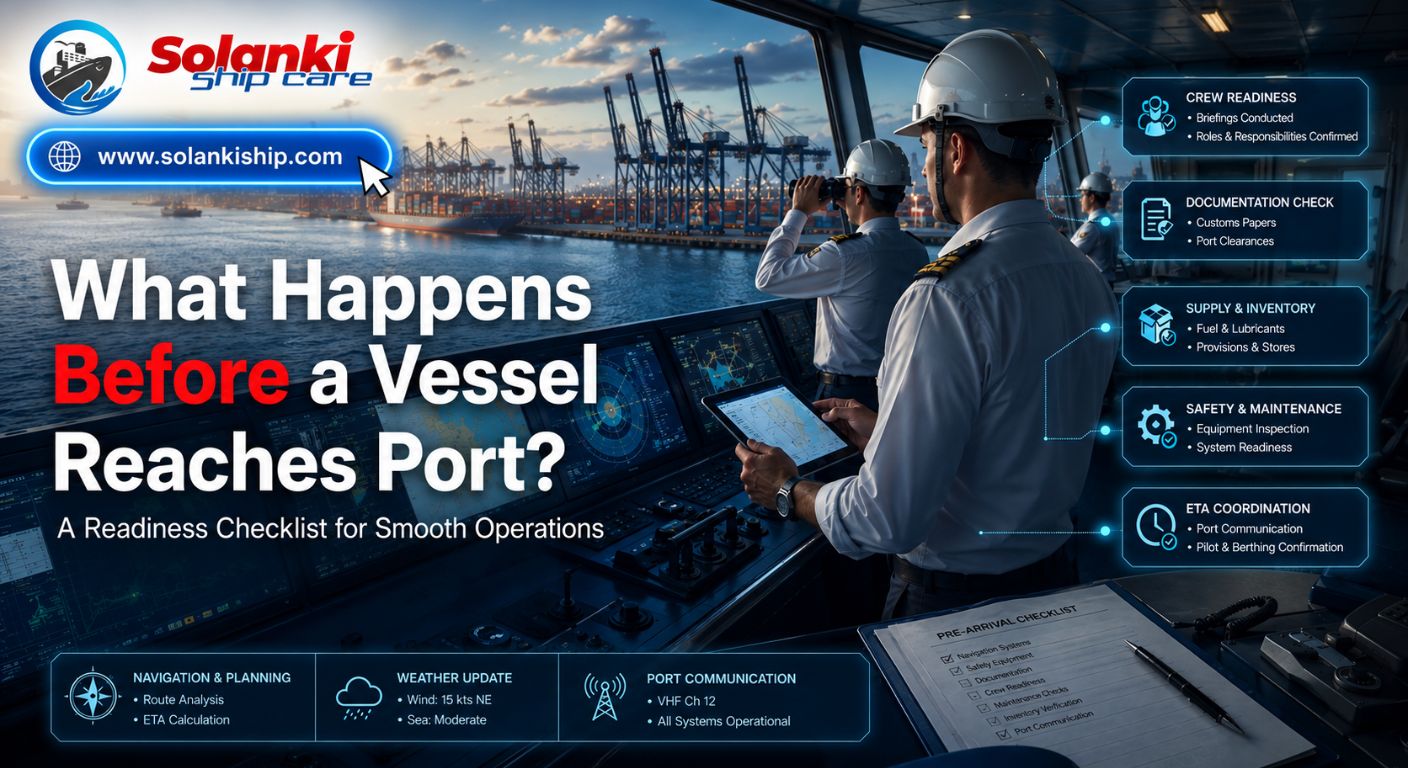
What Happens Before a Vessel Reaches Port: A Readiness Checklist for Smooth Operations
Efficient
vessel operations start before a ship reaches port. Proper planning,
communication, documentation, and preparation help prevent delays, reduce
costs, and ensure smooth port operations.
A
vessel pre-arrival checklist helps coordinate activities and supports a
seamless port call. Solanki Ship Care assists vessels with marine services and
operational support to ensure readiness before arrival.
WHY PRE-ARRIVAL
VESSEL READINESS IS IMPORTANT
The period before a vessel reaches
port is critical for planning and coordination. Every aspect of the vessel's
arrival must be reviewed, from documentation and crew requirements to supplies,
inspections, and technical support.
Proper pre-arrival planning helps
reduce turnaround time, avoid unexpected delays, improve communication with
port authorities, and ensure all operational requirements are fulfilled before
the vessel berths. Learn more at Solanki Ship Care.
1. PRE-ARRIVAL
PLANNING AND COMMUNICATION
Effective communication is essential
for vessel readiness. Before arrival, vessel operators, ship agents, port
authorities, and service providers should coordinate closely.
Key details such as ETA, cargo
information, berth requirements, crew changes, and service requests should be
shared in advance.
This helps stakeholders prepare
resources, streamline operations, and reduce waiting times upon arrival.
2. DOCUMENTATION
AND COMPLIANCE CHECKS
Accurate documentation is essential
for smooth vessel clearance and port operations. Missing or incorrect paperwork
can cause delays and extra costs. Key documents include arrival notifications,
cargo manifests, crew lists, ship certificates, customs declarations, port
clearance documents, and safety certificates. Reviewing these documents before
arrival helps ensure compliance and avoid administrative delays.
3. IDENTIFYING
SERVICE REQUIREMENTS BEFORE ARRIVAL
Vessels often require various
support services while in port, so identifying these needs early helps service
providers prepare resources efficiently. Common requirements include ship
supplies, engine and deck stores, fresh water, bunkering, waste disposal, crew
changes, technical repairs, safety inspections, and spare parts delivery.
Planning these services in advance ensures timely support upon arrival and
helps reduce operational delays.
4. OPERATIONAL
AND TECHNICAL READINESS CHECKS
Before entering port, vessel
operators should ensure all key operational and technical systems are
functioning properly. This includes checking engine performance, navigation and
safety equipment, communication systems, cargo handling equipment, and fuel and
freshwater levels. Completing these checks before arrival helps identify issues
early and supports smooth, efficient port operations.
5. AVOIDING
DELAYS DURING PORT STAY
Port delays can increase operational
costs and disrupt voyage schedules. Common causes include incomplete planning, documentation
issues, and unavailable services.
To reduce delays, vessel operators
should submit documents on time, confirm berth arrangements, schedule services
in advance, and coordinate with port agents. Proper preparation helps vessels
complete port activities efficiently and stay on schedule.
CONCLUSION
Successful port operations begin
with thorough pre-arrival preparation. Effective communication, accurate
documentation, operational readiness checks, and advance service planning help
vessels avoid delays and reduce operational costs.
A structured vessel readiness
checklist ensures smooth coordination between ship operators, port authorities,
and service providers. Solanki Ship Care supports vessel readiness with
reliable marine services, helping ships achieve efficient and hassle-free port
calls.
Visit Solanki Ship Care
to learn more about professional marine support and vessel readiness solutions.
FREQUENTLY ASKED
QUESTIONS (FAQ)
Q1. What is
vessel readiness before port arrival?
Planning and preparations completed
before a ship reaches port.
Q2. Why is
pre-arrival planning important?
It helps reduce delays, ensure
compliance, and improve efficiency.
Q3. What
documents are required before arrival?
Crew lists, cargo manifests, ship
certificates, and clearance documents.
Q4. How can
vessels avoid delays?
Through timely documentation,
communication, and advance planning.
Q5. How does
Solanki Ship Care help?
By providing marine supplies,
technical support, and operational assistance.