
Jul 01, 2026
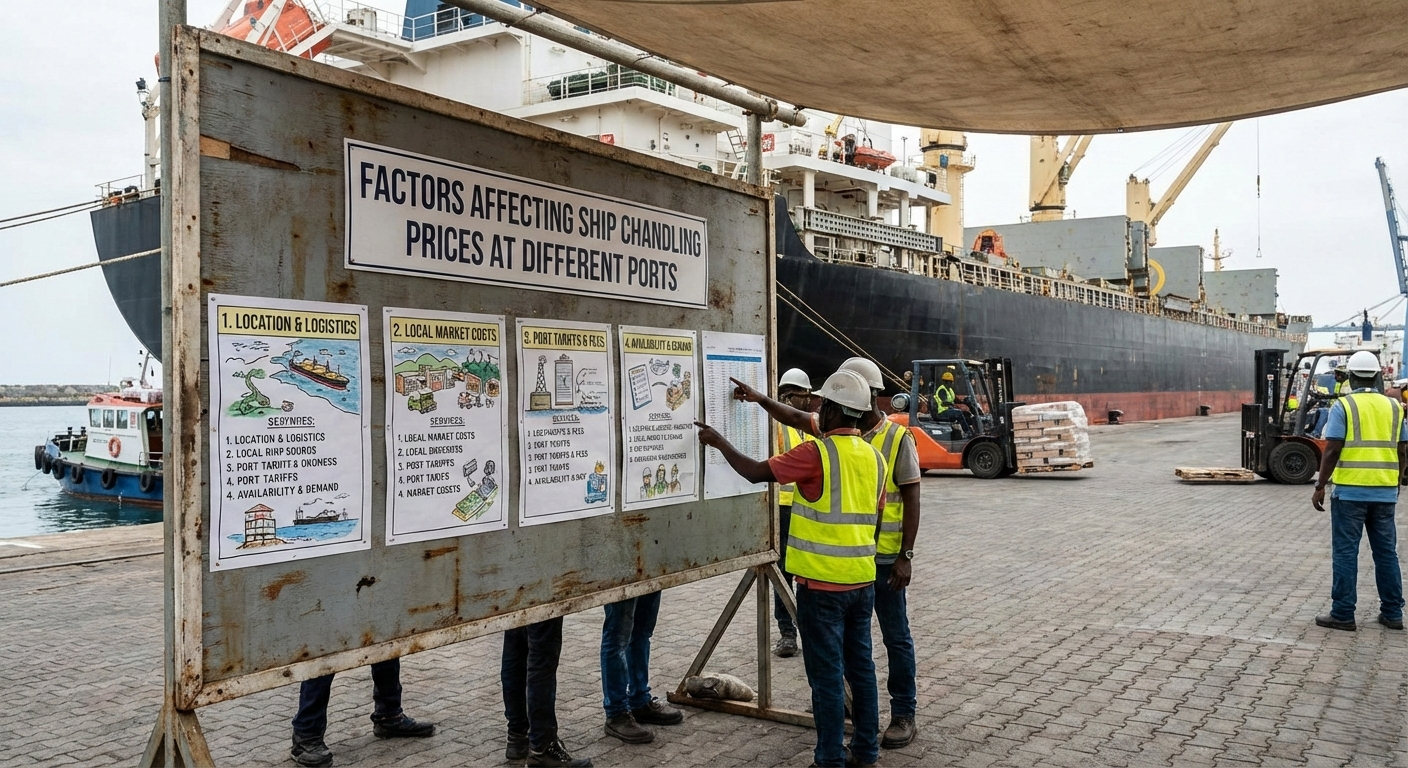
FACTORS AFFECTING SHIP CHANDLING PRICES AT DIFFERENT PORTS
Introduction
Ship chandling plays a vital role in ensuring uninterrupted vessel operations
by supplying provisions, bonded stores, technical items, and consumables at
ports worldwide. However, ship chandling prices often vary significantly from
one port to another. These variations are influenced by multiple operational,
regulatory, and logistical factors. Understanding these elements helps
shipowners and operators plan budgets efficiently and avoid unexpected costs.
Solanki Ship Care focuses on transparency, reliability, and competitive
pricing, ensuring vessels receive quality supplies without hidden charges.
1.
Port Location and Accessibility
How Geography Impacts Chandling
Costs
The geographical location of a port and its accessibility directly affect ship
chandling prices. Ports with high traffic, advanced infrastructure, and easy
access to suppliers often offer more competitive rates compared to remote or
less-developed ports.
Key Influencing Factors:
• Proximity to major supply hubs and warehouses
• Port congestion and berth availability
• Ease of access for transport vehicles and suppliers
Why It Matters
Well-connected ports reduce transportation and handling costs, while remote
ports may incur higher expenses due to limited suppliers and longer delivery
routes.
2.
Type and Quantity of Supplies Required
Demand and Volume Drive Pricing
The nature and volume of supplies requested significantly influence ship
chandling costs. Bulk orders often benefit from better pricing, while
specialized or low-demand items may cost more.
Cost-Related Factors Include:
• Provisions, bonded stores, deck, and engine supplies
• Technical spares and safety equipment
• Quantity, packaging, and storage requirements
Why It Matters
Accurate planning and consolidated orders help optimize costs and ensure timely
availability of essential supplies.
3.
Urgency and Delivery Timelines
Time Sensitivity Adds to Cost
Urgent or last-minute supply requests usually result in higher prices due to
expedited sourcing, overtime labor, and express logistics arrangements.
Factors Affecting Pricing:
• Short notice or emergency supply requests
• Night-time, weekend, or holiday deliveries
• Tight vessel schedules and limited port stay
Why It Matters
Advanced planning allows ship operators to avoid premium charges and ensures
smooth coordination with port schedules.
4.
Customs, Port Regulations, and Logistics Costs
Regulatory Compliance Influences
Pricing
Each port operates under specific customs procedures, port regulations, and
documentation requirements, all of which affect chandling costs.
Cost Components Include:
• Customs clearance and documentation fees
• Port entry permits and security compliance
• Local transportation, handling, and storage charges
Why It Matters
Efficient compliance with port and customs regulations minimizes delays,
penalties, and additional expenses.
5.
How Solanki Ship Care Ensures Transparent and Competitive Pricing
Trusted Ship Chandling Solutions
Across Ports
Solanki Ship Care prioritizes transparency, efficiency, and cost-effectiveness
in ship chandling services.
Our Approach Includes:
• Clear and itemized quotations with no hidden charges
• Strong local supplier networks for competitive pricing
• Efficient logistics planning to meet vessel schedules
• Expertise in customs and port regulations for smooth delivery
Why Choose Solanki Ship Care
With a commitment to reliability and fairness, Solanki Ship Care ensures
vessels receive high-quality supplies at optimized costs, regardless of port
location.
Conclusion
Understanding Pricing for Smarter Ship Operations
Ship chandling prices vary across ports due to factors such as location, supply
requirements, urgency, and regulatory costs. By understanding these elements,
shipowners and operators can plan effectively and control expenses. With its
transparent pricing model, regulatory expertise, and strong supply network,
Solanki Ship Care delivers dependable and cost-efficient ship chandling
solutions, supporting smooth and efficient vessel operations worldwide.