
Aug 01, 2026

Supplying Ships Within Tight Port Windows: Managing Time-Critical Deliveries
Supplying
ships within tight port windows is a major challenge in ship supply services.
Limited time and strict schedules demand fast, efficient delivery. Solanki Ship
Care ensures quick, reliable supply of essential items without delays.
WHY TIGHT PORT WINDOWS CREATE
LOGISTICAL CHALLENGES
Port stay durations are often limited due to heavy traffic, strict port
regulations, and fixed sailing schedules. This leaves a very narrow timeframe
for loading supplies onboard. Any delay in coordination, documentation, or
transport can lead to missed delivery opportunities. Efficient planning and
real-time execution are essential to overcome these challenges and ensure
seamless ship supply operations. Learn more at www.solankiship.com
1. CHALLENGES OF LIMITED PORT STAY
DURATION
Short port stays require rapid execution of supply operations. Suppliers must
work within tight deadlines while managing multiple vessels and cargo
requirements. Unexpected delays such as weather conditions, port congestion, or
clearance issues can further complicate the process. Proper planning, quick
decision-making, and experienced logistics teams are crucial to handle these
time-sensitive situations effectively.
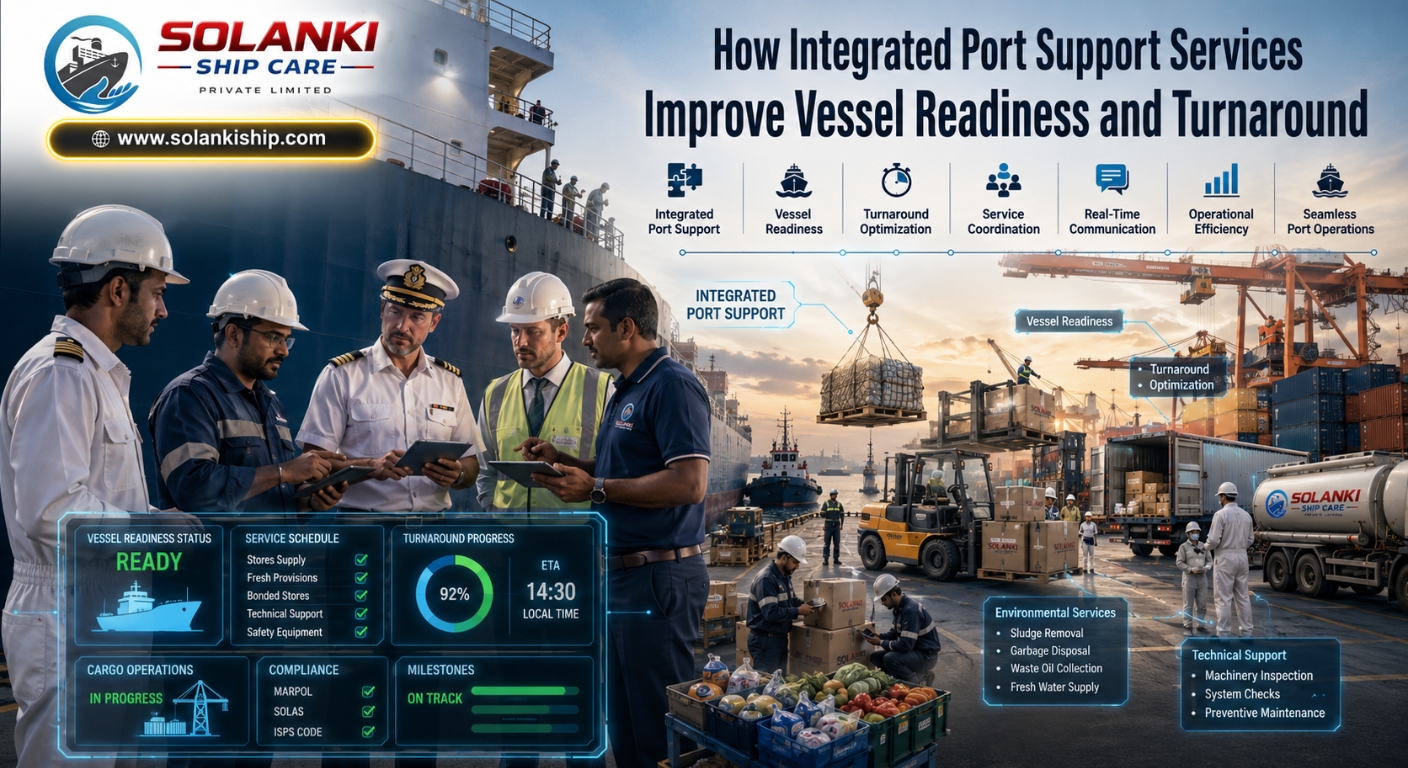
2. PRIORITIZING ESSENTIAL SUPPLIES
When time is limited, prioritizing essential supplies becomes critical. Items
such as food, fresh water, safety equipment, and technical necessities must be
delivered first. A well-organized supply system ensures that high-priority
goods are identified, packed, and dispatched without delay. This helps maintain
vessel operations and ensures crew safety during transit.
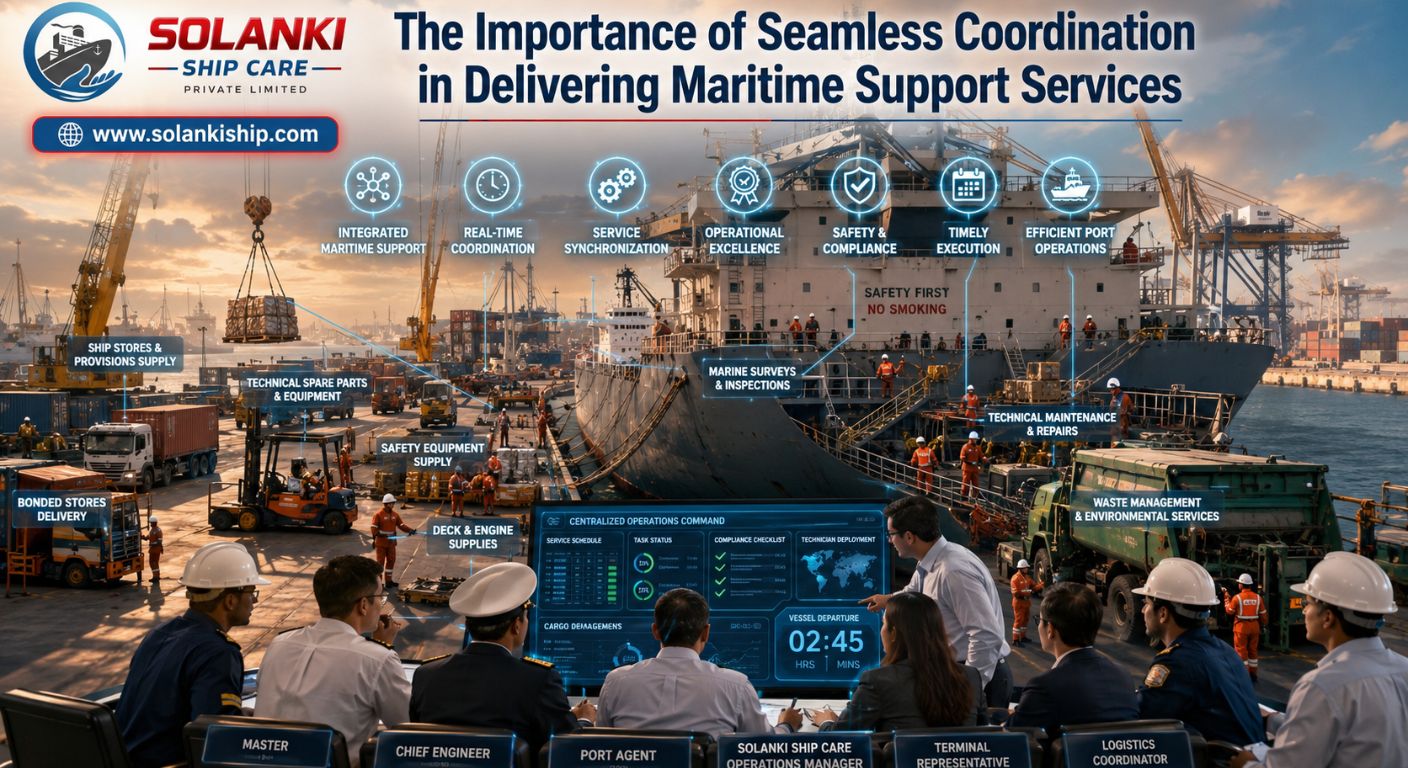
3. FAST COORDINATION WITH VESSEL
CREW
Clear and quick communication with the vessel crew is key to successful
delivery. Real-time coordination helps confirm supply lists, delivery
schedules, and port arrangements. Efficient communication reduces confusion,
prevents errors, and ensures smooth handover of supplies. Strong coordination
between suppliers, port authorities, and ship crew enables faster and more
reliable operations.
4. AVOIDING MISSED DELIVERY
TIMELINES
Missing a delivery window can lead to serious operational and financial
consequences. To avoid this, suppliers must maintain strict timelines, accurate
documentation, and efficient transport systems. Backup planning and contingency
strategies are also important to handle unexpected delays. A proactive approach
ensures that deliveries are completed within the limited port timeframe.
5. HOW SOLANKI SHIP CARE MANAGES
TIME-SENSITIVE DELIVERIES
Solanki Ship Care excels in handling urgent and time-bound ship supply
requirements. Their team ensures advance planning, efficient inventory
management, and quick dispatch of supplies. With strong coordination, reliable
transport systems, and real-time tracking, they ensure deliveries are completed
within tight port schedules. Their expertise in marine logistics services
guarantees seamless operations even under high-pressure conditions.
CONCLUSION
Managing ship supplies within tight port windows requires precision, speed, and
expertise. From prioritizing essential items to ensuring timely delivery, every
step must be carefully executed. Solanki Ship Care provides reliable and
efficient solutions for time-critical deliveries, ensuring smooth vessel
operations and uninterrupted supply chains.
For fast and dependable ship supply services, visit www.solankiship.com
FREQUENTLY ASKED QUESTIONS (FAQ)
Q1. What are tight port windows in ship supply?
They refer to limited time available for supplying vessels while they are
docked at port.
Q2. Why is prioritizing supplies
important?
It ensures essential items are delivered first within limited timeframes.
Q3. How can delays in ship supply be
avoided?
Through proper planning, fast coordination, and efficient logistics management.
Q4. What role does communication
play in ship supply?
It helps in accurate scheduling, reducing errors, and ensuring smooth delivery.
Q5. How does Solanki Ship Care
manage urgent deliveries?
By using advanced planning, quick dispatch systems, and strong coordination
with port and vessel teams.