
Aug 01, 2026
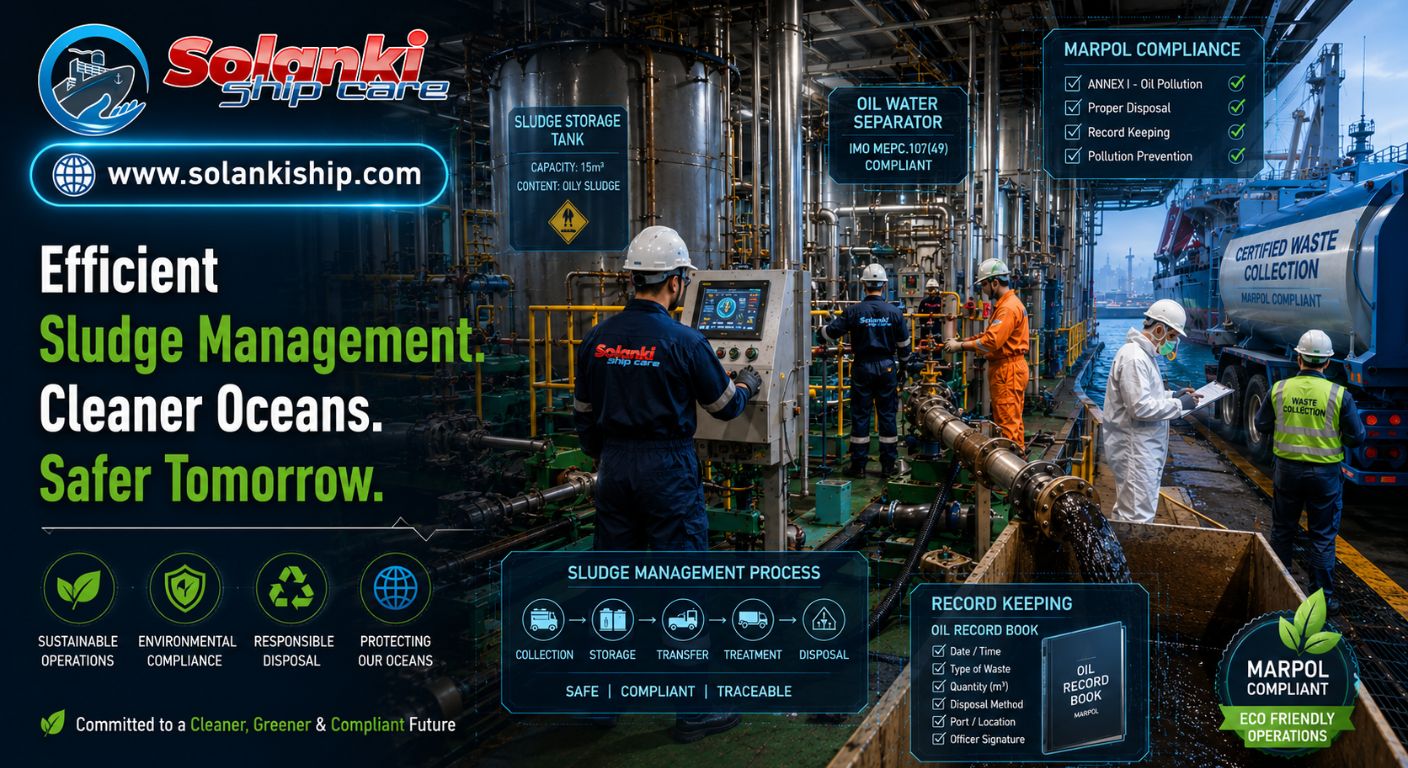
Sludge Management Onboard Ships: Challenges, Compliance, and Best Practices
Effective sludge management is vital
for ship operations, environmental protection, and regulatory compliance.
Proper storage, handling, and disposal of sludge help vessels meet regulations,
reduce environmental risks, and maintain efficient operations.
UNDERSTANDING
ENGINE ROOM SLUDGE
Engine room sludge is a semi-solid
waste made up of oily residues, fuel contaminants, water, lubricants, and other
impurities generated during ship operations. It is commonly produced through
fuel purification, oil treatment, machinery maintenance, and bilge water
processing.
The amount of sludge generated
depends on factors such as fuel quality, engine condition, and vessel
operations. Since sludge contains harmful pollutants, it must be handled
properly to prevent marine pollution and ensure compliance with environmental
regulations. Learn more at Solanki Ship Care.
1. MARPOL
REQUIREMENTS FOR SLUDGE DISPOSAL
The International Convention for the
Prevention of Pollution from Ships (MARPOL Annex I) sets strict rules for
managing oily waste and sludge onboard vessels.
Under MARPOL, ships must store
sludge in designated tanks, maintain accurate Oil Record Books, and dispose of
sludge through approved shore reception facilities or compliant onboard
incinerators.
2. RISKS OF
IMPROPER SLUDGE HANDLING
Improper sludge handling poses
environmental, operational, and financial risks. Marine pollution from illegal
discharge can harm aquatic ecosystems and coastal areas.
It may also result in regulatory
investigations, heavy fines, and increased scrutiny from maritime authorities.
3. CHALLENGES IN
ONBOARD SLUDGE MANAGEMENT
Managing sludge onboard ships comes
with several challenges. Limited storage capacity is a common issue, as sludge
accumulates continuously during voyages and requires careful monitoring and
disposal planning.
Fuel quality also affects sludge
generation, with lower-quality fuels producing more waste. In addition,
changing environmental regulations require crews to stay updated on compliance
requirements.
4. IMPORTANCE OF
CERTIFIED SLUDGE DISPOSAL SERVICES
Certified sludge disposal services
help vessels manage waste responsibly. Authorized providers follow approved
procedures for collecting, transporting, and disposing of sludge in line with
international and local regulations.
Using certified disposal companies
ensures MARPOL compliance, proper documentation, reduced environmental risks,
and better preparedness for inspections through accurate waste management
records.
5. HOW SOLANKI
SHIP CARE MANAGES SLUDGE REMOVAL EFFICIENTLY
Solanki Ship Care provides reliable
sludge removal services that support vessel compliance and environmental responsibility.
Their team ensures safe sludge collection, transfer, and disposal in line with
regulatory requirements.
Using efficient procedures and
authorized disposal facilities, Solanki Ship Care delivers timely service,
proper documentation, and responsible waste management. Their focus on safety
and compliance helps ship owners reduce risks and maintain smooth vessel
operations.
CONCLUSION
Sludge management is essential for
compliant and environmentally responsible ship operations. Proper handling,
storage, and disposal of engine room sludge help vessels meet MARPOL
requirements, protect marine environments, and avoid penalties.
By following effective sludge
management practices and working with trusted providers like Solanki Ship Care,
ship operators can ensure safe disposal, regulatory compliance, and efficient
waste management.
Visit Solanki Ship Care
FREQUENTLY ASKED
QUESTIONS (FAQ)
Q1. What is
engine room sludge?
Engine room sludge is
a mix of oily residues, contaminants, water, and waste from ship operations.
Q2. What are
the MARPOL requirements for sludge disposal?
MARPOL requires proper
storage, recordkeeping, and disposal through approved facilities.
Q3. Why is
improper sludge disposal dangerous?
It can cause
pollution, fines, and operational issues.
Q4. Why should
ships use certified sludge disposal services?
They ensure
compliance, safe handling, and proper disposal.
Q5. How does
Solanki Ship Care support sludge management?
Solanki Ship Care provides sludge collection and disposal through authorized facilities.