
Aug 01, 2026
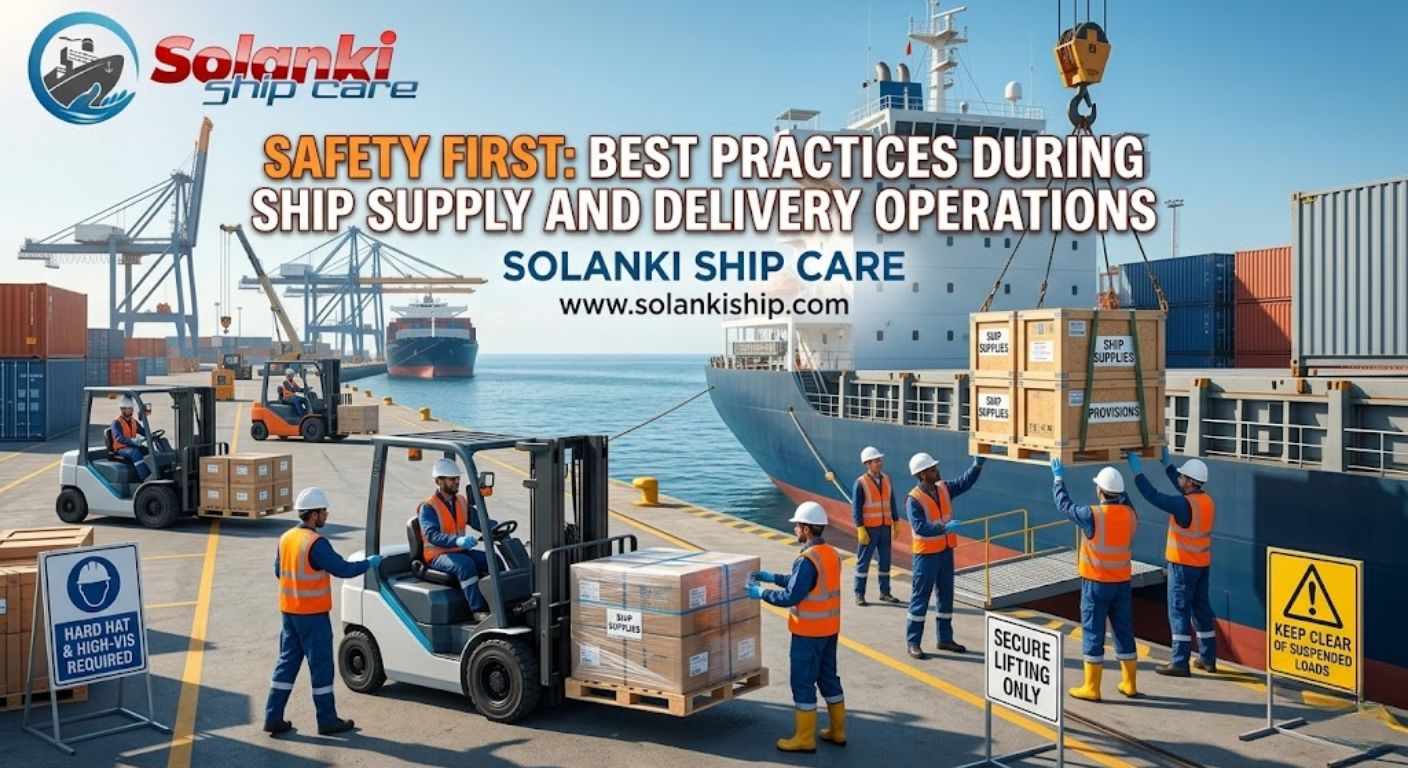
SAFETY FIRST: BEST PRACTICES DURING SHIP SUPPLY AND DELIVERY OPERATIONS | SOLANKI SHIP CARE
Solanki Ship Care follows strict safety protocols
during ship supply and delivery operations across all major Indian ports,
ensuring secure handling, risk prevention, and crew safety at Mumbai, Chennai,
Kandla, Visakhapatnam, Kolkata, Mundra, and more.
SAFE SHIP
SUPPLY AND DELIVERY OPERATIONS ACROSS ALL MAJOR INDIAN PORTS
Safety is a critical component of ship supply and delivery operations. From
dockside handling to onboard transfer, every stage involves potential risks
that must be carefully managed. In today’s fast-paced maritime industry,
following proper safety procedures ensures not only the protection of crew and
cargo but also smooth and delay-free vessel operations.
A
well-structured safety system minimizes accidents, ensures compliance with port
regulations, and protects valuable marine supplies. As a trusted ship chandler
across India, Solanki Ship Care (www.solankiship.com) prioritizes safety at every step of ship supply
and delivery.
1. SAFETY
PROTOCOLS FOR DOCKSIDE SUPPLY DELIVERY
Ensuring Secure Operations at Port Terminals
Dockside operations are one of the most sensitive stages in ship supply. Proper
safety protocols are essential to prevent accidents and ensure smooth delivery.
Key safety
measures include controlled access to dock areas, proper traffic management for
supply vehicles, clear communication with port authorities, and designated safe
zones for loading and unloading.
Solanki
Ship Care strictly follows port safety guidelines and coordinates with terminal
authorities across all Indian ports to ensure every dockside operation is
conducted in a controlled and secure environment.
2.
HANDLING HEAVY STORES AND EQUIPMENT
Safe Lifting and Movement of Marine Supplies
Handling heavy ship stores, machinery parts, and bulk provisions requires
specialized techniques and equipment. Improper handling can lead to serious
injuries and material damage.
Important
practices include using cranes, forklifts, and lifting gear certified for
marine operations, ensuring proper weight distribution, securing loads during
transport, and training staff in safe lifting techniques.
Solanki
Ship Care ensures that all heavy cargo and technical equipment are handled
using approved lifting methods and modern handling tools to maintain safety and
efficiency during operations.
3. PPE
AND CREW SAFETY CONSIDERATIONS
Protecting Personnel During Ship Supply Operations
Personal Protective Equipment (PPE) plays a vital role in ensuring crew safety
during ship supply and delivery. Every individual involved in the operation
must be properly equipped to minimize risks.
Essential
PPE includes safety helmets, gloves, high-visibility jackets, safety shoes, and
protective eyewear. In certain operations, additional gear such as harnesses or
respiratory protection may be required.
Solanki
Ship Care enforces strict PPE compliance for all staff and ensures that safety
gear is worn at all times during dockside and onboard operations, reducing the
risk of injuries significantly.
4. RISK
PREVENTION DURING LOADING AND UNLOADING
Minimizing Hazards in Cargo Transfer Operations
Loading and unloading are high-risk activities that require careful planning
and execution. Without proper precautions, these operations can lead to
accidents, delays, and damage to supplies.
Risk
prevention measures include pre-operation safety checks, proper supervision
during cargo handling, securing items before lifting, maintaining clear
communication between teams, and ensuring stable transfer between dock and
vessel.
Solanki
Ship Care adopts a proactive approach by identifying potential hazards in
advance and implementing preventive measures to ensure safe and efficient cargo
transfer at every port.
5. HOW
SOLANKI SHIP CARE MAINTAINS SAFE SUPPLY PRACTICES
Trusted and Safety-Driven Ship Chandling Services in India
Solanki Ship Care integrates safety into every aspect of ship supply and
delivery operations. Their structured approach ensures that all activities are
conducted with maximum care and compliance.
Their
safety-driven process includes strict adherence to port regulations, trained
and experienced personnel, use of certified equipment, continuous monitoring of
operations, and quick response to any safety concerns.
With a
strong commitment to safety, Solanki Ship Care ensures reliable, risk-free ship
supply services across Mumbai, Chennai, Kandla, Visakhapatnam, Kolkata, Mundra,
Haldia, Cochin, Paradip, Dahej, and all major Indian ports.
CONCLUSION
Safety in ship supply and delivery operations is not optional it is essential
for successful maritime logistics. From dockside handling to onboard delivery,
every stage must be carefully managed to prevent risks and ensure smooth vessel
operations.
By
following strict safety protocols, using proper equipment, and prioritizing
crew protection, Solanki Ship Care delivers reliable and secure ship chandling
services across all Indian ports. Their commitment to safety, efficiency, and
professionalism makes them a trusted partner for vessel operators and shipping
companies.
For safe,
reliable, and professional ship supply and marine services across all major
Indian ports, contact Solanki Ship Care at www.solankiship.com.
FREQUENTLY
ASKED QUESTIONS (FAQ)
Q1. Why
is safety important in ship supply and delivery operations?
Safety ensures protection of crew, cargo, and equipment while preventing delays
and accidents during ship supply operations at ports.
Q2. What
safety measures are followed during dockside delivery?
Dockside safety includes controlled access, traffic management, clear
communication, and designated loading zones to prevent accidents.
Q3. How
are heavy ship stores handled safely?
Heavy items are handled using certified lifting equipment, proper weight
distribution, and trained personnel to avoid injuries and damage.
Q4. What
PPE is required during ship supply operations?
Common PPE includes helmets, gloves, safety shoes, reflective jackets, and
protective eyewear to ensure crew safety.
Q5. How
does Solanki Ship Care ensure safe operations across ports?
They follow strict safety protocols, use trained staff and certified equipment,
and coordinate closely with port authorities to ensure safe and efficient
operations at all Indian ports.