
Jul 10, 2026
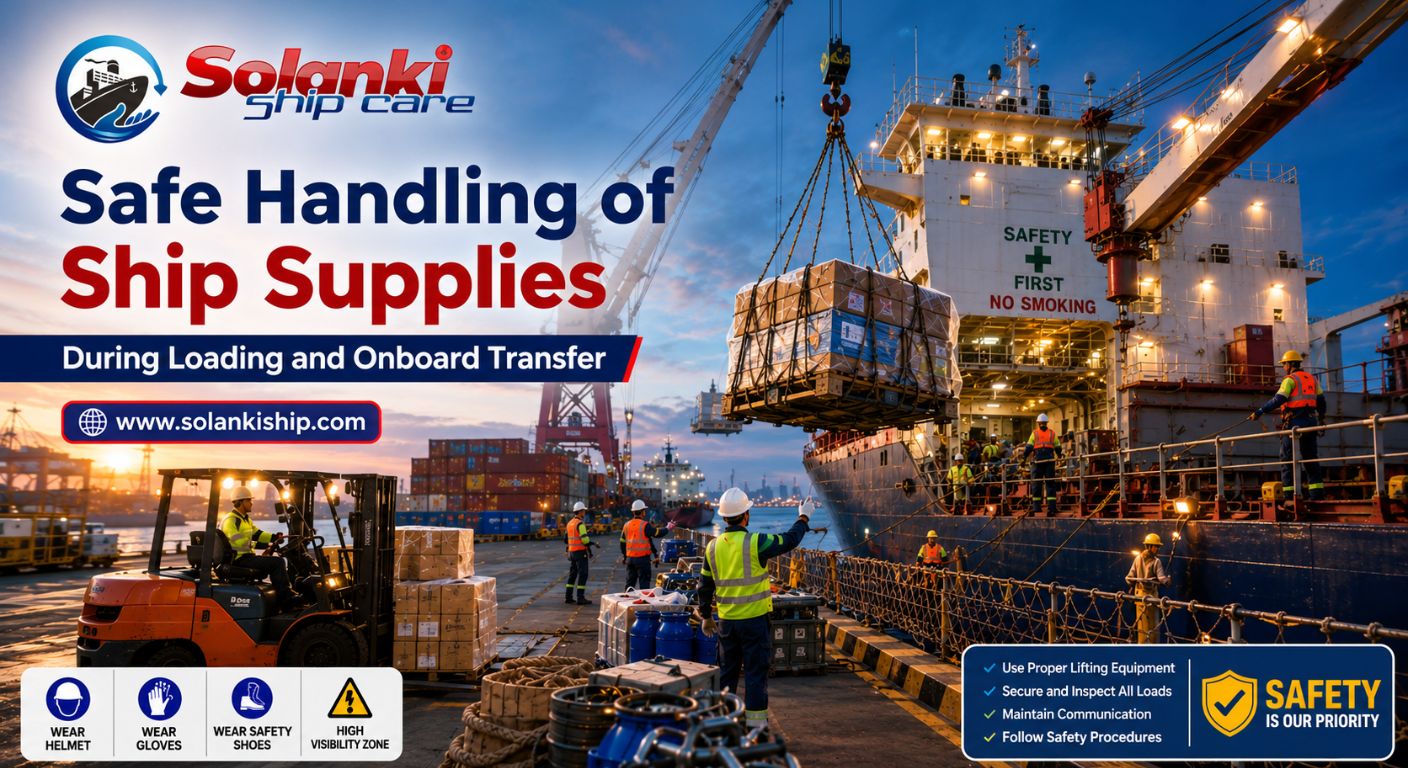
Safe Handling of Ship Supplies During Loading and Onboard Transfer
Safe handling of ship supplies during loading and onboard
transfer is important for smooth vessel operations and crew safety. Improper
handling can cause accidents, cargo damage, and operational delays. Efficient
ship chandling practices help ensure secure loading, safe transportation, and
damage-free delivery of marine supplies. Solanki Ship Care follows professional
safety procedures for reliable marine supply operations.
WHY SAFE SHIP SUPPLY HANDLING IS
IMPORTANT
Marine supply handling involves the
movement of heavy equipment, fragile materials, hazardous products, and
operational supplies between ports and vessels. Unsafe handling during loading
or onboard transfer can result in injuries, cargo damage, and operational
disruptions. Proper ship chandling safety practices help reduce risks, improve
operational efficiency, and ensure smooth vessel support services. Learn more
at Solanki Ship Care
1. RISKS DURING LOADING AND UNLOADING
OPERATIONS
Loading and unloading operations at
ports involve several operational risks, including falling cargo, improper
lifting techniques, equipment malfunction, slippery surfaces, and poor
coordination between dockside teams. Heavy vessel traffic and changing weather
conditions can also increase operational hazards during marine supply delivery.
Proper supervision and safety compliance are important to reduce accidents
during ship chandling operations.
2. PROPER HANDLING OF HEAVY AND
SENSITIVE ITEMS
Ship supplies often include heavy
machinery parts, safety equipment, navigation tools, electrical products,
chemicals, and fragile marine items. Proper lifting equipment, secure
packaging, and careful handling techniques are essential for preventing damage
during transportation and onboard transfer. Sensitive marine products require
additional protection to maintain operational quality and safety standards.
3. CREW AND DOCKSIDE SAFETY
PRECAUTIONS
Crew members and dock workers play
an important role in safe ship supply handling operations. Personal protective
equipment (PPE), proper communication, safe lifting procedures, and designated
loading zones help reduce workplace accidents. Safety training and operational
awareness help teams manage marine supply operations more efficiently while
minimizing risks during vessel loading and unloading activities.
4. PREVENTING DAMAGE AND OPERATIONAL
ACCIDENTS
Proper cargo securing methods,
controlled loading procedures, and equipment inspections help prevent supply
damage and operational accidents. Efficient coordination between transport
providers, port authorities, and vessel crews ensures smooth handling of marine
supplies. Regular monitoring and proper safety checks reduce the risk of supply
loss, delays, and onboard operational issues.
5. HOW SOLANKI SHIP CARE FOLLOWS
SAFE SUPPLY HANDLING PRACTICES
Solanki Ship Care follows
professional ship chandling safety procedures for loading, unloading,
transportation, and onboard transfer of marine supplies. Their experienced team
uses proper handling equipment, safety protocols, and coordinated logistics
support to ensure secure marine supply operations. The company focuses on
minimizing operational risks, protecting vessel supplies, and maintaining
efficient ship support services at every stage.
CONCLUSION
Safe handling of ship supplies
during loading and onboard transfer is important for protecting crew members,
preventing cargo damage, and maintaining smooth vessel operations. Proper
safety procedures, careful handling techniques, and efficient coordination help
reduce operational risks during marine supply activities. Solanki Ship Care
provides reliable and professional ship chandling services with a strong focus
on safety, operational efficiency, and secure marine supply handling.
For professional ship chandling
services, visit Solanki Ship Care
FREQUENTLY ASKED QUESTIONS (FAQ)
Q1. Why is safe handling important
during ship supply operations?
Safe handling helps prevent accidents, cargo damage, operational delays, and
safety risks during vessel operations.
Q2. What risks are involved during
marine supply loading and unloading?
Common risks include falling cargo, equipment failure, improper lifting,
slippery surfaces, and poor coordination.
Q3. How are heavy marine supplies
handled safely?
Heavy supplies are handled using proper lifting equipment, secure packaging,
and trained operational teams.
Q4. What safety precautions are
followed during onboard transfer?
Safety precautions include PPE usage, communication procedures, controlled
loading methods, and equipment inspections.
Q5. How does Solanki Ship Care
ensure safe ship chandling operations?
Solanki Ship Care follows professional safety protocols, proper handling
procedures, and coordinated marine logistics support.