
Jul 11, 2026
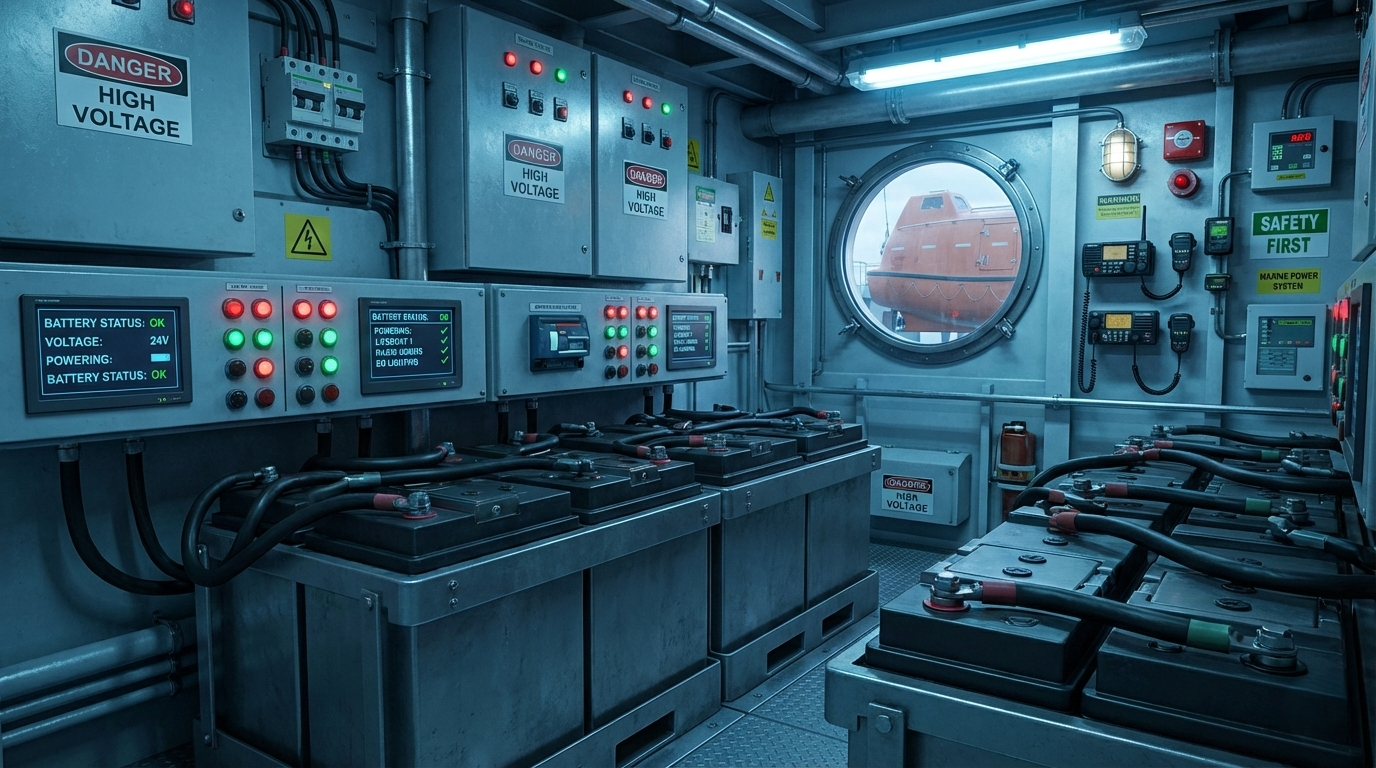
MARINE BATTERIES ONBOARD: POWERING LIFEBOATS, RADIOS & SAFETY SYSTEMS
Reliable Emergency Power at Sea
Modern vessels depend on
uninterrupted power to ensure operational safety, especially during
emergencies. Marine batteries are critical components that support lifeboat
engines, emergency lighting, alarm panels, radios, and GMDSS systems. When the
main power supply fails, these batteries become the primary source of energy,
protecting lives and maintaining communication.
Solanki Ship Care supplies certified
marine batteries designed to perform reliably under harsh marine conditions
while meeting international safety standards.
1. TYPES OF MARINE BATTERIES USED
ONBOARD
Engineered for Marine Conditions
Marine batteries are built to
withstand vibration, humidity, salt exposure, and temperature fluctuations.
Different onboard systems require specific battery technologies depending on
their load and performance requirements.
Common
marine battery types include:
• Lead-Acid Batteries –
Commonly used for engine starting and backup systems
• VRLA (Valve Regulated Lead Acid) Batteries – Maintenance-free and
suitable for enclosed spaces
• AGM (Absorbent Glass Mat) Batteries – High vibration resistance and
fast recharge capability
• Gel Batteries – Deep cycle performance with extended lifespan
• Lithium-Ion Marine Batteries – Lightweight, high efficiency, and long
cycle life
Selecting the correct battery
depends on system demand, emergency endurance requirements, and regulatory
compliance standards.
2. LIFEBOAT, RADIO & EMERGENCY
SYSTEM BATTERY REQUIREMENTS
Powering Critical Safety Equipment
Safety systems onboard must function
even during complete vessel power failure. Marine batteries installed for
emergency use must meet strict capacity and endurance standards.
Lifeboat Battery Requirements
• Reliable engine starting
capability
• Power for internal and external lighting
• Support for onboard communication equipment
• Resistance to extreme marine weather conditions
• Long standby life with low self-discharge
Radio & GMDSS System
Requirements
• Dedicated emergency backup power
• Minimum operational endurance as per maritime regulations
• Stable voltage output
• Rapid recharge capability
• Certified compliance with safety standards
Emergency Lighting & Alarm
Systems
• Instant activation during blackout
• Continuous operation for required safety duration
• Low maintenance and dependable performance
Proper battery capacity calculation
is essential to ensure compliance and uninterrupted safety operations.
3. STORAGE AND MAINTENANCE
CONSIDERATIONS
Ensuring Long-Term Performance
Correct storage and regular
maintenance are vital for maintaining battery efficiency and lifespan onboard
vessels.
Important maintenance practices
include:
• Storing batteries in dry,
ventilated compartments
• Regular voltage and condition checks
• Monitoring electrolyte levels (for applicable battery types)
• Preventing deep discharge beyond recommended limits
• Cleaning terminals to avoid corrosion
• Conducting periodic load testing
• Maintaining inspection and replacement records
Routine checks ensure batteries
remain fully functional and ready for emergency deployment.
4. COMPLIANCE WITH MARITIME SAFETY
STANDARDS
Meeting International Regulations
Marine batteries used for emergency
systems must comply with strict maritime safety regulations. Non-compliance can
result in vessel detention, inspection failures, and safety risks.
Compliance typically aligns with:
• SOLAS (Safety of Life at Sea)
requirements
• IMO safety regulations
• GMDSS certification standards
• Classification society approvals
• Flag state inspection requirements
Certified batteries ensure vessels
pass port state control inspections and maintain operational compliance.
5. HOW SOLANKI SHIP CARE SUPPLIES
CERTIFIED MARINE BATTERIES
Dependable Marine Power Solutions
Solanki Ship Care provides
structured battery supply services tailored to vessel safety and operational
requirements. With a strong understanding of marine technical standards, the
company ensures reliable, compliant, and performance-tested battery systems.
Service
strengths include:
• Supply of certified marine-grade
batteries
• Technical support for correct battery selection
• Compliance documentation support
• Timely delivery across ports
• Emergency replacement assistance
• Coordination with ship managers and technical teams
• Quality assurance checks before dispatch
By combining certified products with
professional service, Solanki Ship Care ensures uninterrupted emergency power
for lifeboats, radios, and safety systems onboard.
CONCLUSION
Marine batteries are essential to
vessel safety infrastructure. From lifeboat operations to emergency
communications and lighting, these systems must perform flawlessly during
critical situations.
Through certified supply, proper
maintenance guidance, and strict adherence to maritime regulations, Solanki
Ship Care supports safe, compliant, and uninterrupted marine operations across
all voyages.