
Jul 28, 2026
MANAGING TEMPERATURE-SENSITIVE PROVISIONS IN SHIP SUPPLY OPERATIONS | SOLANKI SHIP CARE
Supplying
vessels with frozen, chilled, and fresh food provisions requires strict
temperature control and careful handling. Even small temperature fluctuations
during storage or delivery can compromise food safety and product quality.
Ship
chandlers must ensure that perishable provisions such as meat, seafood, dairy
products, fruits, and vegetables are transported under controlled temperature
conditions from warehouse to vessel. Maintaining a reliable cold chain is
essential for protecting crew health and meeting maritime food safety
standards.
Managing Temperature-Sensitive Provisions in Ship Supply Operations
Ship
supply operations involve delivering various perishable food products that
require strict temperature control. Frozen foods are typically stored below -18°C,
while chilled products remain between 0°C and 4°C to maintain safety and
freshness.
Maintaining
these temperature ranges throughout the supply chain from warehouse storage to
dockside delivery is critical to prevent spoilage and ensure vessels receive
high-quality provisions.
1. Challenges in Transporting Frozen, Chilled, and Fresh Provisions
Transporting
temperature-sensitive provisions to vessels can be challenging in busy port
environments.
Common
challenges include:
- Maintaining consistent temperatures during
transport
- Preventing thawing during loading and
unloading
- Protecting fresh produce from heat exposure
- Managing delays caused by vessel schedules or
port congestion
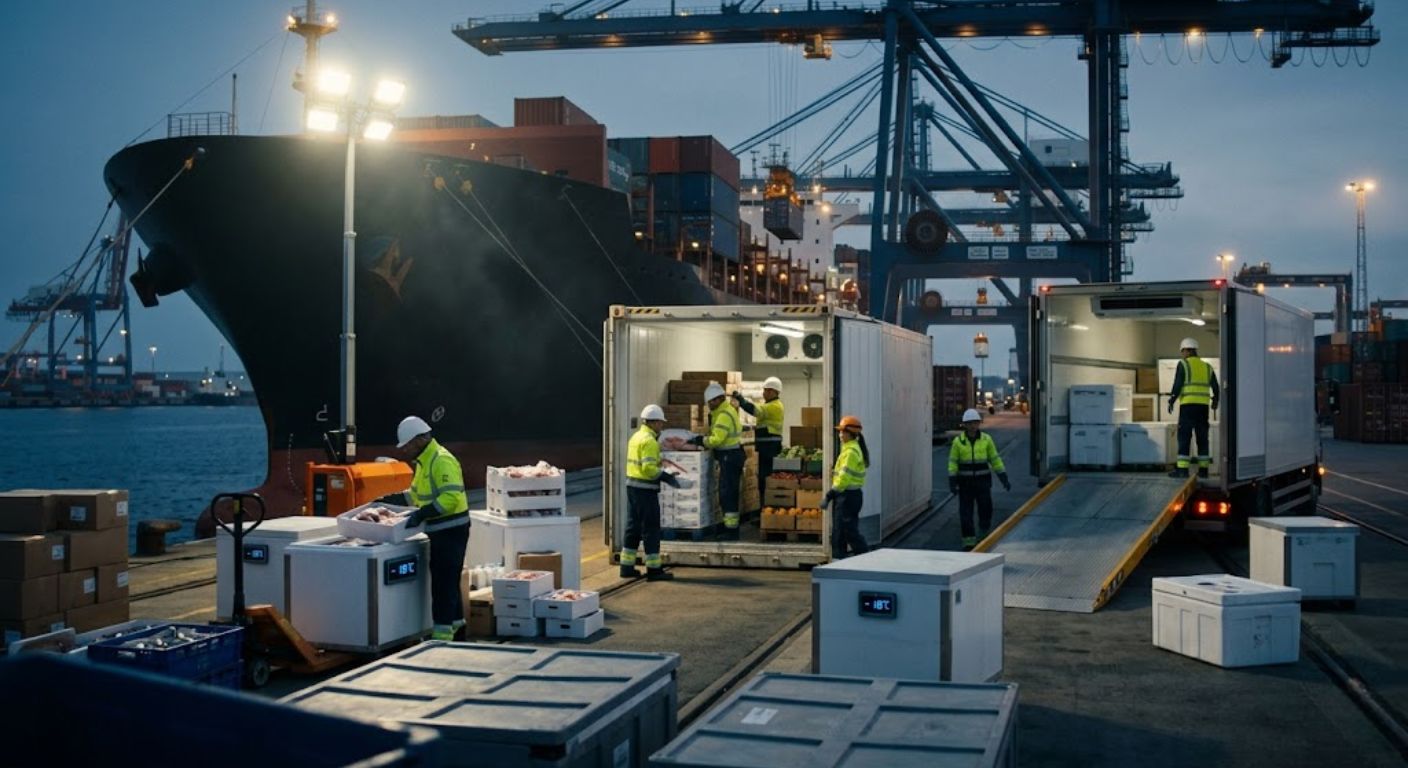
2. Maintaining Cold-Chain Integrity During Port Delivery
Maintaining
cold-chain integrity is critical in ship supply operations. From warehouse
storage to vessel delivery, temperature levels must remain within safe limits.
Best
practices include:
- Using refrigerated trucks for transport
- Reducing handling time during loading
- Monitoring temperatures during transit
- Coordinating delivery with vessel schedules
3. Risks of Temperature Fluctuations During Barge or Dockside Supply
Temperature
fluctuations can occur during barge or dockside deliveries, especially in
tropical port environments.
Common
risks include:
- Exposure of frozen items to warm temperatures
- Delays during port clearance or vessel access
- Improper handling during cargo transfer
- Increased spoilage risk for perishable goods
4. Quality Inspection and Storage Procedures Before Vessel Delivery
Quality
inspection ensures that vessels receive safe and hygienic food provisions.
Key
procedures include:
- Checking expiry dates and packaging
- Verifying product temperatures before dispatch
- Storing frozen, chilled, and fresh items
separately
- Maintaining hygiene and food safety standards
5. How Solanki Ship Care Ensures Safe Handling of Temperature-Controlled
Provisions
Solanki Ship
Care ensures safe and reliable ship provision supply by:
- Proper cold storage handling for frozen and
chilled provisions
- Hygienic storage and inspection of fresh food
supplies
- Coordinated logistics for timely vessel
deliveries
- Efficient supply operations across major
Indian ports
Conclusion
Managing
temperature-sensitive provisions is essential in ship chandling operations.
Maintaining cold-chain integrity and proper inspection procedures helps ensure
food safety and crew welfare onboard vessels.
Solanki
Ship Care supports vessels with reliable ship chandling and marine provision
supply services across major Indian ports including Mumbai, Chennai, Kandla,
Visakhapatnam, Kolkata, Mundra, Haldia, Cochin, Paradip, and Dahej.
For
professional ship chandling services and temperature-controlled provision
supply, visit:
www.solankiship.com
Frequently Asked Questions (FAQ)
Q1. What
are temperature-sensitive ship provisions?
Temperature-sensitive provisions include frozen meat, seafood, dairy products,
fruits, vegetables, and other perishable food items requiring controlled
storage and transport.
Q2. Why
is cold-chain management important in ship supply operations?
Cold-chain management keeps provisions within safe temperature ranges during
storage and transport, preventing spoilage and ensuring food safety.
Q3. What
risks occur during ship provision delivery?
Risks include temperature fluctuations, delays during dockside transfer,
improper handling, and exposure to high temperatures.
Q4. Does
Solanki Ship Care provide ship provision supply across India?
Yes. Solanki Ship Care provides ship chandling and marine provision supply
services across major Indian ports in India.