

Aug 06, 2026
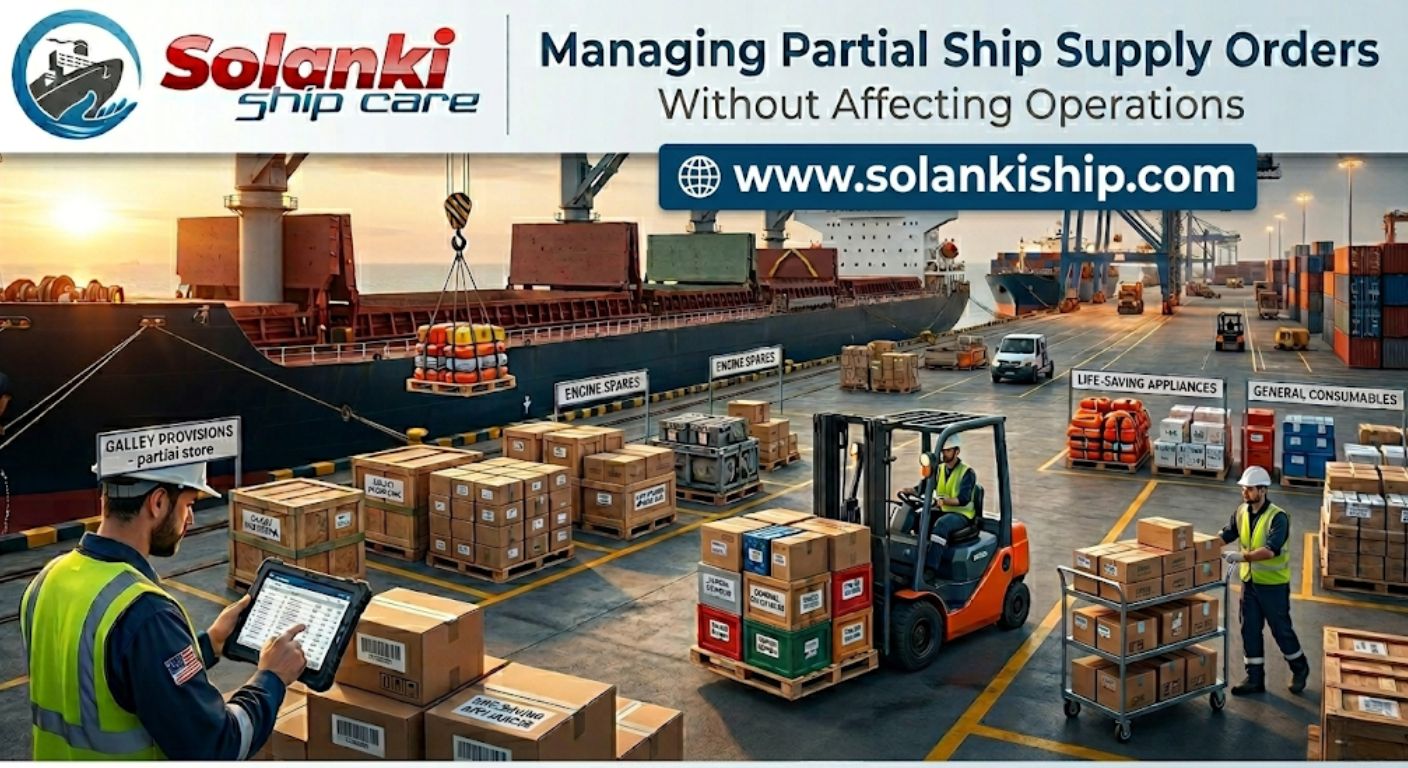
Managing Partial Ship Supply Orders Without Affecting Operations
Managing
partial ship supply orders is important in modern maritime logistics. Vessels
often need supplies in stages due to schedule changes, urgent requirements, or
limited storage space. Proper coordination ensures uninterrupted operations.
Solanki Ship Care provides efficient and timely partial ship supply solutions
for smooth vessel management.
WHY PARTIAL SHIP SUPPLY ORDERS ARE IMPORTANT
Partial ship supply management helps
vessels maintain operational efficiency without overloading onboard storage. In
many cases, ships require different supplies at multiple ports based on voyage
conditions, crew needs, and operational demands. Proper ship chandling services
ensure timely deliveries, accurate tracking, and uninterrupted vessel
performance. Learn more at www.solankiship.com
1. WHEN AND WHY PARTIAL SUPPLIES ARE REQUIRED
Partial ship supplies are required
when vessels face changing schedules, urgent operational demands, or limited
storage capacity. Some items may also become available at different ports,
making phased deliveries more practical. Weather conditions, voyage extensions,
and emergency requirements often make partial deliveries necessary for smooth
vessel operations.
2. COORDINATING MULTIPLE DELIVERIES FOR ONE VESSEL
Managing multiple deliveries for the
same vessel requires proper planning and communication. Every delivery must
match the vessel’s port schedule and operational timing. Coordination between
suppliers, logistics teams, and vessel operators ensures smooth supply movement
and avoids delays during loading and unloading activities.
3. ENSURING CONTINUITY OF ESSENTIAL ITEMS
Essential supplies such as food provisions,
technical consumables, safety equipment, cleaning materials, and spare parts
must remain continuously available onboard. Partial deliveries help maintain
sufficient inventory levels while avoiding unnecessary storage pressure. Proper
planning ensures vessels always have access to critical operational supplies.
4. AVOIDING CONFUSION IN ORDER TRACKING
Handling partial deliveries can
become complicated without proper tracking systems. Organized documentation,
accurate labeling, and real-time inventory management help avoid duplicate
orders, missing supplies, or delivery confusion. Efficient order tracking
improves transparency and ensures every supply item reaches the vessel
correctly.
5. HOW SOLANKI SHIP CARE MANAGES PARTIAL DELIVERIES
Solanki Ship Care provides
professional ship supply services designed for efficient partial delivery
management. Their experienced team coordinates every stage of the supply
process with accurate scheduling and inventory control. By maintaining clear
communication with vessel operators and logistics teams, they ensure smooth,
timely, and organized deliveries without affecting vessel operations.
CONCLUSION
Managing partial ship supply orders
requires efficient coordination, accurate tracking, and reliable logistics
support. Proper planning helps vessels maintain uninterrupted operations while
ensuring essential supplies remain available at all times. Solanki Ship Care
delivers dependable ship chandling solutions that support smooth maritime
operations through organized partial supply management.
For reliable ship supply services,
visit www.solankiship.com
FREQUENTLY ASKED QUESTIONS (FAQ)
Q1. What are
partial ship supply orders?
Partial ship supply orders involve
delivering vessel supplies in multiple stages instead of a single shipment.
Q2. Why are
partial deliveries important in shipping?
They help vessels manage storage
limitations, urgent requirements, and operational changes efficiently.
Q3. What
supplies are commonly delivered partially?
Food provisions, technical
consumables, spare parts, safety equipment, and cleaning materials are commonly
delivered in stages.
Q4. How can
order confusion be avoided during partial deliveries?
Using organized documentation, inventory
tracking systems, and proper coordination helps avoid confusion.
Q5. How does
Solanki Ship Care handle partial ship supplies?
They provide accurate scheduling,
inventory management, and timely coordination for efficient vessel supply
operations.