

Aug 01, 2026
Maintaining Hygiene in Ship Supply: From Warehouse to Vessel Delivery
Maintaining
hygiene in ship supply is a critical aspect of marine logistics, especially
when dealing with food, beverages, and daily-use items. From warehouse storage
to final vessel delivery, every step must follow strict hygiene standards to
ensure safety, quality, and compliance. Solanki Ship Care ensures clean, safe,
and well-managed supply operations for vessels.
WHY HYGIENE IS ESSENTIAL IN SHIP
SUPPLY OPERATIONS
Hygiene plays a vital role in
protecting the health of crew members and maintaining the quality of supplies.
Contaminated food or poorly handled items can lead to serious health risks
onboard. Proper hygiene practices also help in meeting international maritime
standards and ensuring smooth inspections. A hygienic supply chain builds trust
and reliability in marine services. Learn more at www.solankiship.com
1. HYGIENE PRACTICES DURING PACKING
AND HANDLING
Proper hygiene begins at the packing
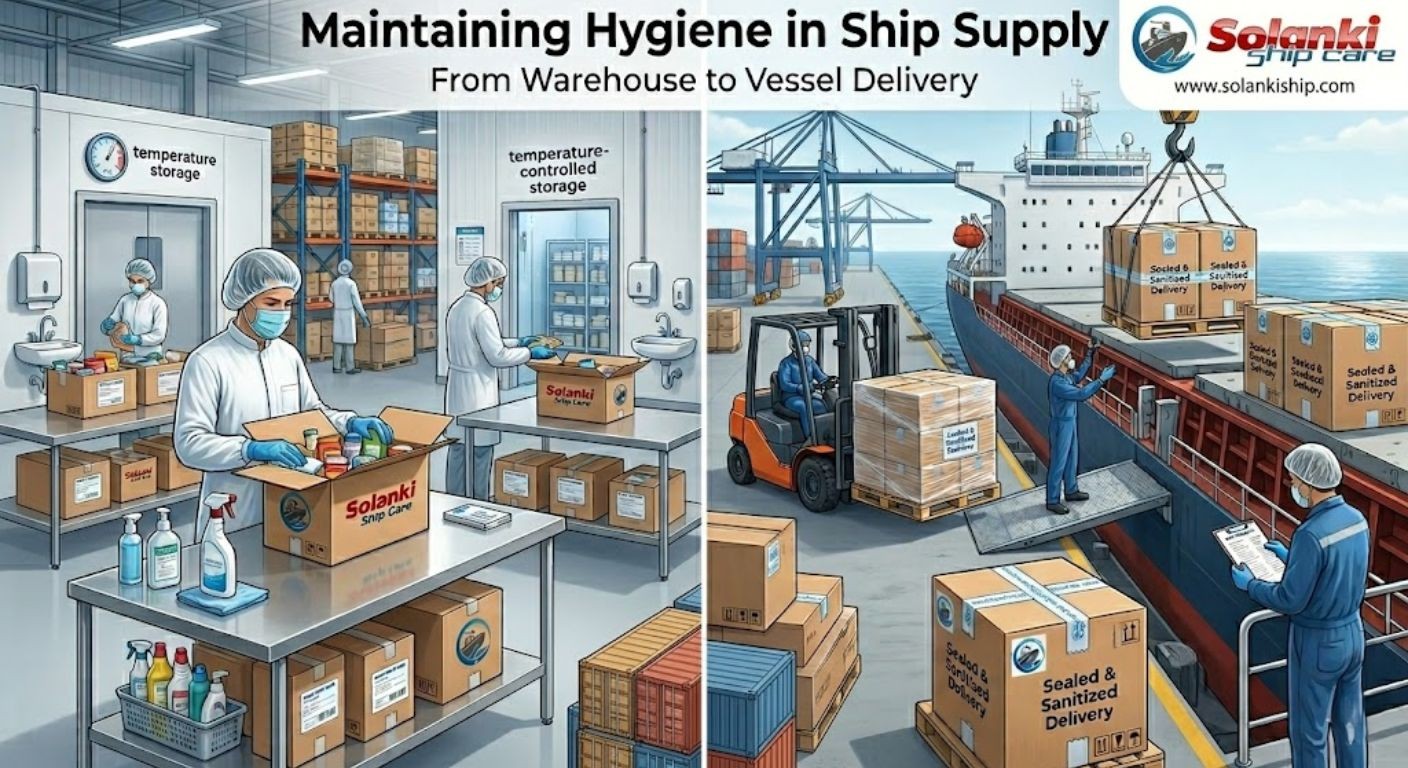
stage. All items, especially food supplies, must be handled with clean gloves,
sanitized equipment, and hygienic packaging materials. Workers must follow
strict cleanliness protocols to avoid contamination. Packaging areas should be
regularly disinfected to maintain a controlled environment. This ensures safe
and clean supplies for vessel use.
2. PREVENTING CONTAMINATION OF
SUPPLIES
Preventing contamination is a top
priority in ship supply services. Food items must be kept separate from
chemicals, cleaning agents, and technical goods. Sealed packaging and proper
labeling help maintain product integrity. Regular quality checks ensure that
all supplies meet hygiene standards before dispatch. A well-managed system
reduces risks and ensures safety onboard.
3. IMPORTANCE OF HYGIENE FOR FOOD
AND DAILY-USE ITEMS
Food and daily-use items directly
impact crew health and comfort. Poor hygiene can lead to spoilage,
contamination, and health issues. Maintaining cleanliness ensures fresh and safe
consumption of supplies. Hygienic handling of personal care and daily-use items
also enhances onboard living conditions. This contributes to overall crew
well-being and operational efficiency.
4. STORAGE AND TRANSPORT CONDITIONS
Proper storage and transportation
are essential to maintain hygiene. Temperature-controlled storage is required
for perishable goods, while dry and clean environments are necessary for other
supplies. Vehicles used for transportation must be sanitized and
well-maintained. Timely delivery ensures that items remain fresh and safe for
use. Efficient logistics play a key role in preserving hygiene standards.
5. HOW SOLANKI SHIP CARE ENSURES
HYGIENIC SUPPLY DELIVERY
Solanki Ship Care follows strict
hygiene protocols across all supply stages. From procurement and inspection to
packing and delivery, every process is carefully monitored. The team ensures
proper segregation, clean handling, and safe transportation of all items. With
a focus on quality and hygiene, they deliver reliable ship supply services that
meet industry standards.
CONCLUSION
Maintaining hygiene in ship supply
is essential for safe, efficient, and reliable marine operations. With proper
handling, storage, and transportation practices, contamination risks can be minimized.
Solanki Ship Care ensures hygienic, high-quality supply delivery that supports
crew health and vessel efficiency.
For hygienic and reliable marine
supply services, visit www.solankiship.com
FREQUENTLY ASKED QUESTIONS (FAQ)
Q1. Why is hygiene important in ship
supply?
It ensures safe consumption of supplies and protects crew health onboard.
Q2. How can contamination be
prevented in ship supplies?
By proper segregation, sealed packaging, and hygienic handling practices.
Q3. What hygiene practices are
followed during packing?
Using clean equipment, gloves, sanitized areas, and proper packaging materials.
Q4. Why are storage conditions
important?
They help maintain product quality, freshness, and safety during transit.
Q5. How does Solanki Ship Care
maintain hygiene?
By following strict protocols in packing, storage, handling, and
transportation.