
Jul 13, 2026
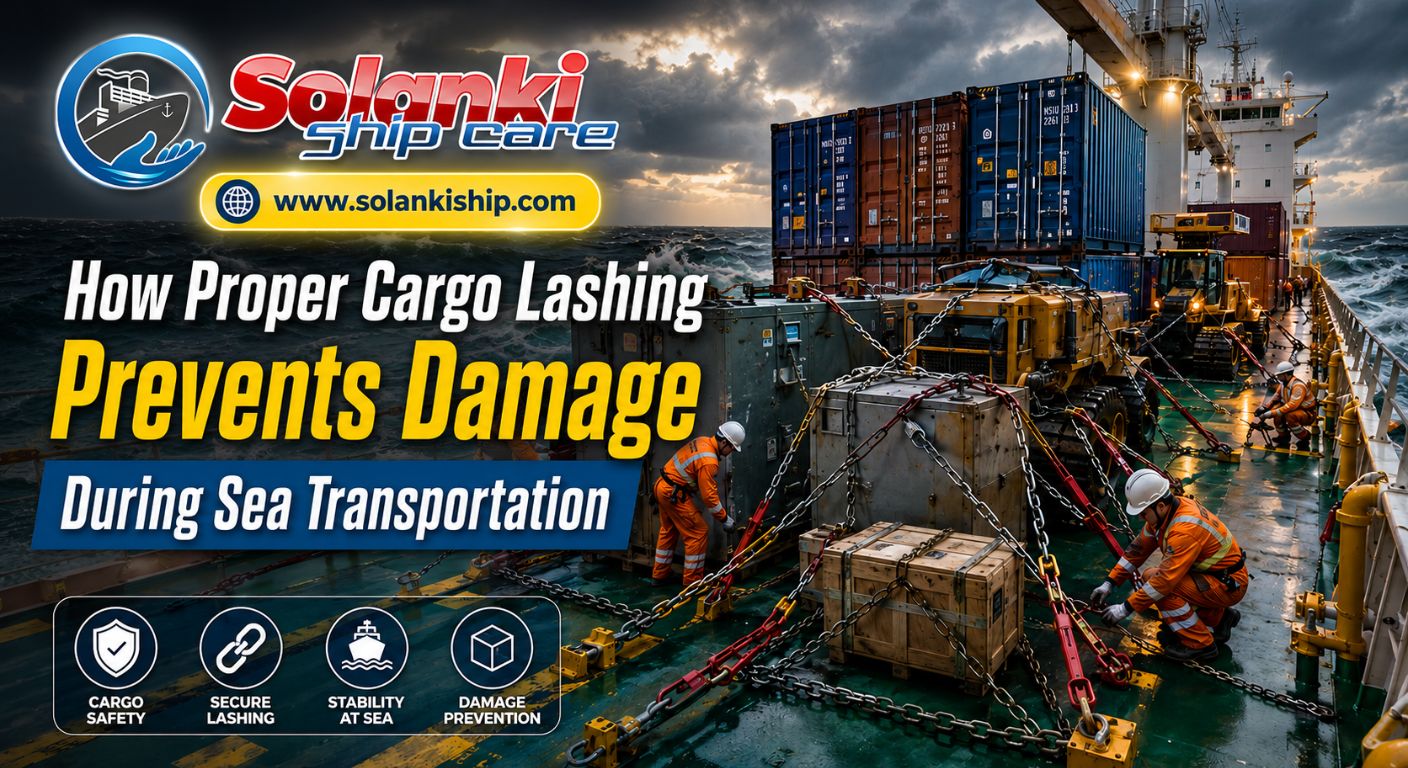
How Proper Cargo Lashing Prevents Damage During Sea Transportation
Cargo
transportation by sea is essential for global trade, making proper cargo
lashing and securing systems important for preventing cargo shifting and damage
during voyages. Effective cargo securing improves vessel safety, reduces
operational risks, and supports compliance with maritime safety standards.
Solanki Ship Care provides professional cargo lashing and securing solutions
for safe and efficient sea transportation.
WHY CARGO LASHING
IS IMPORTANT DURING SEA TRANSPORTATION
Sea voyages often expose vessels to
rough weather conditions, strong winds, heavy waves, and vessel movement.
Without proper cargo securing systems, cargo can shift during transit, causing
serious damage to goods, containers, vessel structures, and onboard equipment.
Proper cargo lashing helps stabilize cargo throughout the voyage while
improving operational safety, protecting crew members, and reducing financial
losses caused by cargo damage. Learn more at Solanki Ship Care.
1. IMPORTANCE OF
CARGO SECURING DURING VOYAGES
Cargo securing is one of the most
critical safety procedures in maritime logistics and shipping operations.
During sea transportation, vessels experience rolling, pitching, and vibration
caused by changing sea conditions. Proper lashing systems help maintain cargo
stability and prevent movement throughout the voyage. Secure cargo handling
also minimizes the risk of container collapse, cargo imbalance, and accidents
that may affect vessel safety and operational efficiency.
2. TYPES OF
CARGO LASHING & SECURING EQUIPMENT
Modern vessels use various cargo
lashing and securing equipment depending on cargo type, weight, and
transportation requirements. Common cargo securing equipment includes lashing
rods, turnbuckles, twist locks, chains, wire ropes, web lashings, tensioners,
and container securing bars. Heavy cargo and project cargo often require
additional securing systems such as dunnage materials, steel stoppers, and
custom lashing arrangements. Using the correct lashing equipment helps maintain
cargo integrity and improves transportation safety during long sea voyages.
3. RISKS OF
CARGO SHIFTING AT SEA
Improper cargo securing can lead to
serious operational and financial consequences during sea transportation. Cargo
shifting at sea may cause container collapse, cargo loss overboard, structural
vessel damage, and instability issues that threaten crew safety. In severe
weather conditions, unsecured cargo can increase the risk of vessel listing or
accidents onboard. Cargo damage also leads to shipment delays, insurance
claims, customer dissatisfaction, and costly operational disruptions for
shipping companies and cargo owners.
4. IMPORTANCE OF
INSPECTION & MAINTENANCE OF LASHING SYSTEMS
Routine inspection and maintenance
of cargo lashing systems are essential for safe vessel operations. Damaged,
corroded, or worn-out securing equipment may fail during rough sea conditions
and compromise cargo stability. Regular inspections help identify defective
chains, loose fittings, damaged turnbuckles, weakened wire ropes, and worn
securing components before voyages begin. Proper maintenance of cargo securing
equipment improves operational reliability, extends equipment lifespan, and
helps vessels comply with international maritime safety regulations.
5. HOW SOLANKI
SHIP CARE PROVIDES CARGO SECURING SOLUTIONS
Solanki Ship Care provides
professional cargo lashing, securing, and inspection solutions for various types
of marine cargo operations. Their experienced marine team supports vessels with
reliable cargo securing arrangements, lashing inspections, maintenance
services, and safety-focused operational support. The company follows
international maritime safety practices to help ensure cargo stability, prevent
transportation damage, and maintain safe vessel operations during sea voyages.
Solanki Ship Care focuses on delivering dependable cargo securing solutions
that support efficient and compliant marine transportation services.
CONCLUSION
Proper cargo lashing and securing
systems are essential for preventing cargo damage, maintaining vessel
stability, and ensuring safe sea transportation operations. Effective cargo
securing reduces the risks of cargo shifting, operational accidents, and financial
losses during voyages. Routine inspection and maintenance of lashing equipment
also help improve safety and compliance with maritime regulations. Solanki Ship
Care provides reliable cargo securing and lashing solutions that support safe,
secure, and efficient marine logistics operations. Visit Solanki
Ship Care.
FREQUENTLY ASKED
QUESTIONS (FAQ)
Q1. Why is cargo
lashing important during sea transportation?
Cargo lashing helps prevent cargo
movement, damage, and operational accidents caused by vessel motion and rough
sea conditions.
Q2. What
equipment is used for cargo securing on vessels?
Common equipment includes lashing
rods, chains, turnbuckles, twist locks, wire ropes, web lashings, and securing
bars.
Q3. What are the
risks of improper cargo securing?
Improper securing can cause cargo
shifting, container collapse, vessel instability, cargo damage, and financial
losses.
Q4. Why is
lashing equipment inspection necessary?
Routine inspections help identify damaged
or worn securing equipment before failures occur during voyages.
Q5. How does
Solanki Ship Care support cargo securing operations?
Solanki Ship Care provides cargo
lashing, securing inspections, maintenance services, and professional cargo
safety support for marine operations.