
Jul 09, 2026
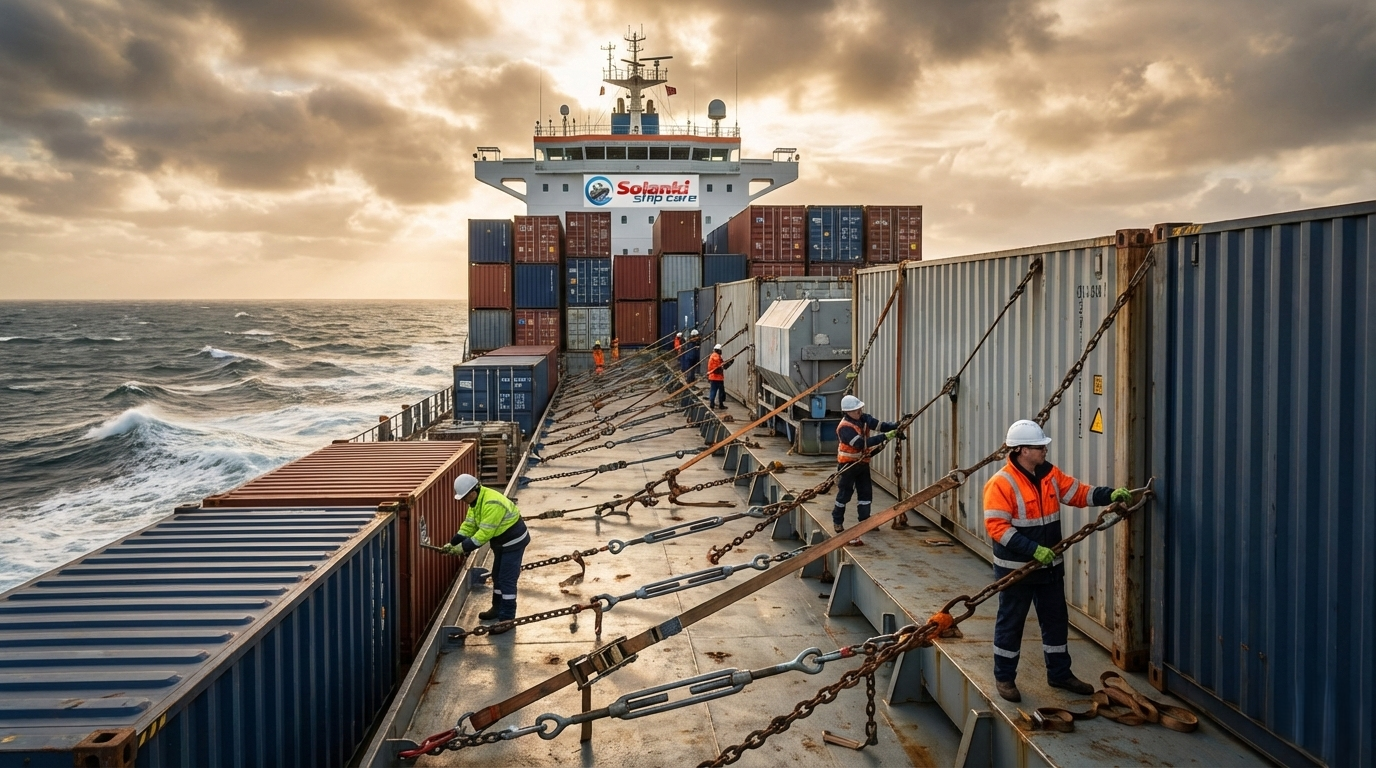
CARGO LASHING & SECURING EQUIPMENT: PREVENTING DAMAGE DURING SEA VOYAGES
The maritime industry operates in
highly dynamic conditions where vessels encounter rough seas, high winds, and
continuous motion. In such an environment, cargo stability becomes a critical
safety priority. Proper cargo lashing and securing are not just operational
requirements they are essential safeguards that protect cargo, crew, and vessel
integrity.
Solanki Ship Care provides
professional cargo lashing solutions designed to ensure maximum safety,
compliance, and efficiency during sea voyages.
1. IMPORTANCE OF PROPER CARGO
SECURING
Protecting Cargo, Crew & Vessel Integrity
During sea voyages, vessels
experience rolling, pitching, and heaving motions. Without proper securing systems,
cargo can shift, collapse, or even fall overboard.
Proper
cargo securing ensures:
• Prevention of cargo damage
• Protection against vessel instability
• Reduced risk of onboard accidents
• Compliance with international maritime safety standards
• Protection of high-value and sensitive goods
• Avoidance of financial losses and insurance claims
Effective lashing directly
contributes to voyage safety and operational reliability. Poorly secured cargo
can result in structural damage, legal liabilities, and severe delays.
2. TYPES OF LASHING EQUIPMENT AND
SECURING TOOLS
Essential Systems for Cargo Stability
Cargo lashing equipment varies
depending on cargo type, vessel design, and voyage conditions. Using the
correct tools ensures proper tension and load distribution.
Common
lashing and securing equipment includes:
• Twist Locks – Secure containers
vertically and horizontally
• Lashing Rods – Provide structural stability for stacked containers
• Turnbuckles – Adjust and maintain lashing tension
• Chain Lashings – Used for heavy cargo and machinery
• Web Lashing Straps – Ideal for lighter cargo and flexible securing
• Dunnage Bags – Prevent movement in enclosed spaces
• Wire Ropes – Provide high tensile strength securing
• Corner Castings & Fittings – Ensure container locking alignment
Selecting appropriate securing
equipment depends on cargo weight, size, and voyage duration. Solanki Ship Care
ensures all tools meet marine-grade standards and regulatory compliance.
3. INSPECTION REQUIREMENTS FOR
SECURING SYSTEMS
Ensuring Equipment Reliability and Compliance
Routine inspection of lashing
systems is essential before departure and during cargo operations. Damaged or
worn equipment can compromise cargo stability.
Inspection
procedures typically include:
• Checking tension levels of
lashings
• Examining rods and chains for cracks or corrosion
• Inspecting turnbuckles for thread damage
• Verifying twist lock functionality
• Ensuring proper locking of securing fittings
• Confirming compliance with vessel cargo securing manual
Regular inspections reduce accident
risks and ensure adherence to maritime safety regulations. Solanki Ship Care
conducts thorough checks to guarantee operational readiness and safety
compliance.
4. RISKS OF IMPROPER CARGO HANDLING
Operational and Financial Consequences
Improper cargo handling and
inadequate securing can cause serious damage during sea voyages.
Potential
risks include:
• Cargo shifting leading to vessel
imbalance
• Container collapse in rough weather
• Structural damage to ship decks
• Injury to crew members
• Loss of cargo overboard
• Insurance disputes and financial penalties
• Delay in delivery schedules
Even minor securing negligence can
result in significant losses. Professional lashing services reduce these risks
and ensure safe maritime transport.
5. HOW SOLANKI SHIP CARE PROVIDES
RELIABLE LASHING SOLUTIONS
Professional Marine Securing Services
Solanki Ship Care delivers
structured cargo securing services tailored to vessel and cargo requirements.
Our team understands the operational demands of marine logistics and implements
systematic lashing procedures.
Our
service strengths include:
• Skilled and trained lashing
personnel
• Use of certified marine-grade securing equipment
• Pre-departure inspection and safety verification
• Onboard supervision during loading operations
• Compliance with maritime safety standards
• Rapid response for urgent securing requirements
• Coordination with vessel agents and port authorities
With operational precision and
strict safety protocols, Solanki Ship Care ensures cargo remains stable
throughout the voyage, preventing avoidable damage and operational disruptions.
CONCLUSION
Cargo lashing and securing are
fundamental components of safe maritime transport. In a challenging sea
environment, proper securing systems protect cargo, vessel stability, and crew
safety.
By utilizing high-quality equipment,
conducting systematic inspections, and implementing professional handling
procedures, Solanki Ship Care delivers dependable lashing solutions that
prevent damage during sea voyages. Our commitment to safety, compliance, and
operational excellence supports secure and uninterrupted maritime operations
across ports.