
Jul 28, 2026
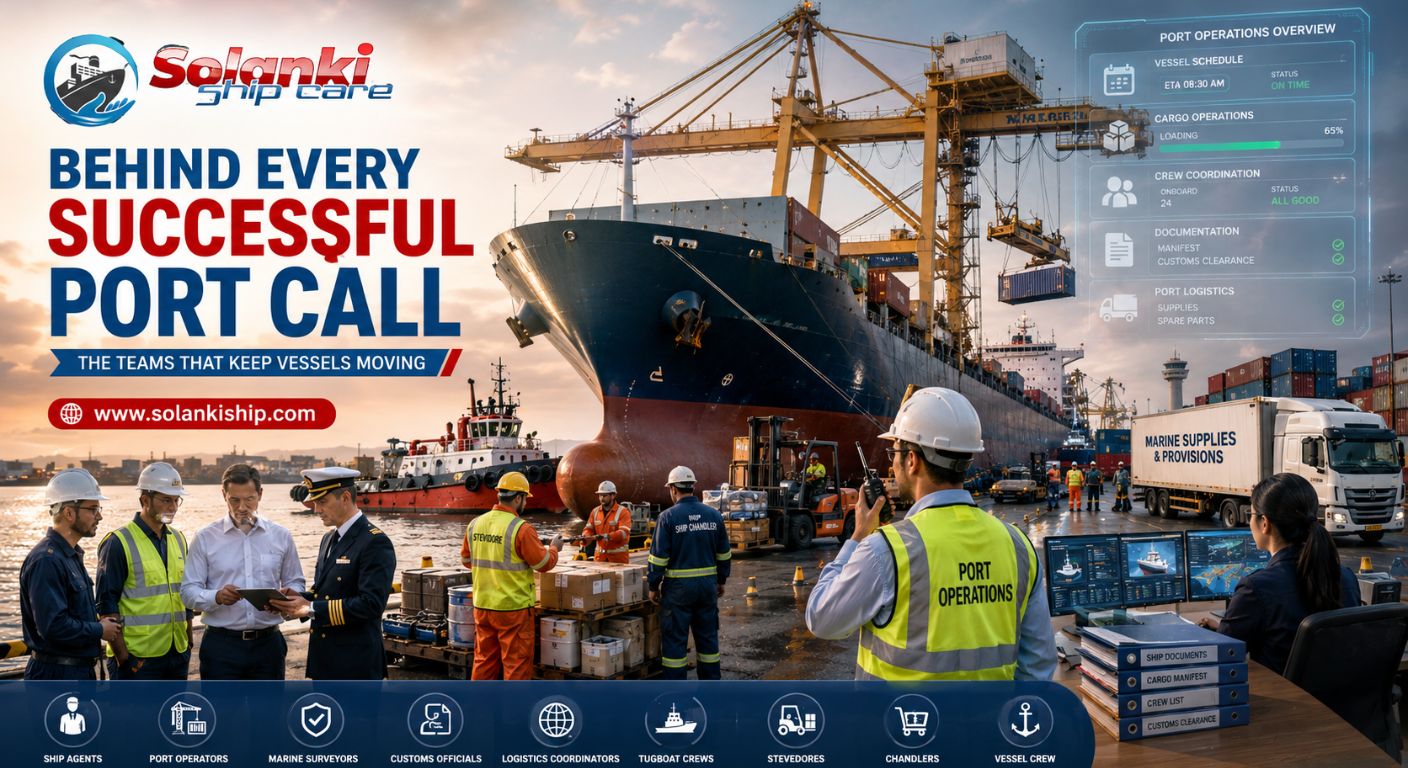
Behind Every Successful Port Call: The Teams That Keep Vessels Moving
The shipping industry depends on
coordinated efforts behind the scenes to keep global trade moving. Every
successful port call requires professionals working together to manage vessel operations,
cargo activities, and regulatory requirements efficiently.
KEY SERVICES
THAT KEEP VESSELS MOVING
Successful port calls rely on
various support services that help vessels operate efficiently, stay on
schedule, and meet safety and regulatory requirements.
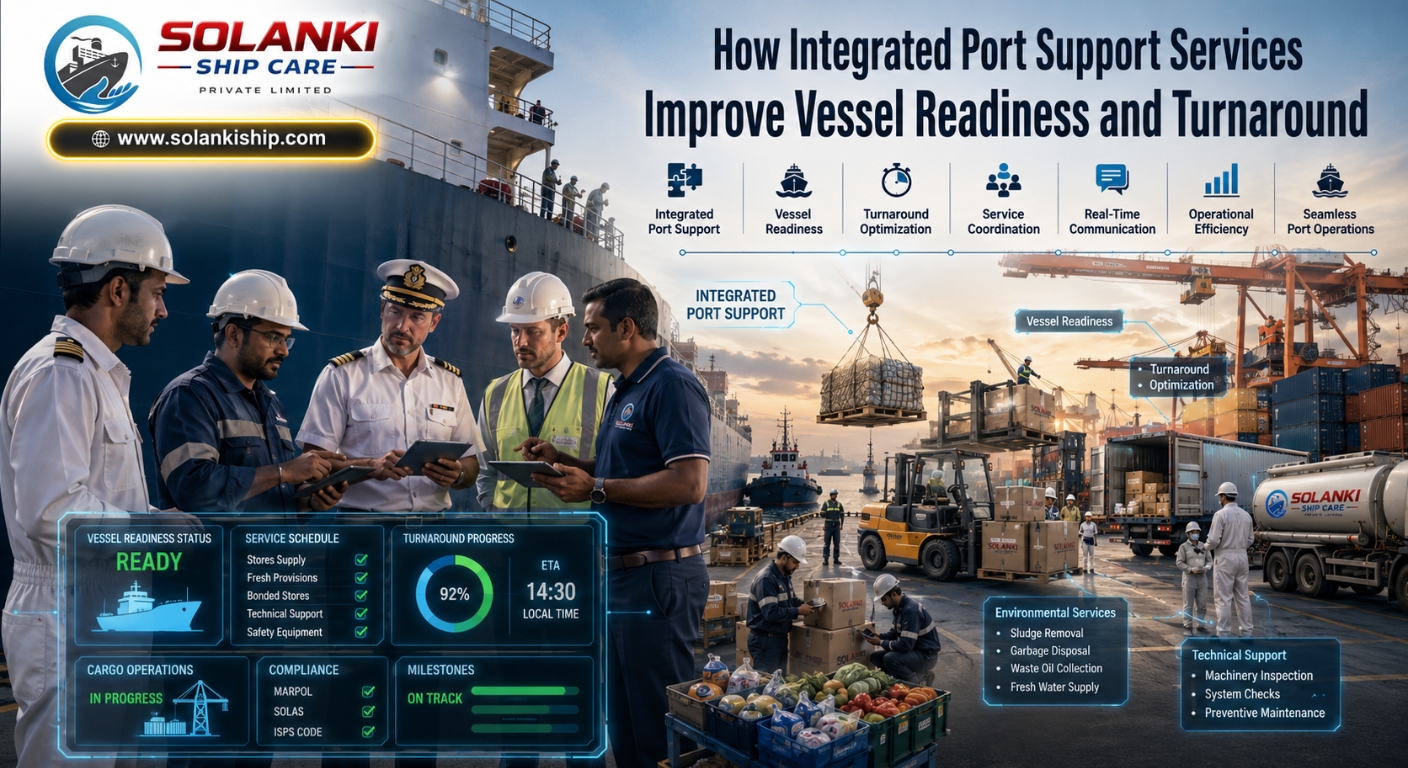
Key services include crew changes,
bunkering and fuel supply, fresh water and provisions delivery, spare parts
logistics, waste disposal, marine surveys, and documentation support. These
services keep vessels operational, compliant, and ready for their next voyage
while reducing delays.
When managed effectively, they help
minimize downtime, improve turnaround efficiency, and ensure smooth vessel
operations. learn more at Solanki Ship Care
1. WHY TEAMWORK
IS ESSENTIAL FOR SUCCESSFUL PORT OPERATIONS
A vessel's time in port is often
limited, making coordination crucial. Multiple stakeholders, including port
authorities, terminal operators, customs officials, logistics providers, and
ship agents, must work together to complete various tasks within a tight
schedule. Effective collaboration helps reduce turnaround time, avoid costly
delays, and maintain compliance with port regulations.
2. PORT
OPERATIONS BEHIND THE SCENES
Before a vessel arrives, extensive
planning takes place to prepare for its port call. Activities such as berth
allocation, cargo handling arrangements, customs clearance, crew changes,
bunkering, and technical inspections must be carefully coordinated. Any
disruption in these processes can affect schedules and increase operational
costs.
Successful port operations depend on
accurate planning and timely execution, ensuring vessels can complete their
activities efficiently and continue their voyage as planned.
3. THE
IMPORTANCE OF COMMUNICATION
Clear communication is one of the
most important factors in vessel operations. Since many parties are involved,
information must be shared quickly and accurately. Effective communication
helps stakeholders coordinate activities, manage unexpected changes, and
resolve issues before they impact vessel schedules.
When vessel crews, port authorities,
and service providers stay connected, operations become more efficient and
delays can often be avoided.
4. OVERCOMING
OPERATIONAL CHALLENGES
Port operations can face several
challenges, including congestion, adverse weather conditions, documentation
delays, and supply chain disruptions. These situations require quick
decision-making and strong coordination among all stakeholders.
By working together and responding
promptly to changing circumstances, maritime teams can minimize disruptions and
keep vessel operations running smoothly.
5. HOW SOLANKI
SHIP CARE SUPPORTS VESSEL OPERATIONS
Solanki Ship Care provides
professional ship agency services that help vessels navigate complex
port procedures efficiently. Their experienced team coordinates with port
authorities, customs officials, terminal operators, suppliers, and vessel crews
to ensure all operational requirements are completed on time.
By serving as a central point of
communication, Solanki Ship Care helps reduce delays, improve operational
efficiency, and support faster vessel turnaround times.
CONCLUSION
Every successful port call is the
result of teamwork, planning, and effective communication. While much of the
work happens behind the scenes, these coordinated efforts are essential for
keeping vessels moving and global trade flowing smoothly.
With reliable ship agency
services, Solanki Ship Care helps ensure efficient port operations and
seamless vessel support at every stage of the journey.
visit Solanki Ship Care
FREQUENTLY ASKED
QUESTIONS (FAQ)
Q1. What is a
port call in shipping?
A port call is a
vessel's stop at a port for cargo handling, crew changes, supplies, or
inspections.
Q2. Why is
teamwork important during vessel operations?
Teamwork helps
coordinate activities, reduce delays, and improve efficiency.
Q3. What
challenges commonly affect vessel turnaround?
Port congestion, bad
weather, documentation delays, and supply chain disruptions can affect
turnaround times.
Q4. How does
communication improve port operations?
Clear communication
helps stakeholders coordinate smoothly and avoid delays.
Q5. How does
Solanki Ship Care support vessel operations?
Solanki Ship Care provides ship agency services, operational support, and documentation assistance for smooth vessel operations.